recorded 1927; in use today
Aban: the castle
Aban


Adinkra sign
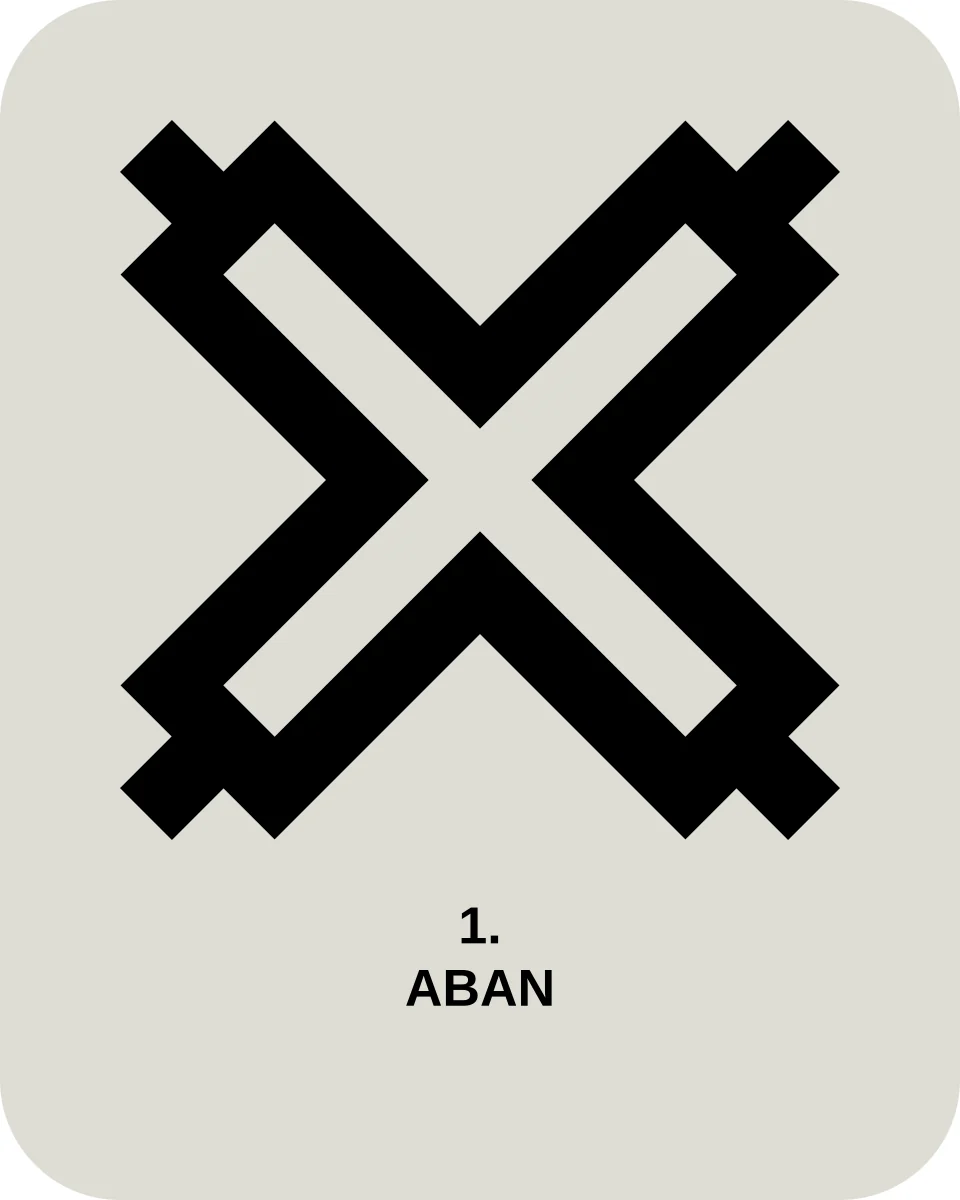
Aban, the castle, stands for strength, the seat of power and authority.
- Literal meaning
- the castle
- Stands for
- strength, the seat of power, authority and magnificence
- What it shows
- A two-storeyed house or castle.
- Where it is used
- Formerly worn by the King of Asante alone (Rattray); the stone palace in Kumasi was known as the Aban.
The sign is traced from a licensed reference and shown in this platform’s own style. Its shape is not changed.
Aban is a two-storeyed house or castle; the stone palace building in Kumasi was known as the Aban. Rattray records that this design was formerly worn by the King of Asante alone. Modern catalogues give strength, the seat of power, authority and magnificence. Status: in Rattray's list of 1927, and in the modern catalogues consulted.
Key facts
- Rattray (1927): formerly worn by the king alone
- Meaning: strength, seat of power, authority
- Status: in Rattray's list of 1927, and in the modern catalogues consulted.