A catalogue
Symbols and their meanings
Adinkra signs, the emblems of kingship, stool designs, sword ornaments, linguist staffs, goldweights, kente patterns and clan totems: what each one shows, the saying it carries and what it means. Where sources give different meanings, both are kept.
236 sourced entries · every source listed
Adinkra symbols
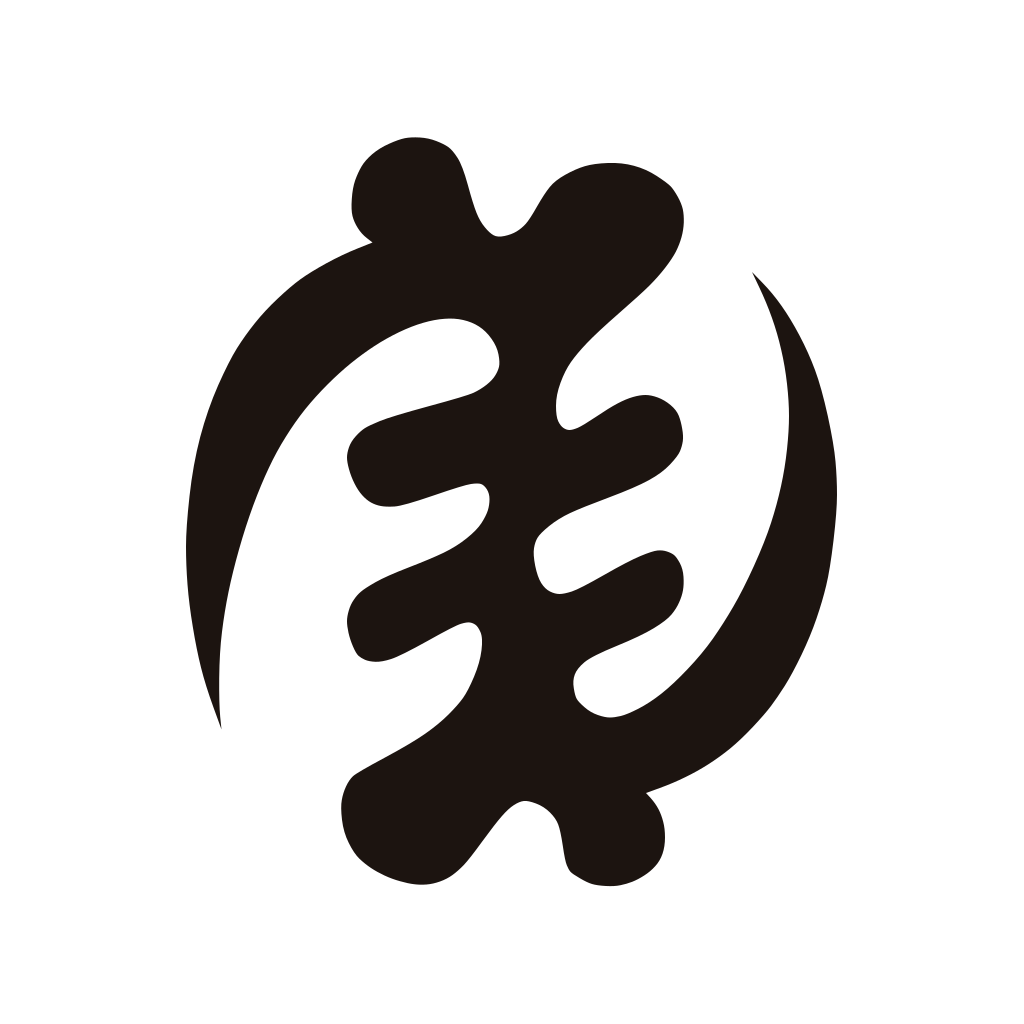
Gye Nyame: except God
Gye NyameGye Nyame, 'except God', speaks of the supremacy of God and is Ghana's most widely used adinkra design.
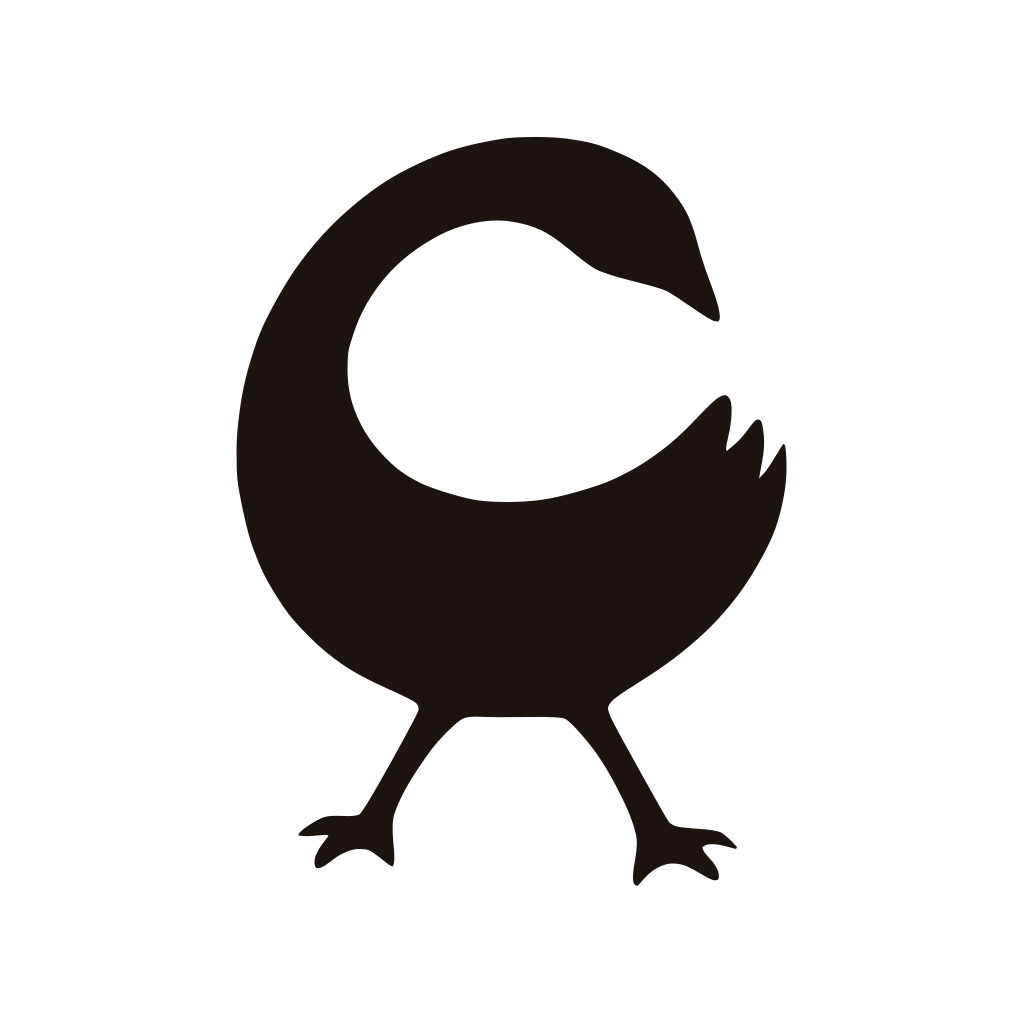
Sankofa (bird form): go back and fetch it
Sankofa; san ko faSankofa, 'go back and fetch it', shows a bird looking backward and teaches that the past is a resource for the present.
Note on the sources
Sankofa (heart form)
SankofaThe heart form of Sankofa carries the same name and proverb as the bird: go back and take what was left behind.

Adinkrahene: chief of the adinkra designs
Adinkrahene; Adinkira 'hene (Rattray)Adinkrahene, a set of concentric circles, is the chief of the adinkra designs and stands for greatness and leadership.
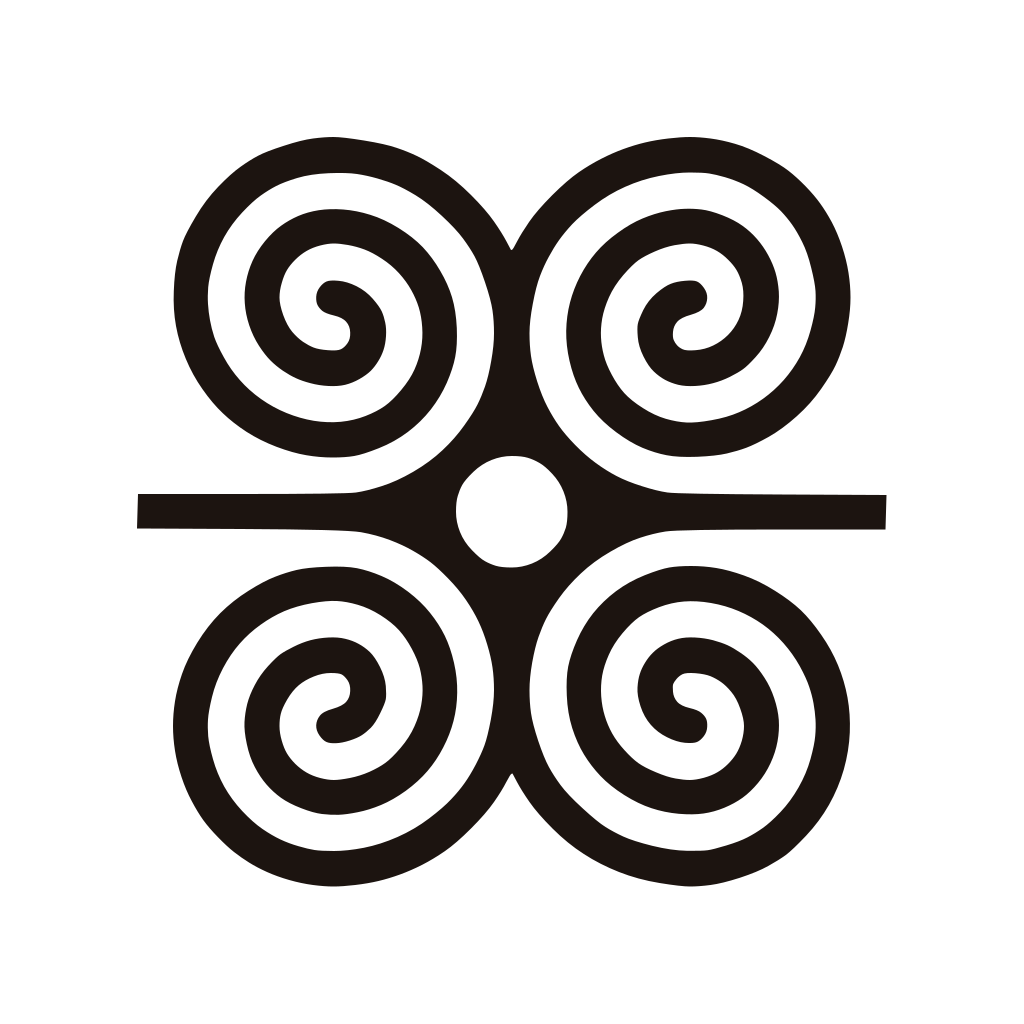
Dwennimmen: ram's horns
Dwennimmen; Dwenini aben (Rattray); Dwenini mmenDwennimmen, the ram's horns, teaches that even the strong should be humble.
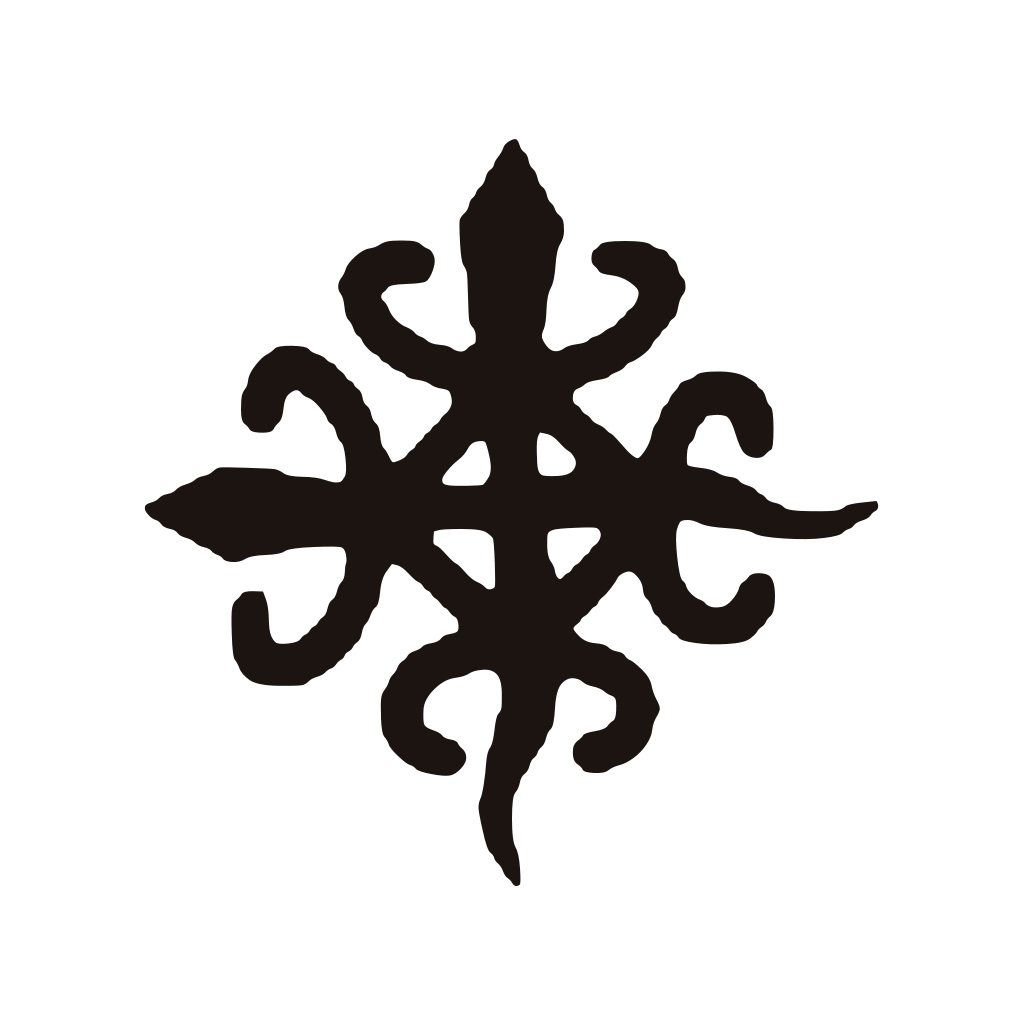
Funtunfunefu Denkyemfunefu: the crocodiles with one stomach
Funtunfunefu Denkyemfunefu; Funtumfunafu Denkyem Funafu; funtum frefu, denkyem frefu (Rattray)Funtunfunefu Denkyemfunefu, two crocodiles with one stomach, warns that quarrelling within a family harms everyone.
Note on the sources
Nyame Dua: God's tree
Nyame Dua; Onyame duaNyame Dua, God's tree, is the forked altar post that stands for God's presence and protection in the home.

Akoma: the heart
AkomaAkoma, the heart, stands for patience, tolerance and endurance.

Akoma Ntoso: joined hearts
Akoma Ntoso; Akoma NtoasoAkoma Ntoso, the joined hearts, stands for understanding, agreement and people of one mind.
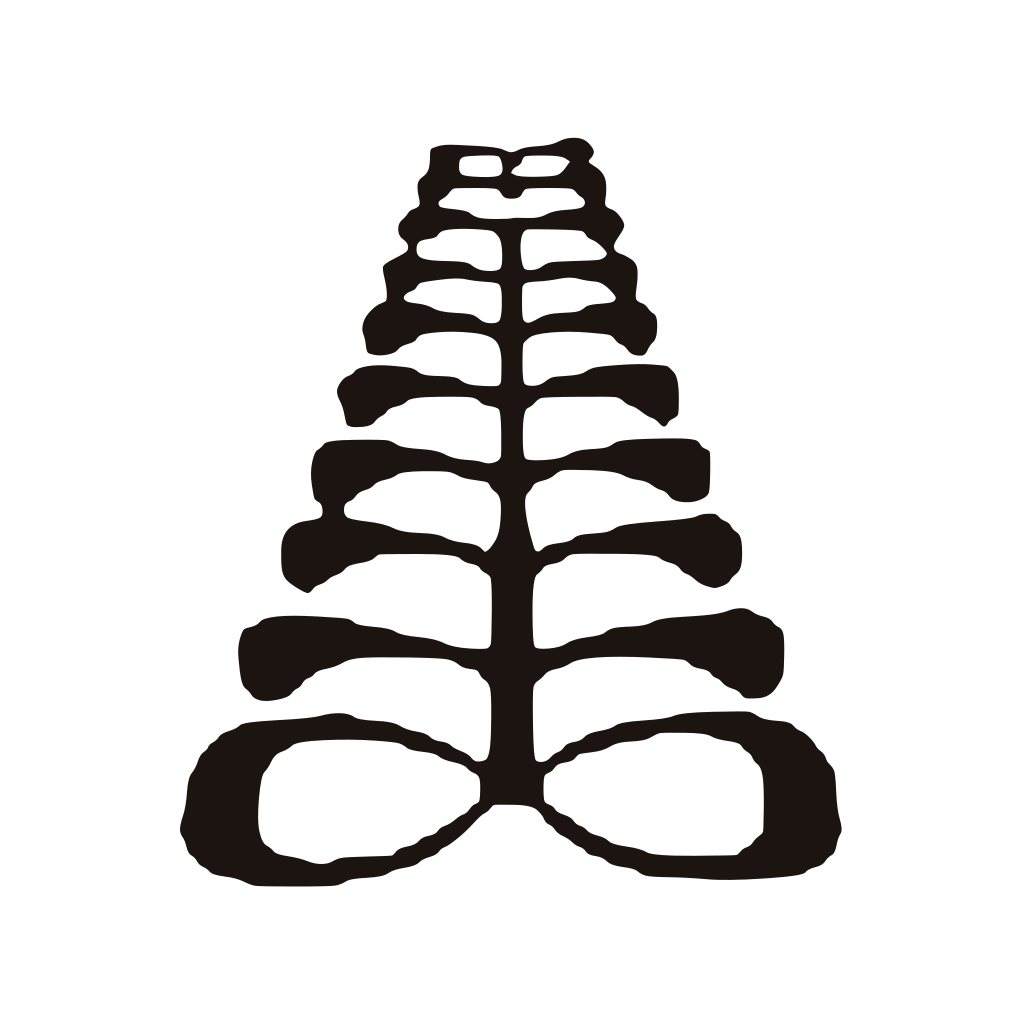
Aya: the fern
AyaAya, the fern, speaks of endurance and independence, since the fern grows in difficult places.
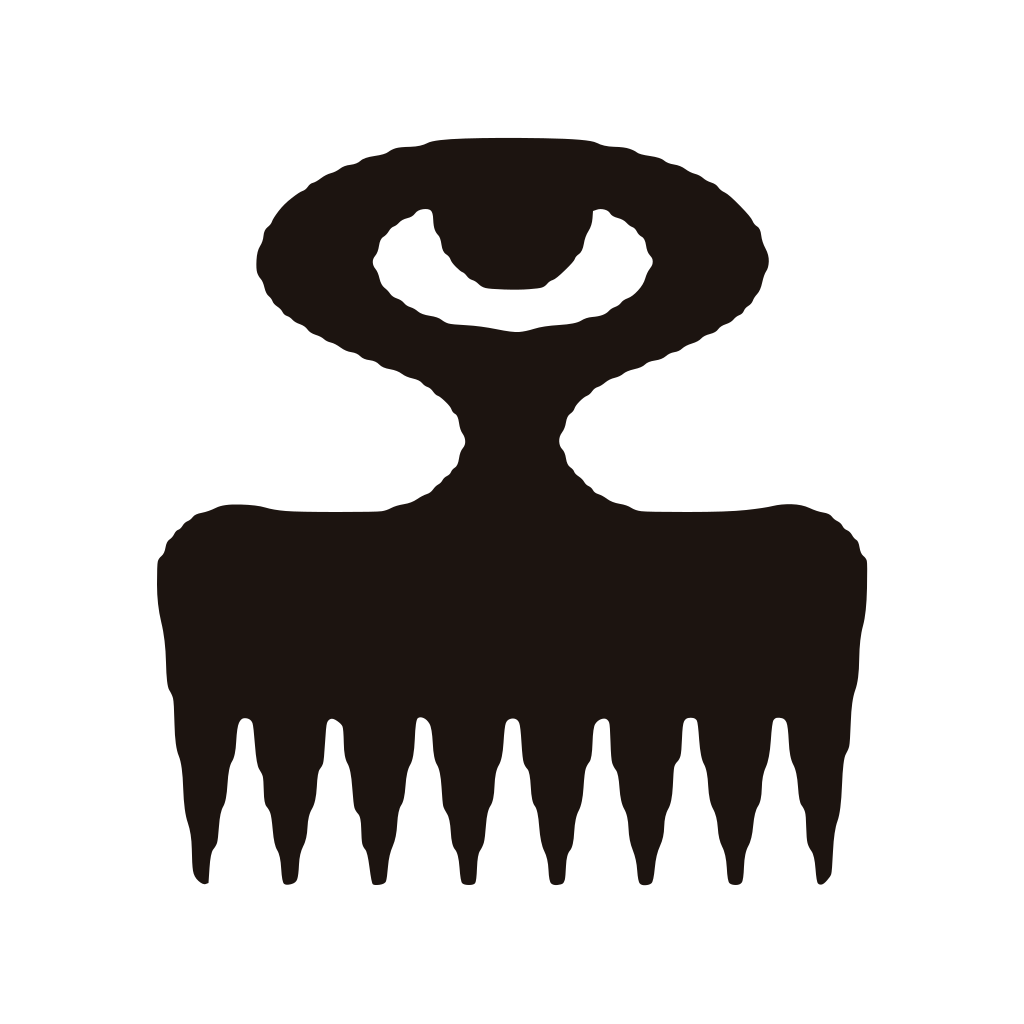
Duafe: the wooden comb
DuafeDuafe, the wooden comb, is read as feminine goodness and care, or as beauty and cleanliness.
Note on the sources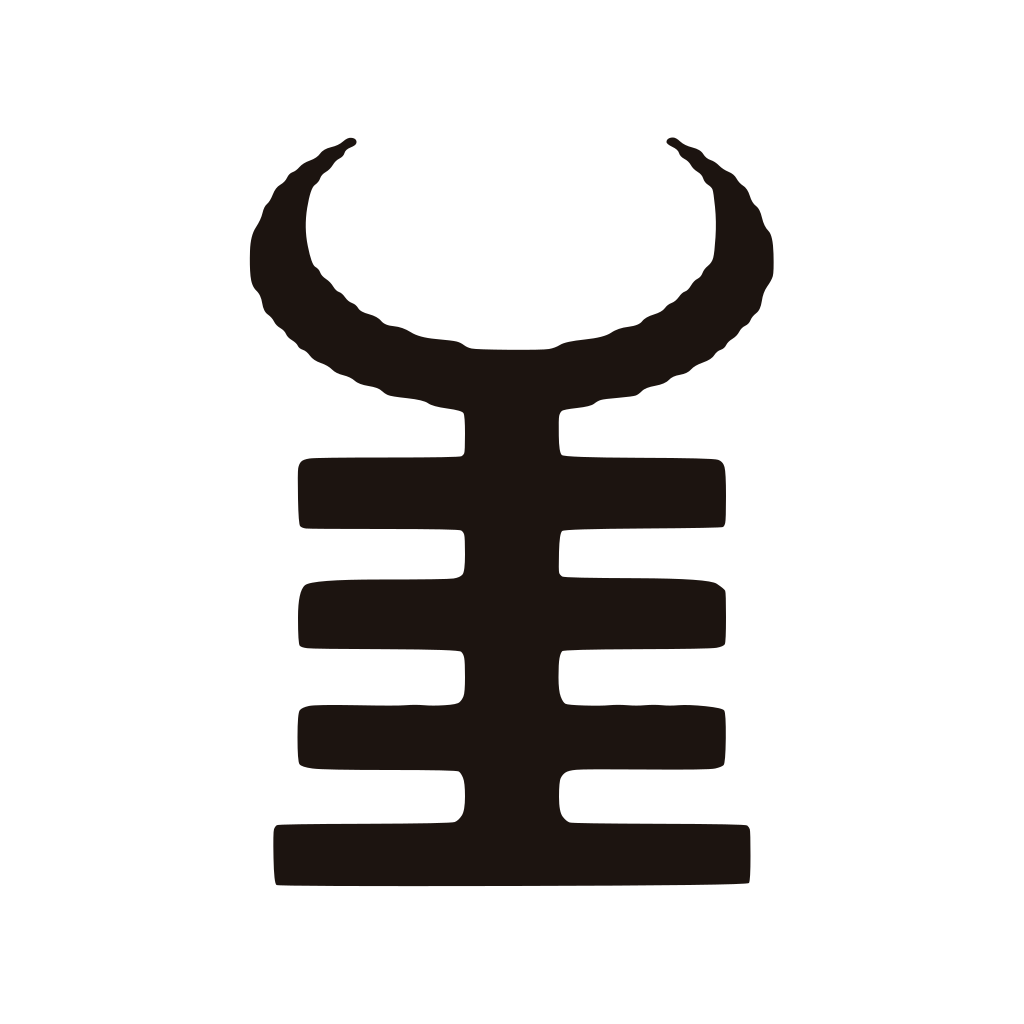
Akoben: the war horn
AkobenAkoben, the war horn, stands for vigilance and readiness to answer a call to action.
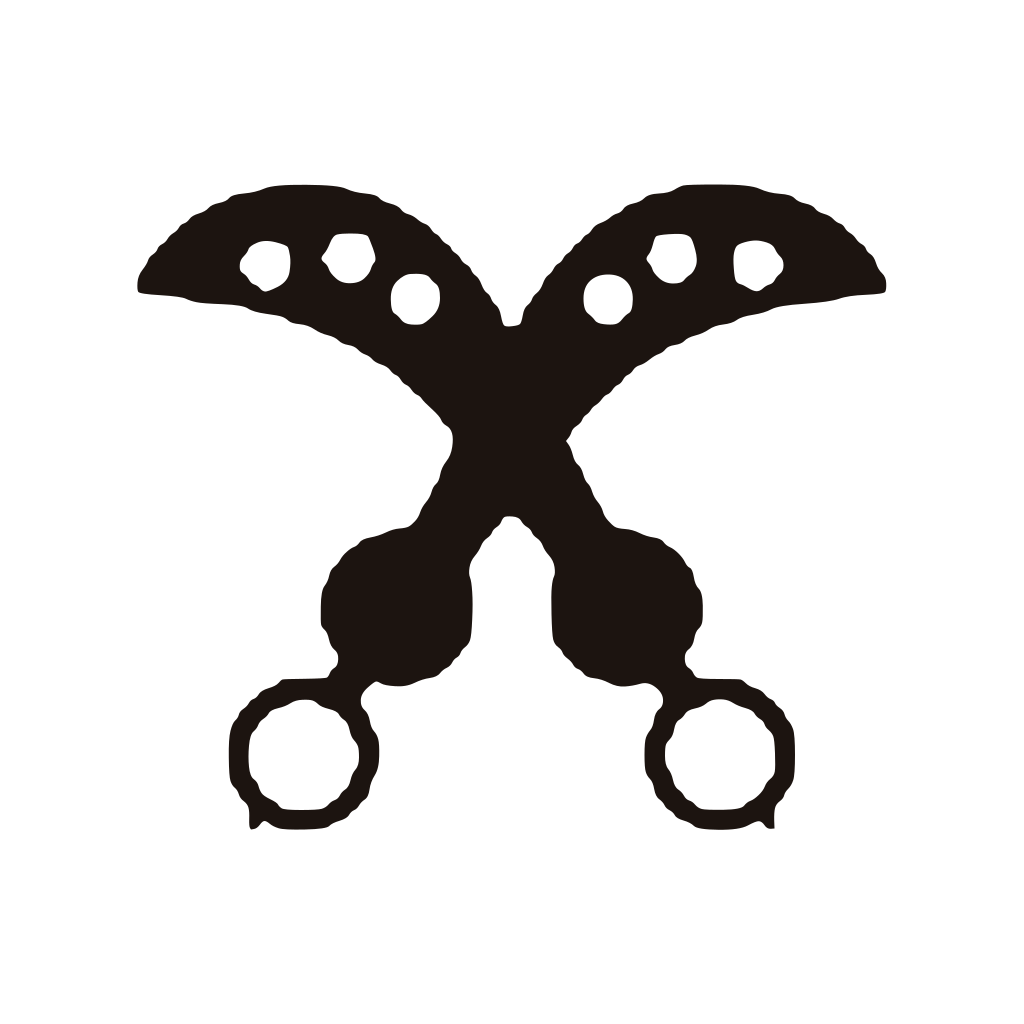
Akofena: the sword of war
AkofenaAkofena, the sword of war, shows crossed state swords and stands for courage and the authority of a ruler.

Ananse Ntontan: the spider's web
Ananse Ntontan; Ananse NtentanAnanse Ntontan, the spider's web, stands for wisdom, creativity and the complexity of life.

Bese Saka: a sack of cola nuts
Bese SakaBese Saka, a sack of cola nuts, speaks of affluence and abundance from the cola trade.
Note on the sources
Bi Nka Bi: no one should bite another
Bi Nka Bi; Obi nka obi; Obi nka obie (Rattray)Bi Nka Bi, no one should bite another, warns against provocation and stands for peace and fair play.
Note on the sources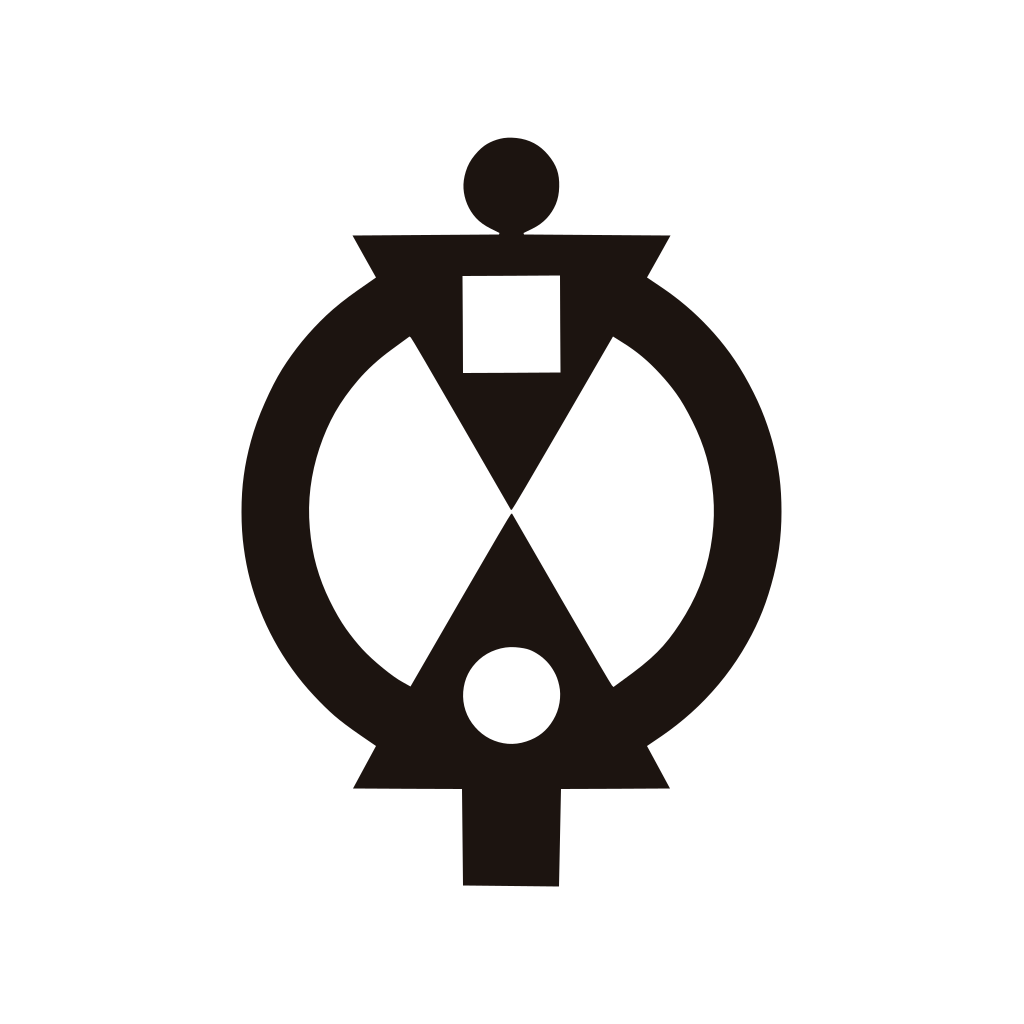
Boa Me Na Me Mmoa Wo: help me and let me help you
Boa Me Na Me Mmoa WoBoa Me Na Me Mmoa Wo, help me and let me help you, stands for cooperation and interdependence.

Dame-Dame: the draughts board
Dame-Dame; DamedameDame-Dame, the draughts board, stands for intelligence, ingenuity and strategy.
Denkyem: the crocodile
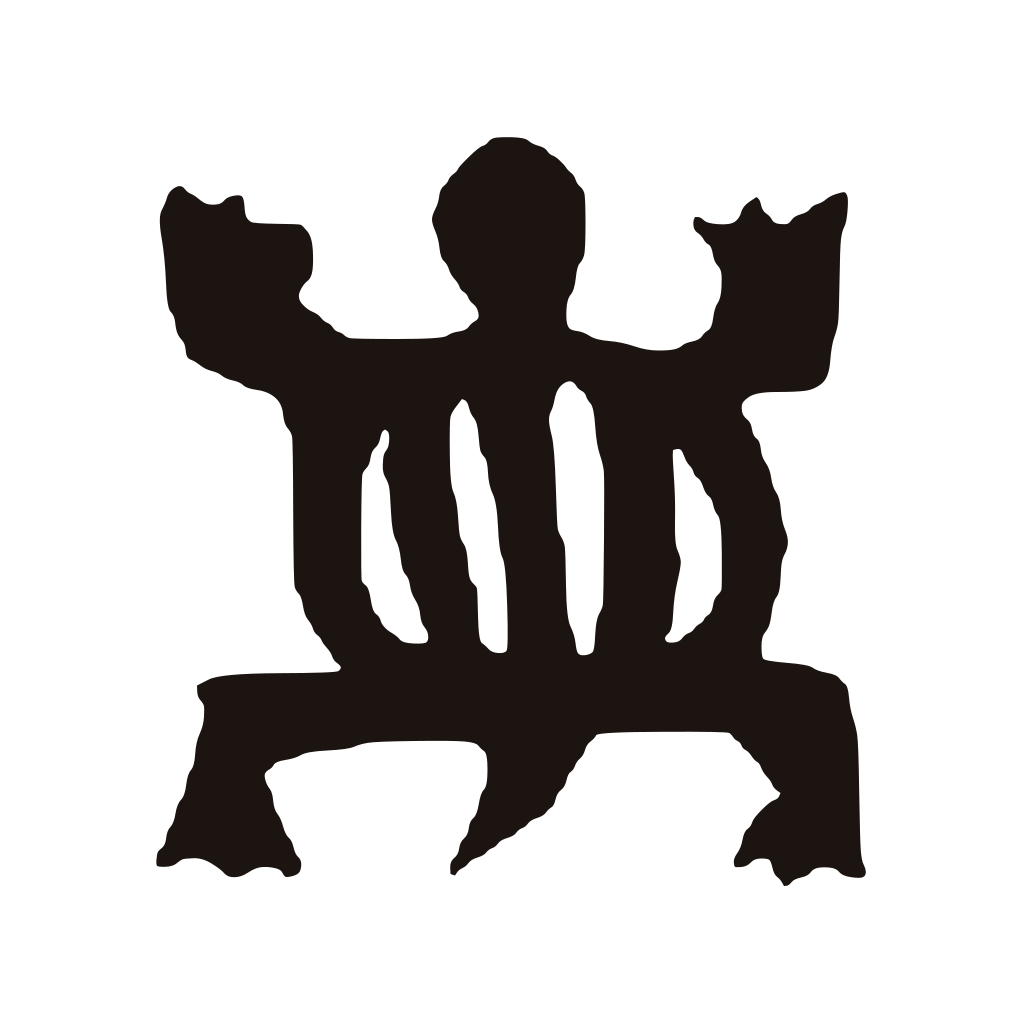
DenkyemDenkyem, the crocodile, stands for adaptability, and at court for a king who defends Asanteman fearlessly.

Eban: the fence
EbanEban, the fence, stands for love, safety and security, as a fenced house is thought the ideal home.

Epa: handcuffs
EpaEpa, handcuffs, reminds wrongdoers that the law is uncompromising and also speaks of captivity.
Note on the sources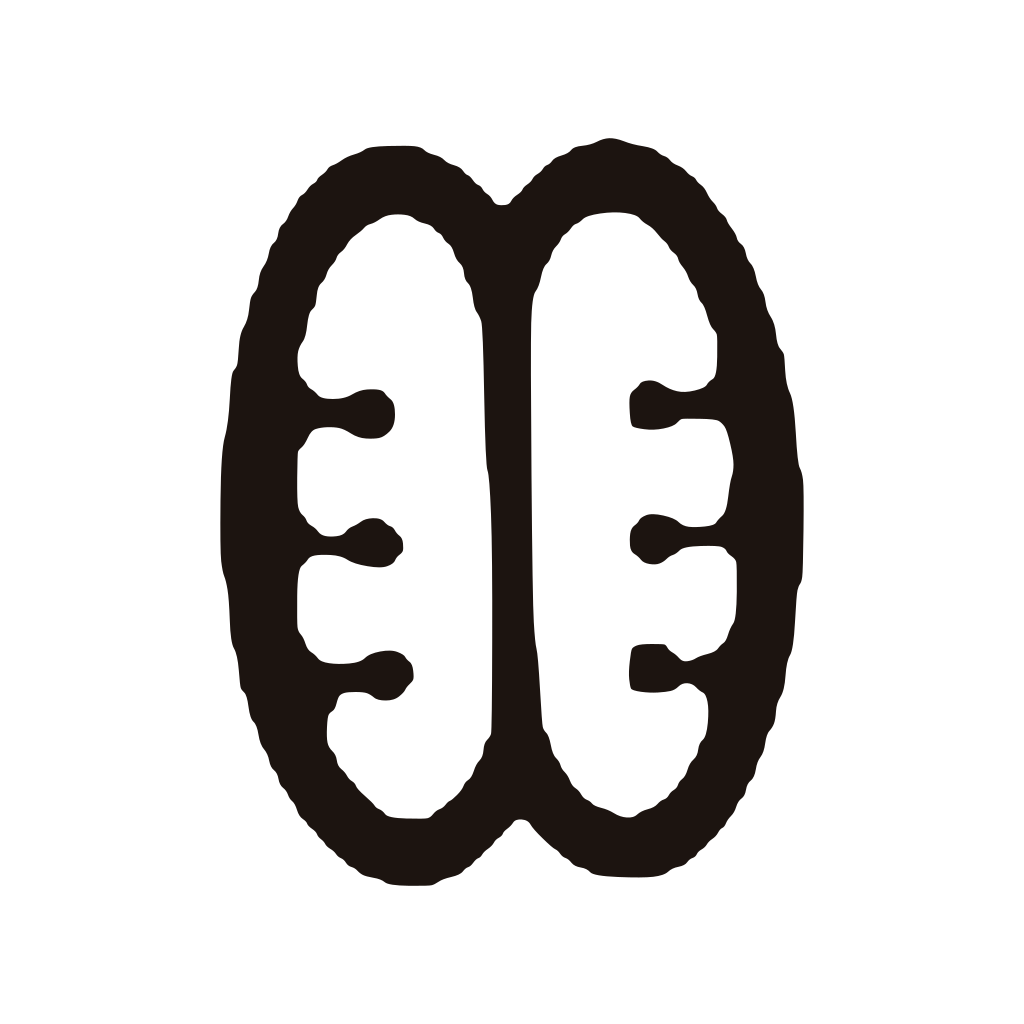
Ese Ne Tekrema: the teeth and the tongue
Ese Ne TekremaEse Ne Tekrema, the teeth and the tongue, shows friends who hurt each other at times yet must work together.
Fawohodie: independence
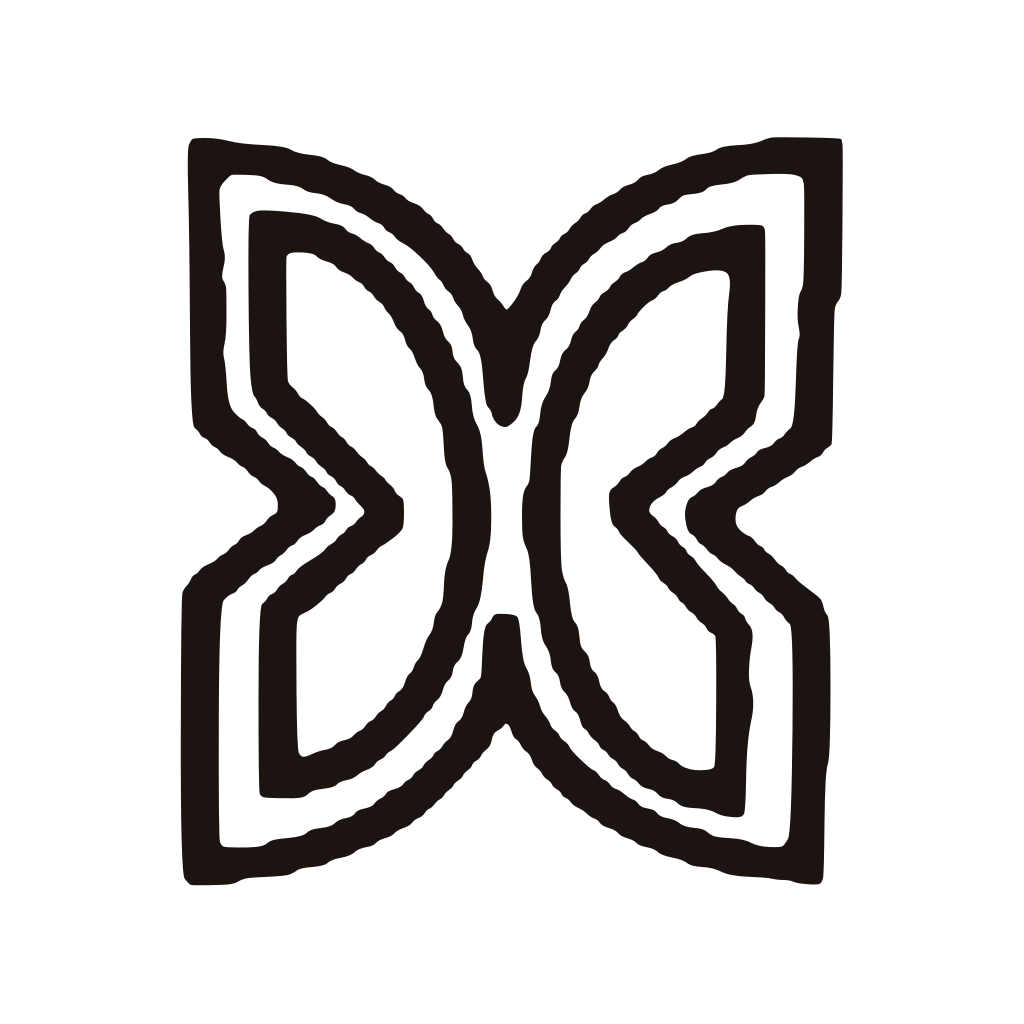
Fawohodie; FawodhodieFawohodie means independence and reminds that freedom brings responsibilities.

Fihankra: the compound house
FihankraFihankra, the compound house, stands for security, safety and brotherhood.

Fofo: the yellow-flowered plant
Fofo; Fofoo; Se die fofoo pe, ne se gyinantwi abo bedie (Rattray)Fofo, the yellow-flowered plant, warns against jealousy and envy.
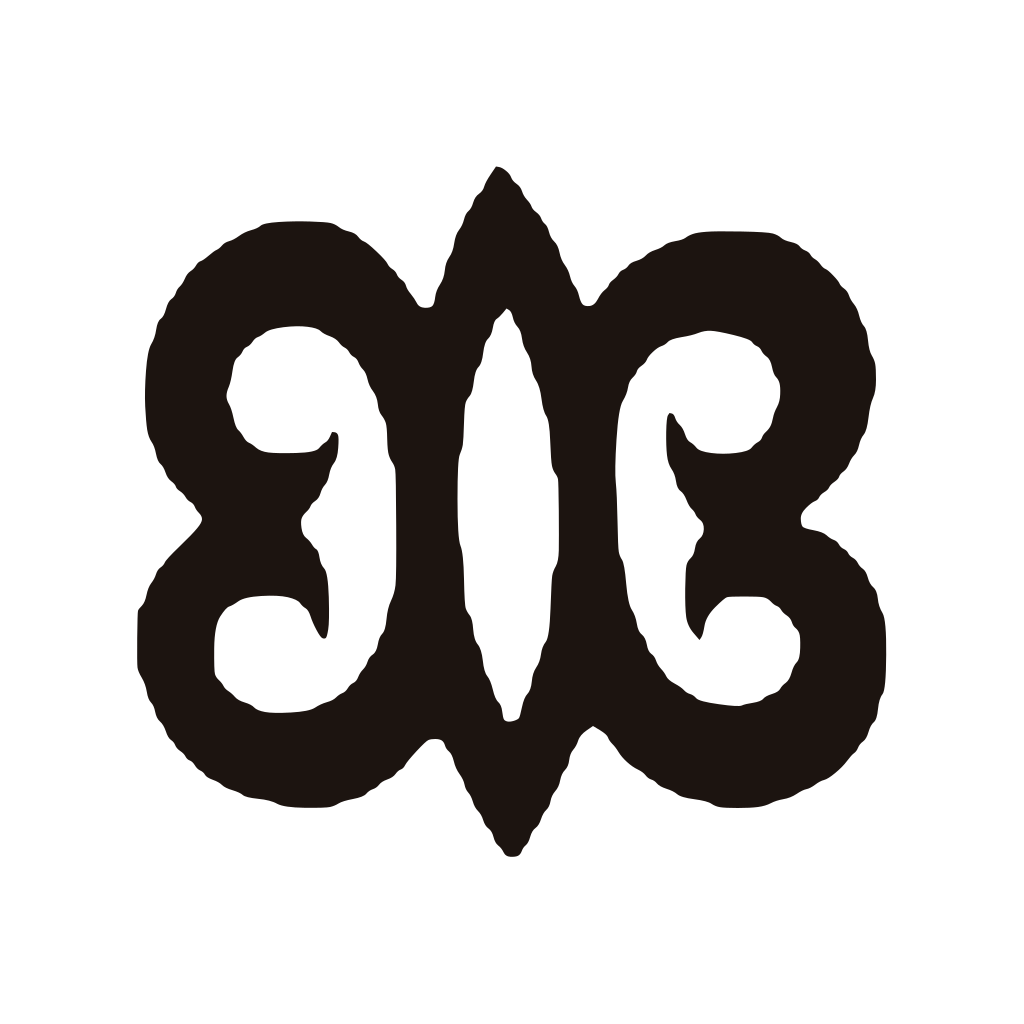
Hwemudua: the measuring rod
Hwemudua; Hwehwemudua; Hwe Mu DuaHwemudua, the measuring rod, stands for careful examination and the striving for excellence.
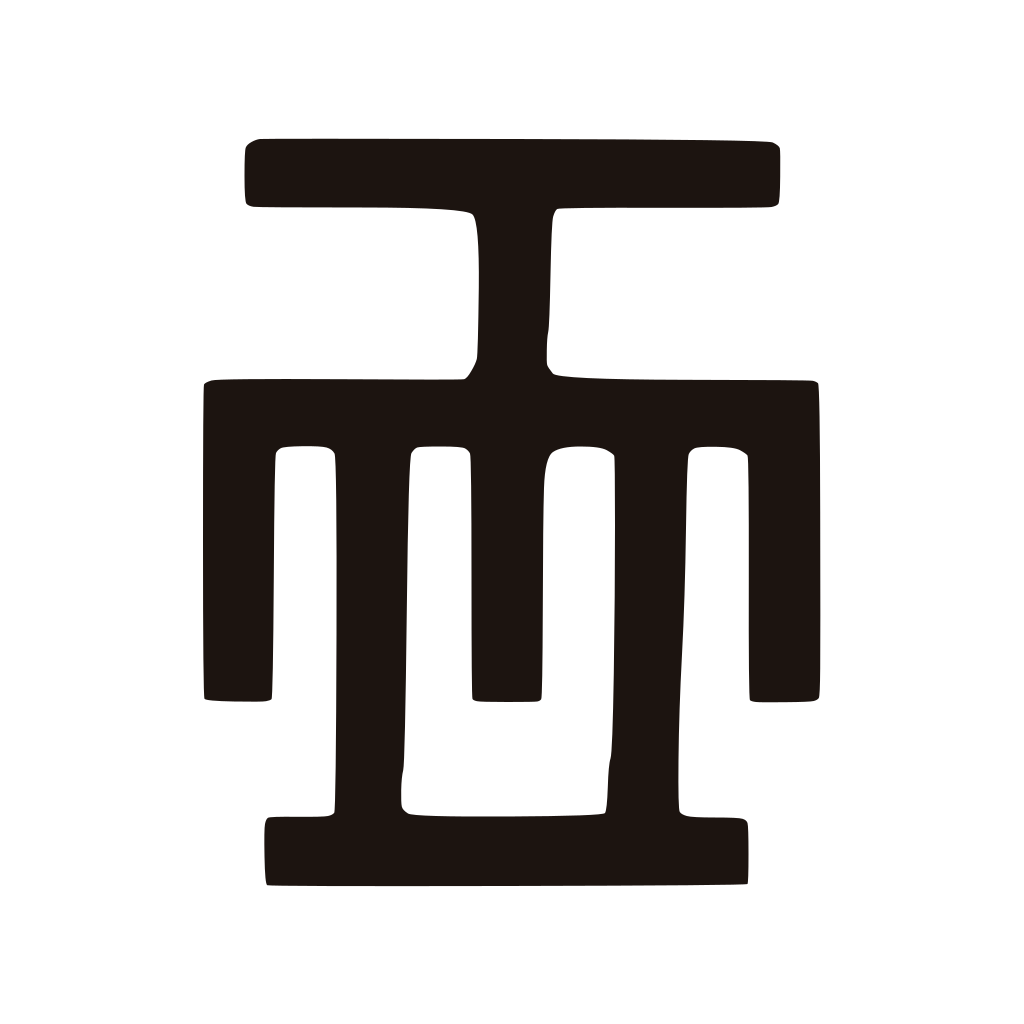
Hye Wonhye: that which does not burn
Hye Wonhye; Hye Wo Nhye; Hye AnhyeHye Wonhye, that which does not burn, stands for imperishability and endurance.
Note on the sources
Kete Pa: the good bed
Kete PaKete Pa, the good bed, stands for a good marriage and good care.

Kintinkantan: puffed-up extravagance
Kintinkantan; Kuntinkantan; NkuntinkantanKintinkantan, puffed-up extravagance, warns against boasting and arrogance.
Kwatakye Atiko: the back of Kwatakye's head
Kwatakye AtikoKwatakye Atiko, the back of Kwatakye's head, is named after a war captain's haircut and stands for bravery.
Note on the sources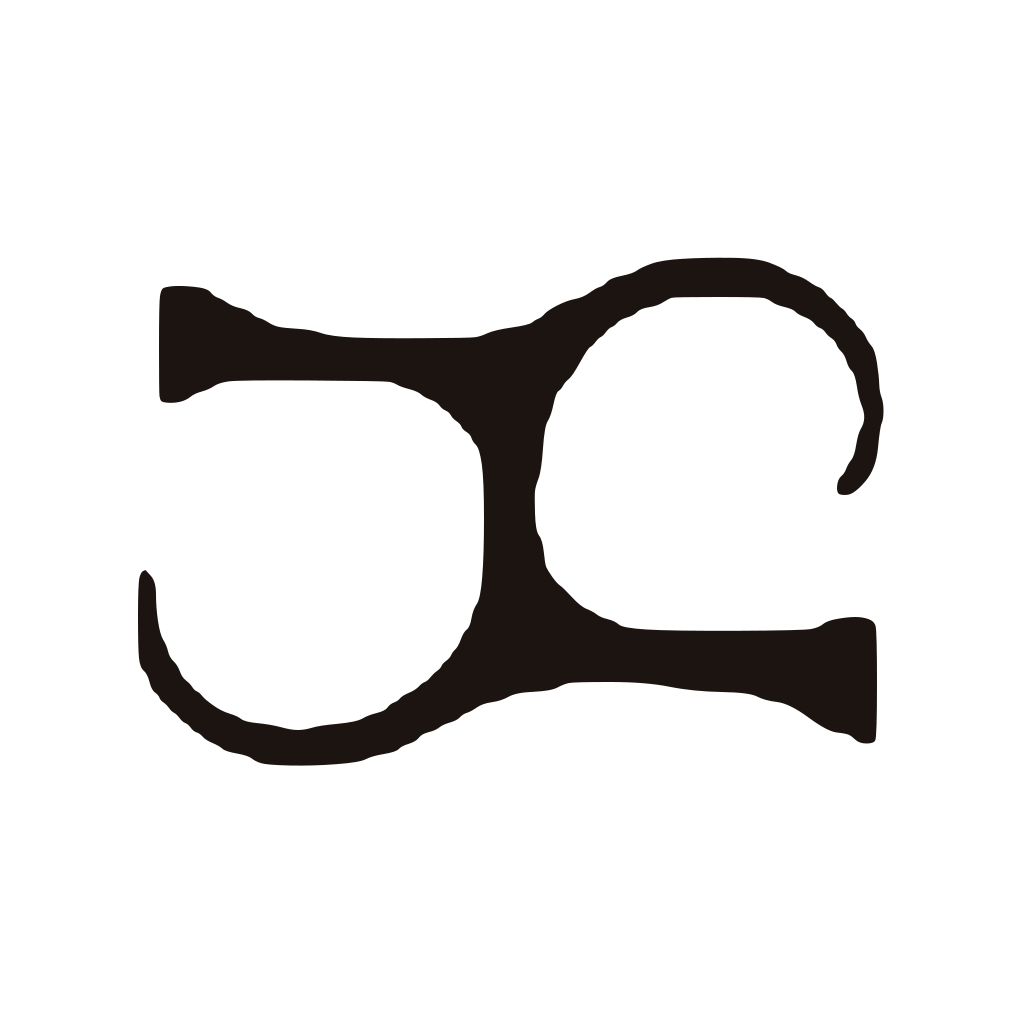
Gyawu Atiko: the back of Gyawu's head
Gyawu AtikoGyawu Atiko, the back of Gyawu's head, is named after a Bantama sub-chief's Odwira haircut and read as valour.

Mate Masie: I have heard and kept it
Mate Masie; Ntesie; Ma te; Masie (Rattray)Mate Masie, 'I have heard and kept it', praises discretion and, in modern readings, wisdom and prudence.
Note on the sources
Me Ware Wo: I shall marry you
Me Ware WoMe Ware Wo, 'I shall marry you', stands for commitment and perseverance.
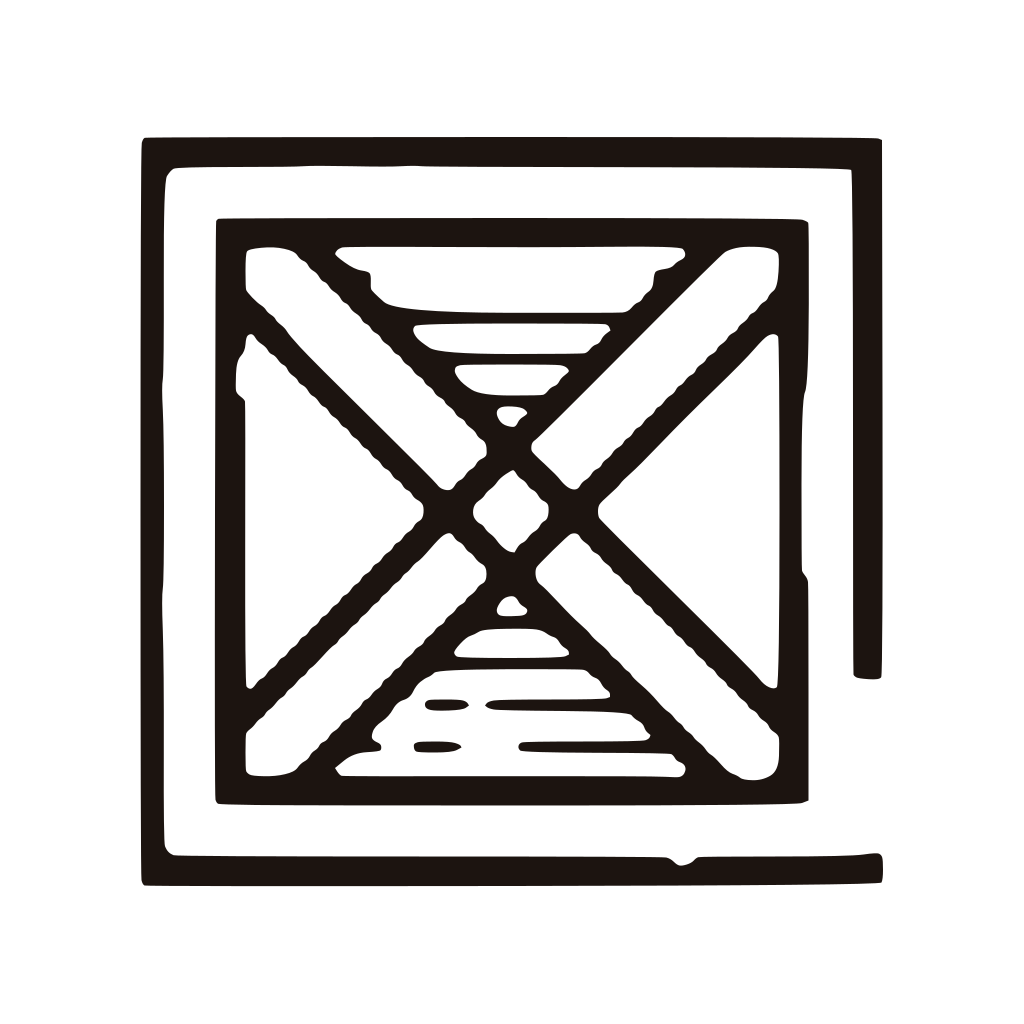
Mframadan: the wind-resistant house
MframadanMframadan, the wind-resistant house, stands for fortitude and readiness for life's changes.
Note on the sources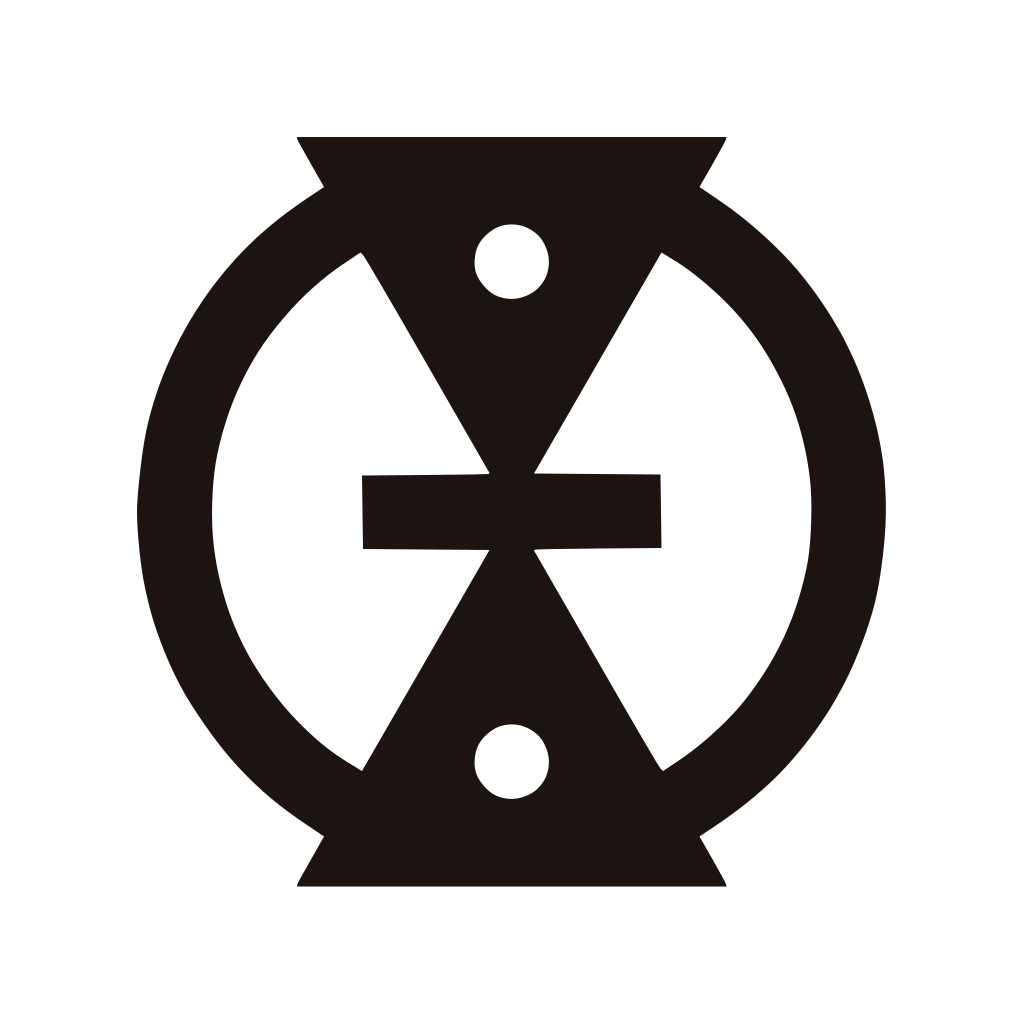
Mmere Dane: time changes
Mmere DaneMmere Dane, time changes, reminds the fortunate that good times are temporary.

Mmusuyidee (Krapa): that which removes evil
Mmusuyidee; Musuyidie; Krapa; KerapaMmusuyidee, that which removes evil, was stamped on a cloth the king stepped on each morning for good fortune.
Mpatapo: the knot of reconciliation
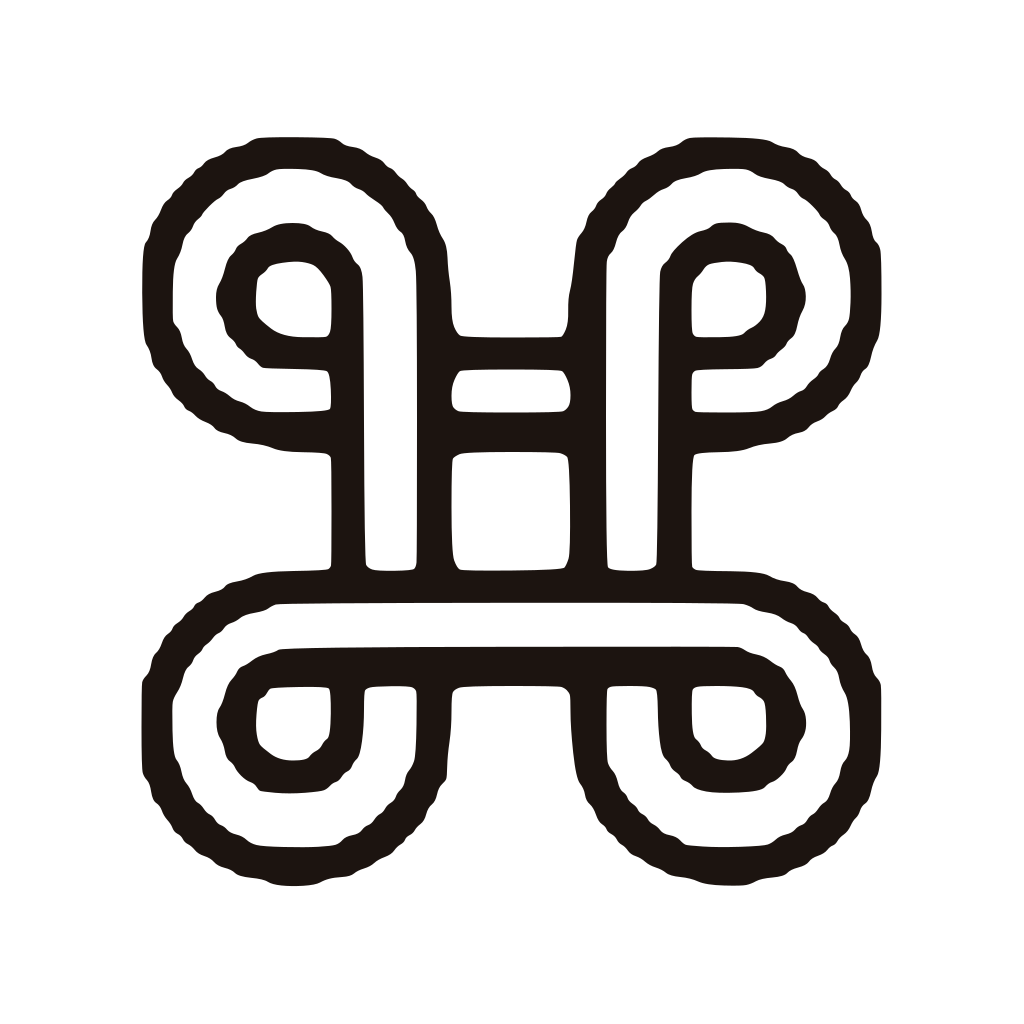
MpatapoMpatapo, the knot of reconciliation, stands for peacemaking and forgiveness after strife.
Mpuannum: five tufts of hair
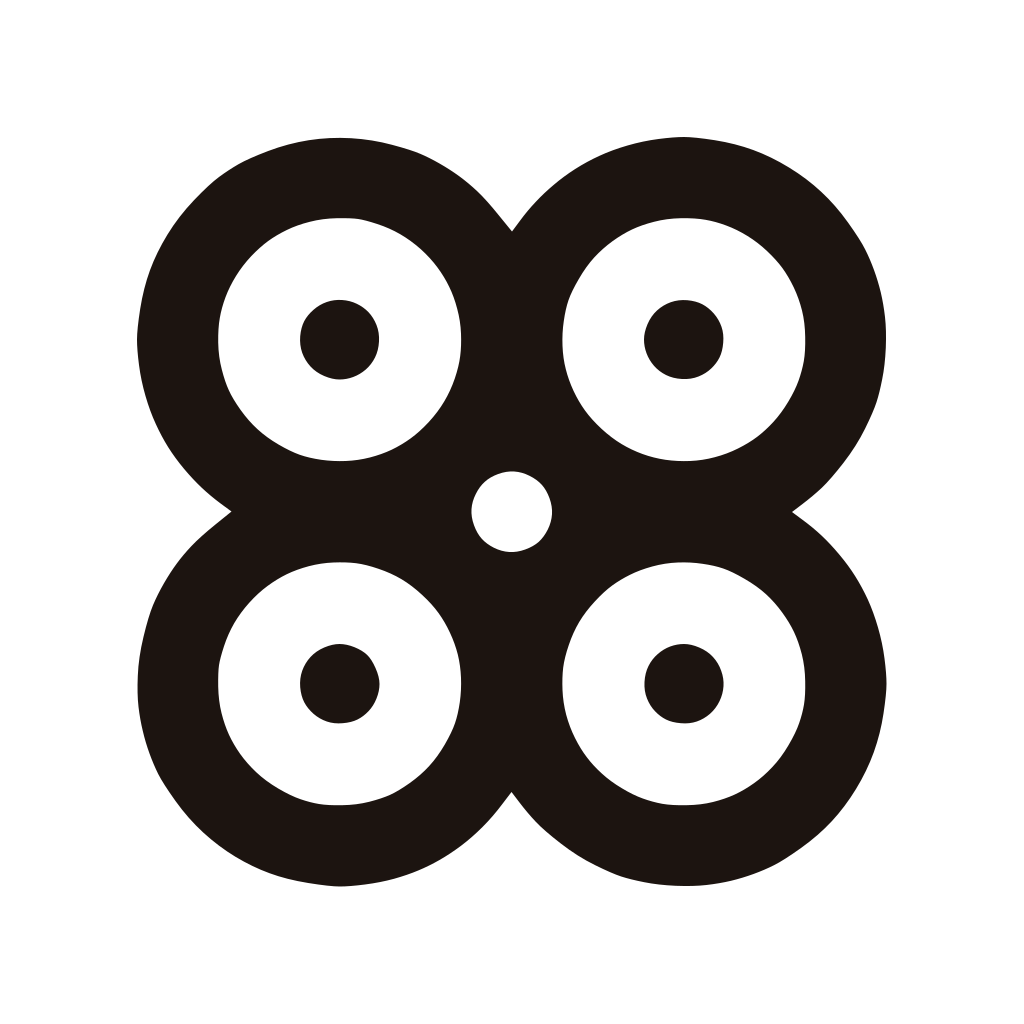
Mpuannum; MpuanumMpuannum, five tufts of hair, is a priestess's hairstyle standing for loyalty and priestly office.
Nea Onnim No Sua A, Ohu: he who does not know can learn
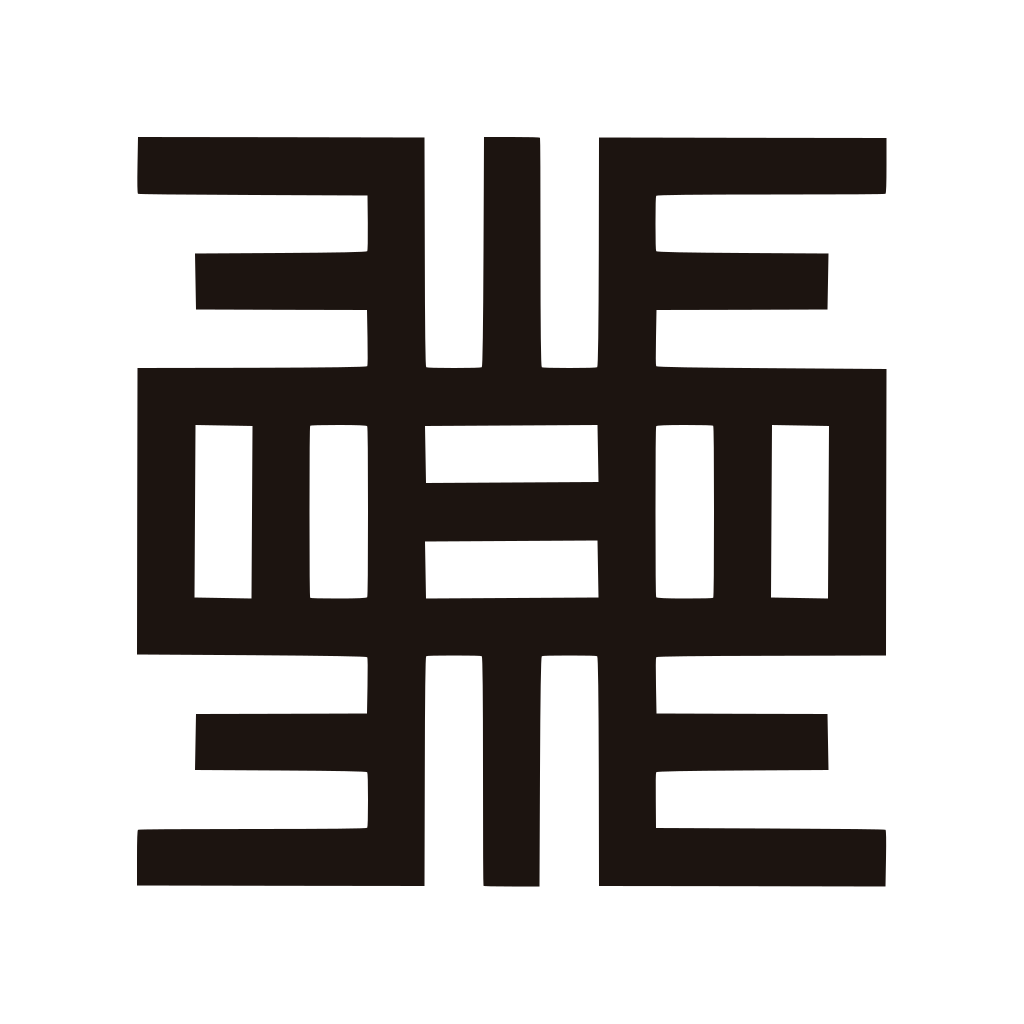
Nea Onnim No Sua A, Ohu; Nea OnnimNea Onnim No Sua A, Ohu, says he who does not know can learn, and stands for lifelong education.

Nea Ope Se Obedi Hene: he who wants to be king
Nea Ope Se Obedi HeneNea Ope Se Obedi Hene says that whoever wants to be king must first learn to serve.
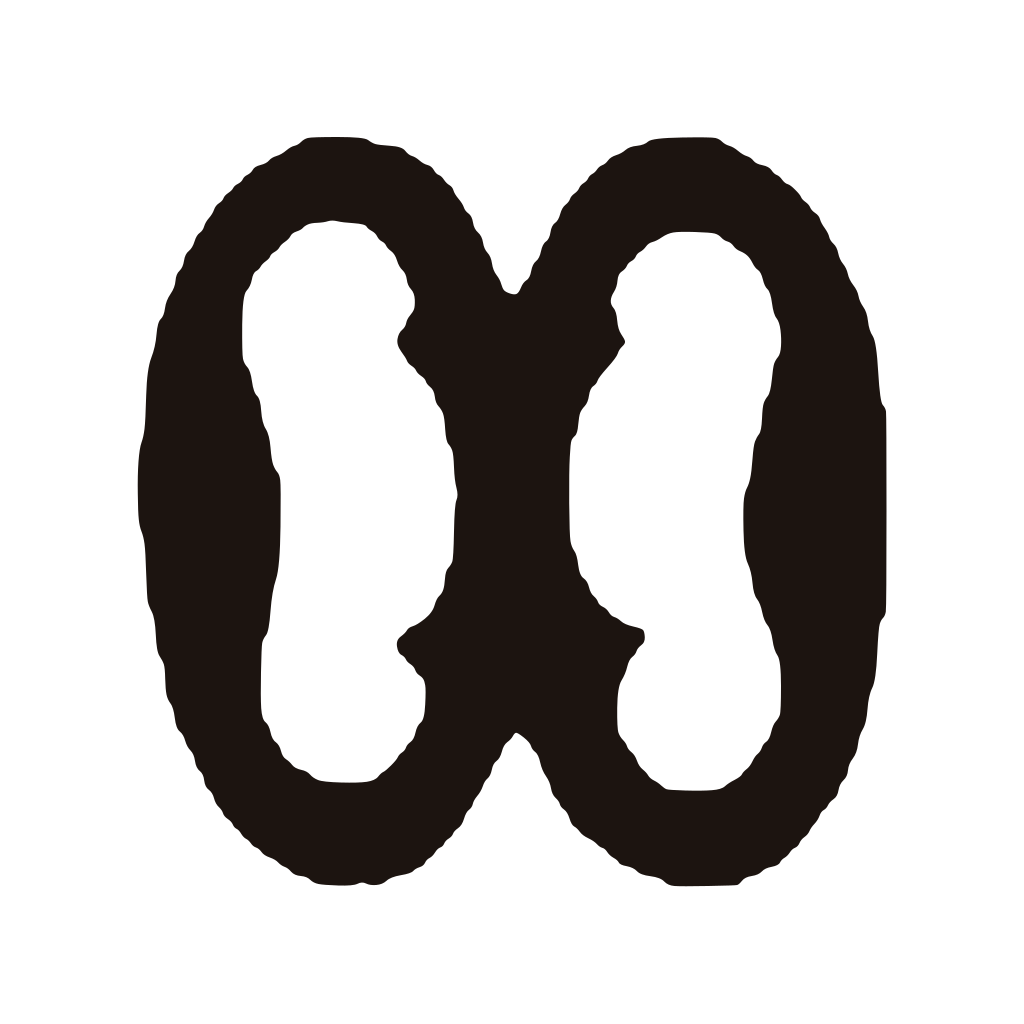
Nkonsonkonson: links of a chain
NkonsonkonsonNkonsonkonson, links of a chain, stands for unity and reminds people to contribute to the community.
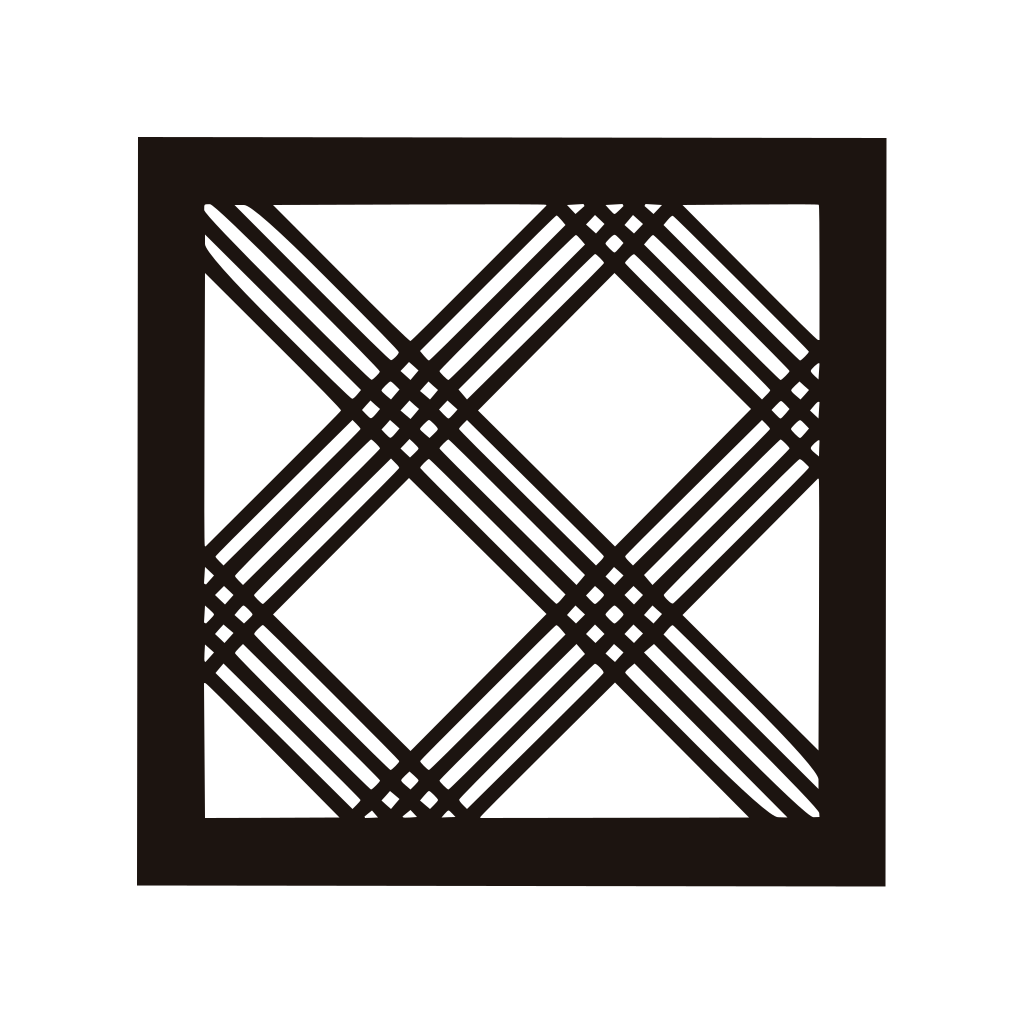
Nkyimu: the ruled lines on the cloth
Nkyimu; NkyemuNkyimu, the ruled lines on the cloth, stands for skill and precision in dividing cloth before stamping.

Nkyinkyim: twisting
Nkyinkyim; Nkyimkyim (Rattray)Nkyinkyim, twisting, shows a zigzag band standing for life's winding course and the toughness needed on it.

Nsaa: the northern blanket cloth
NsaaNsaa, the northern blanket cloth, stands for excellence and genuineness.

Nsoromma: child of the heavens
Nsoromma; NsoromaNsoromma, child of the heavens, is a star that stands for guardianship and faith in God.
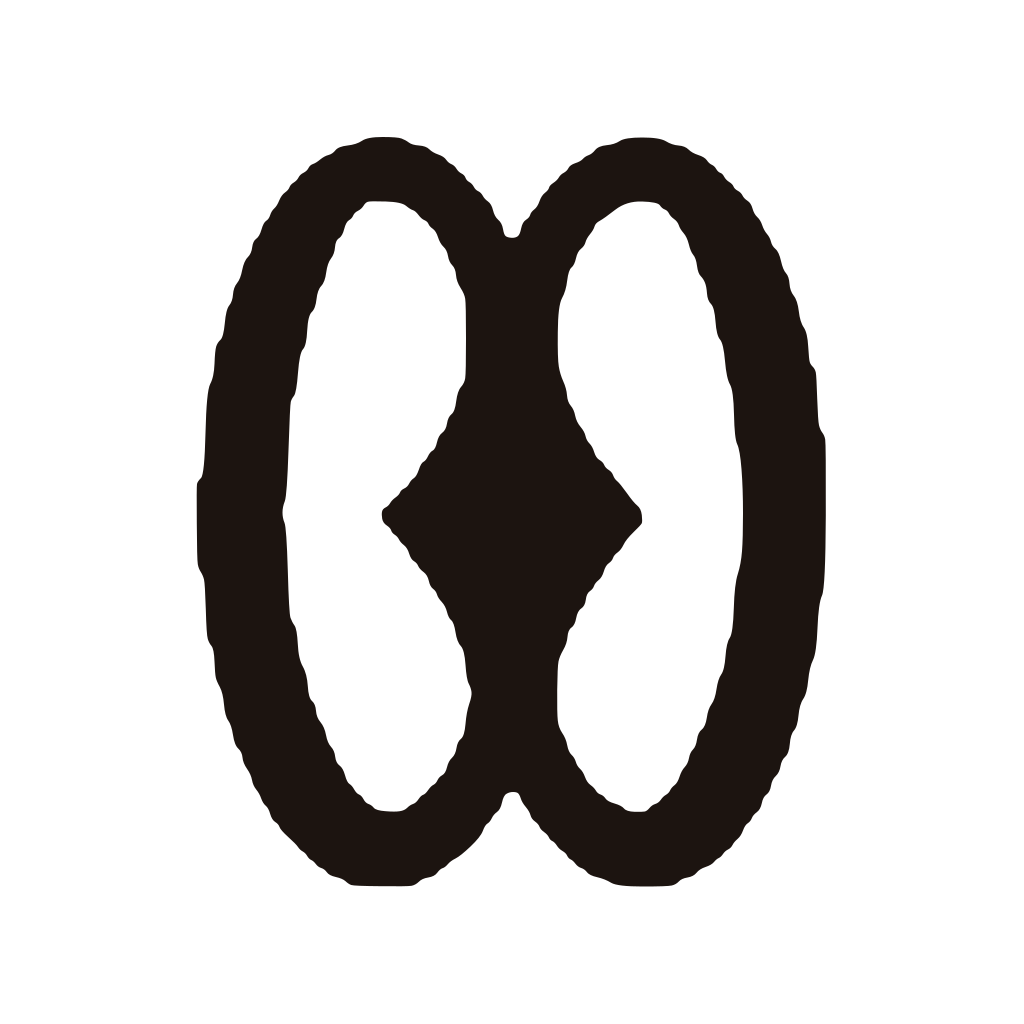
Nyame Biribi Wo Soro: God, there is something in the heavens
Nyame Biribi Wo Soro; Nyame, biribi wo soro, ma no me ka me nsa (Rattray)Nyame Biribi Wo Soro is a symbol of hope, a prayer that what is in the heavens may reach one's hand.
Note on the sources
Nyame Nnwu Na Mawu: God does not die, so I shall not die
Nyame Nnwu Na Mawu; Nyame nwu na ma wuNyame Nnwu Na Mawu says God does not die, so I shall not die, and stands for the immortal soul.
Note on the sources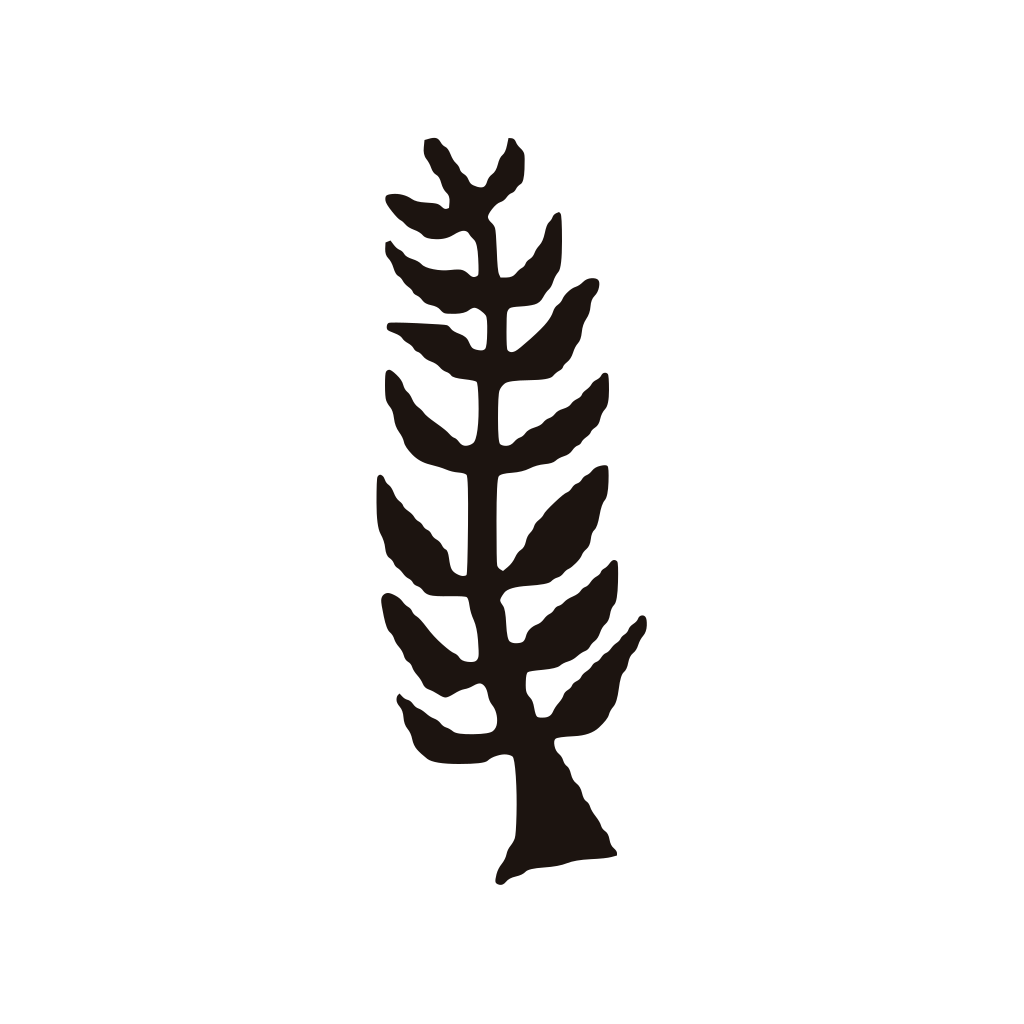
Nyame Nti: by God's grace
Nyame NtiNyame Nti, by God's grace, shows a stalk and stands for faith and trust in God.
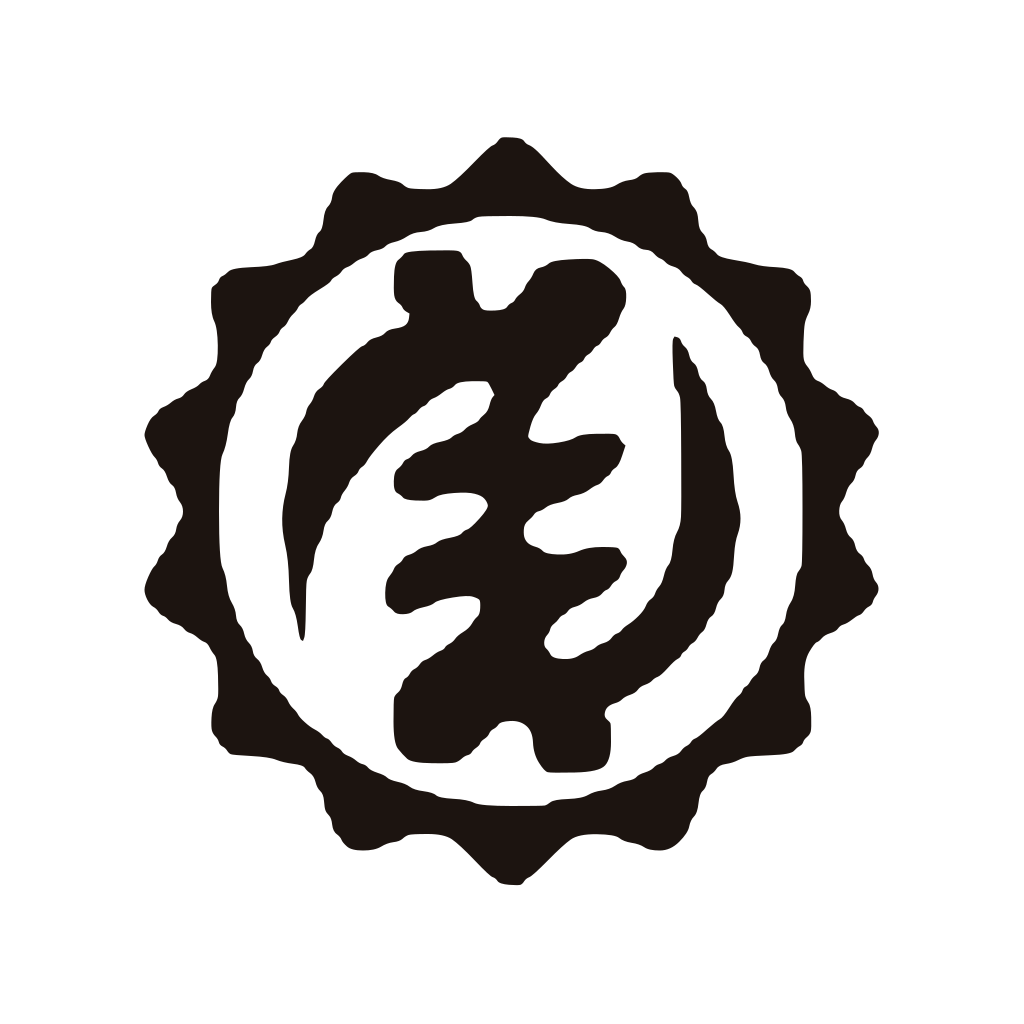
Nyame Ye Ohene: God is king
Nyame Ye OheneNyame Ye Ohene, God is king, stands for the majesty and supremacy of God.
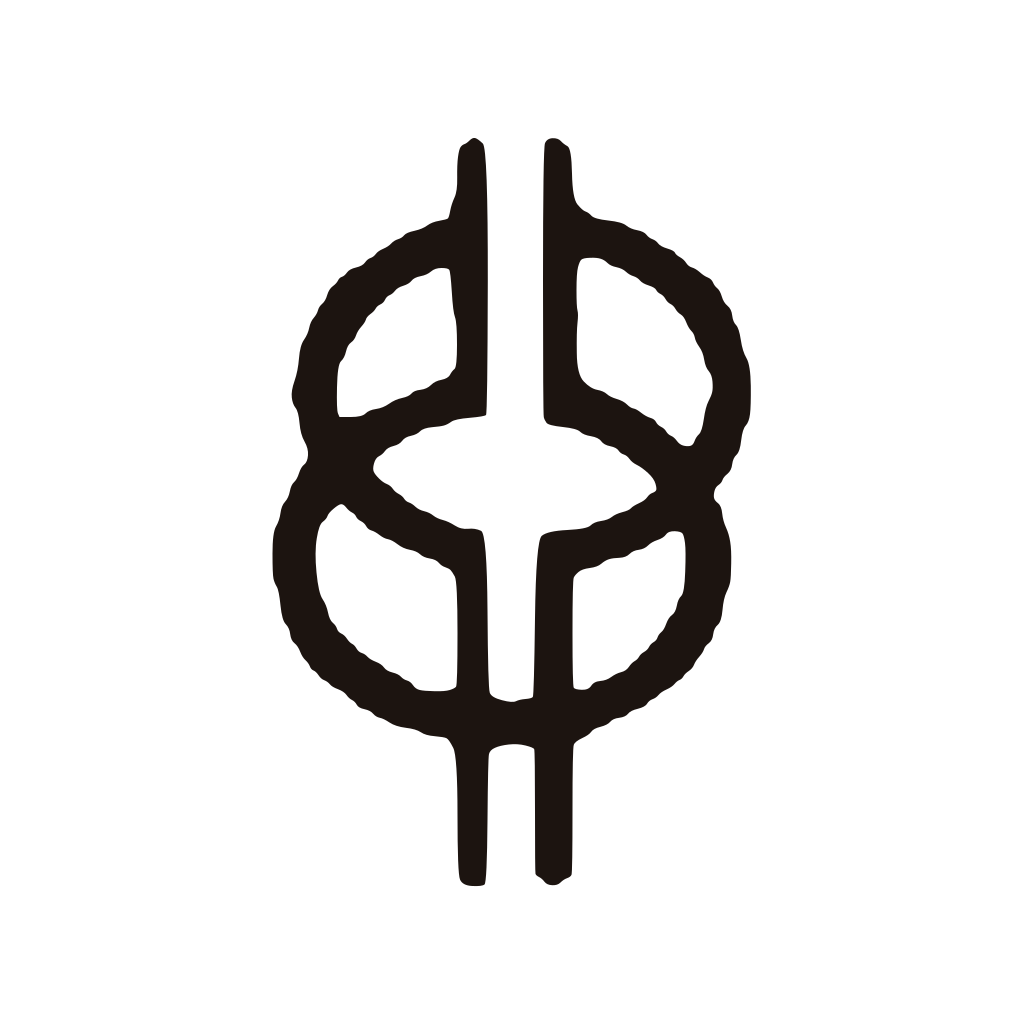
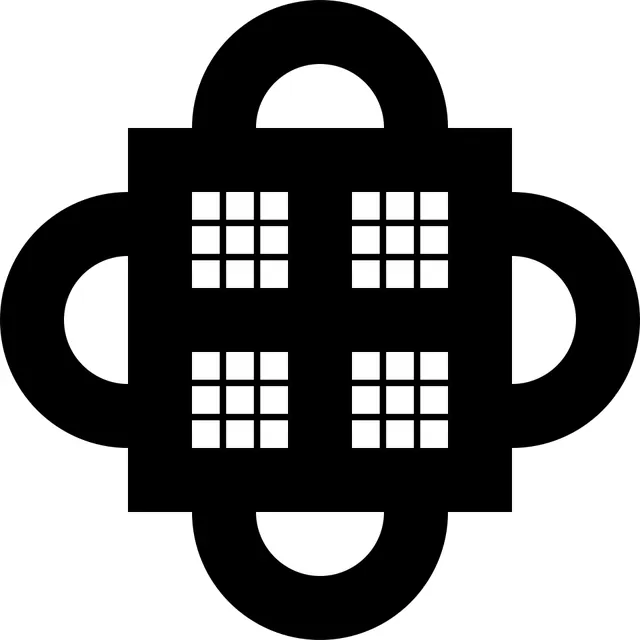
Nyansapo: the wisdom knot
NyansapoNyansapo, the wisdom knot, stands for wisdom and patience, since only the wise can untie it.
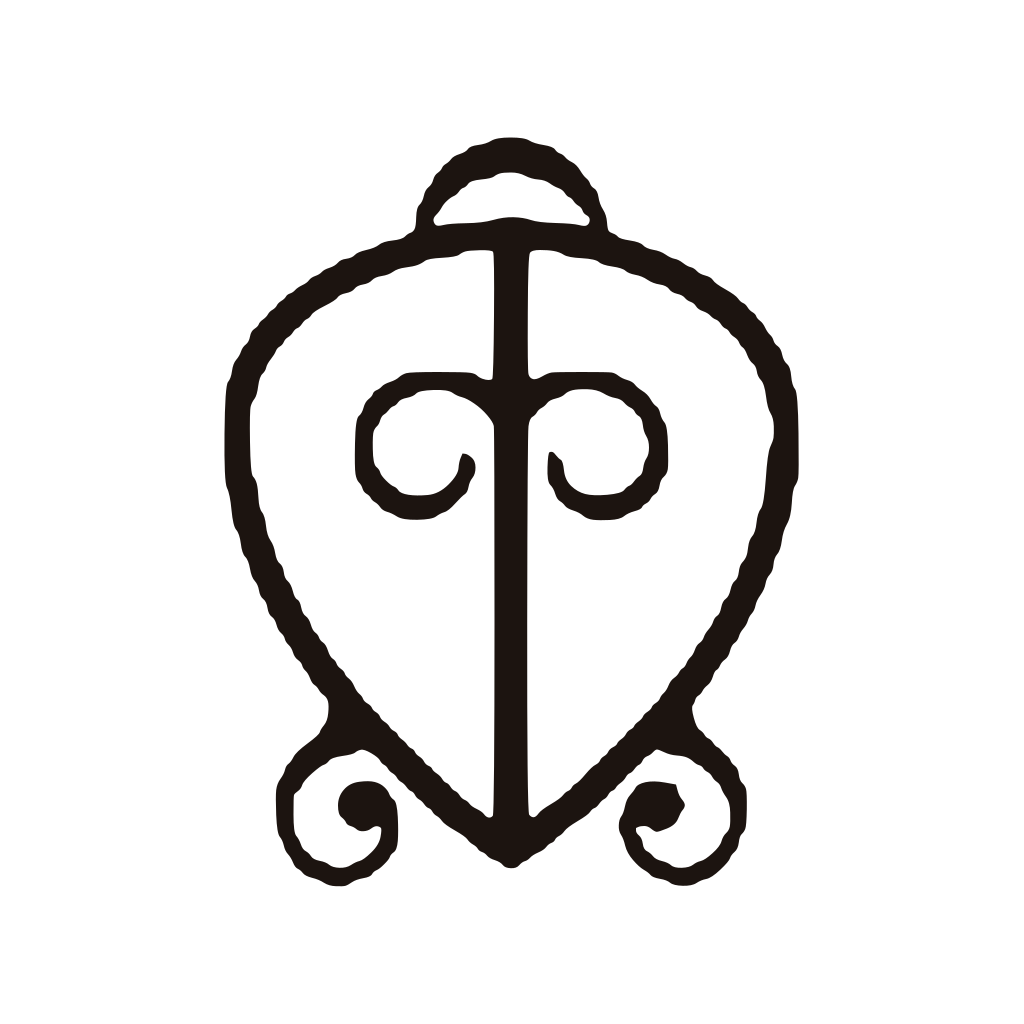
Odo Nnyew Fie Kwan: love does not lose its way home
Odo Nnyew Fie Kwan; Odo Nyera Fie KwanOdo Nnyew Fie Kwan says love does not lose its way home, and stands for the power of love.
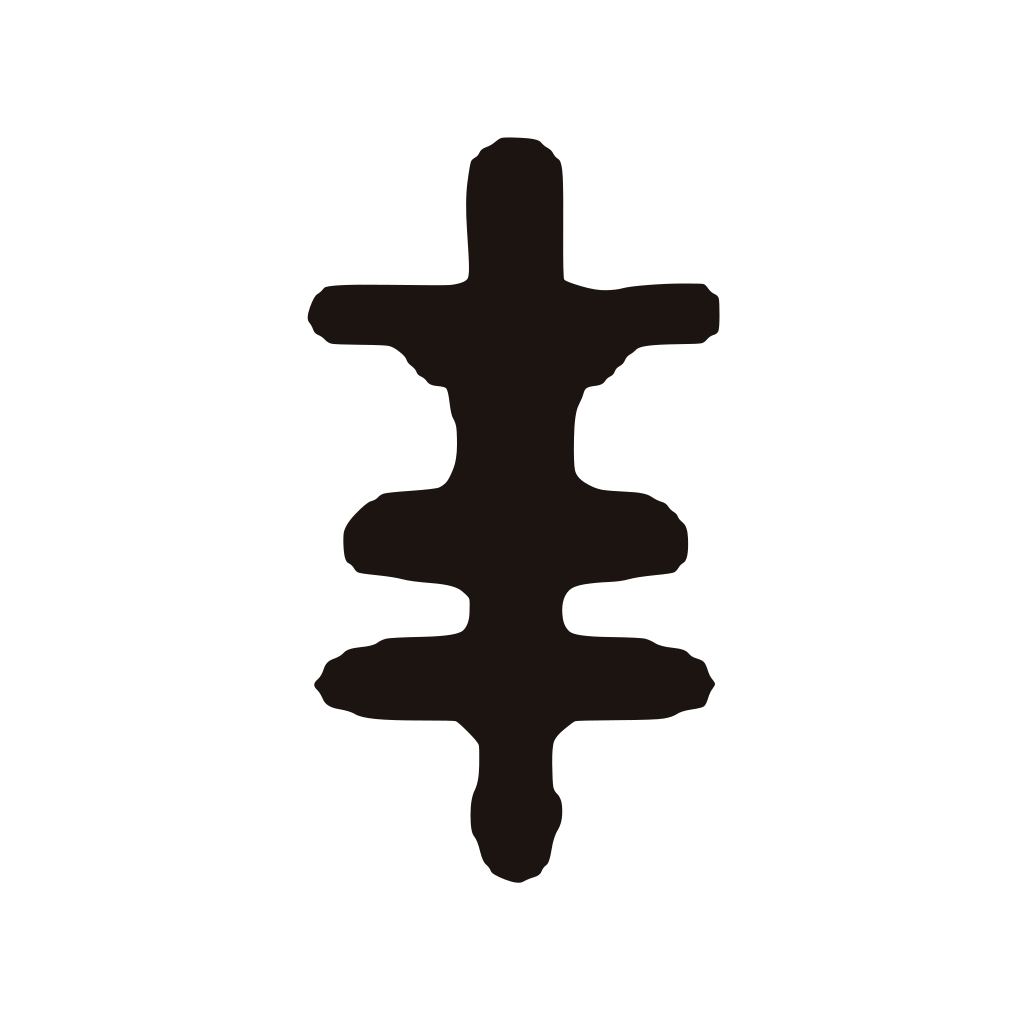
Okodee Mmowere: the eagle's talons
Okodee Mmowere; Kodie mmowerewa (Rattray)Okodee Mmowere, the eagle's talons, stands for strength, bravery and power.
Note on the sources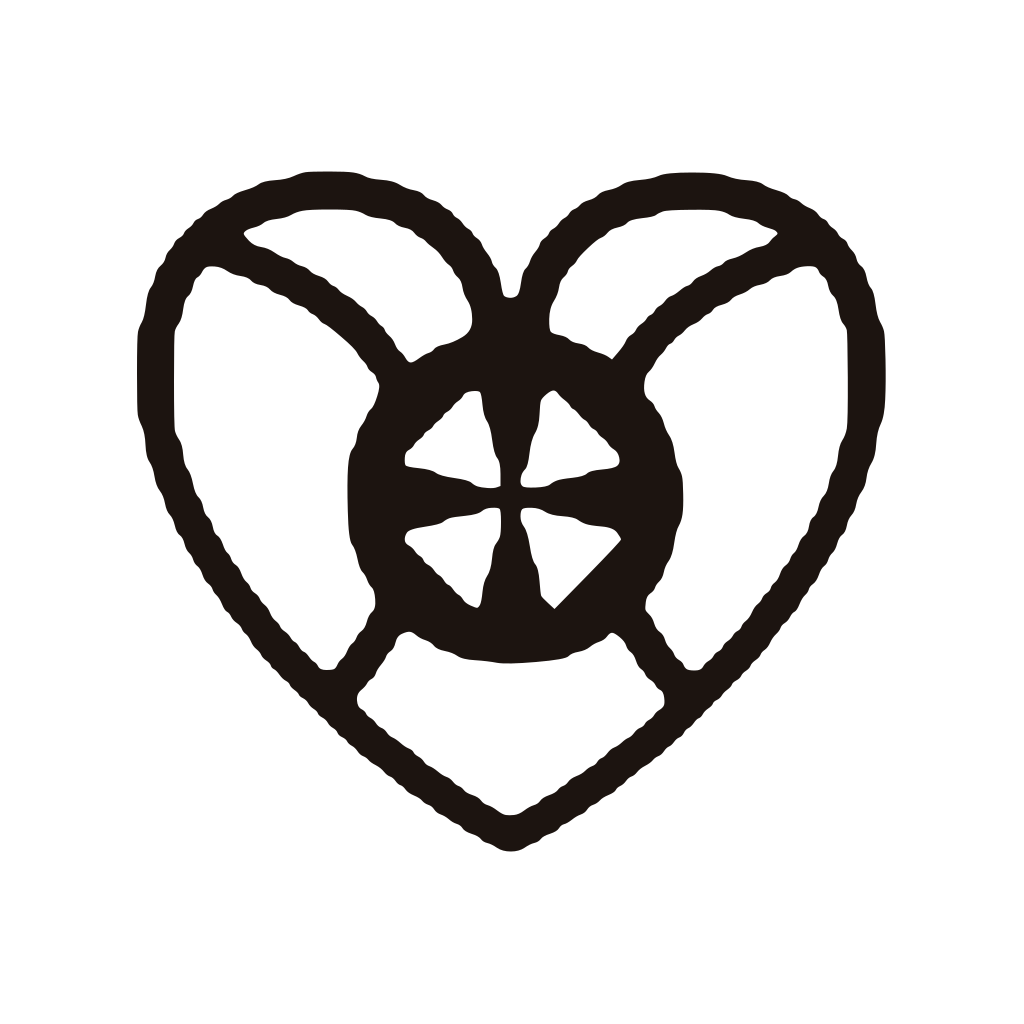
Onyankopon Adom Nti Biribiara Beye Yie: by God's grace all will be well
Onyankopon Adom Nti Biribiara Beye YieOnyankopon Adom Nti Biribiara Beye Yie, by God's grace all will be well, stands for hope and faith.

Osram Ne Nsoromma: the moon and the star
Osram Ne NsorommaOsram Ne Nsoromma, the moon and the star, stands for love, faithfulness and harmony in marriage.
Owo Foro Adobe: the snake climbs the raffia palm
Owo Foro AdobeOwo Foro Adobe, the snake climbs the raffia palm, speaks of doing a difficult thing quietly.
Note on the sources
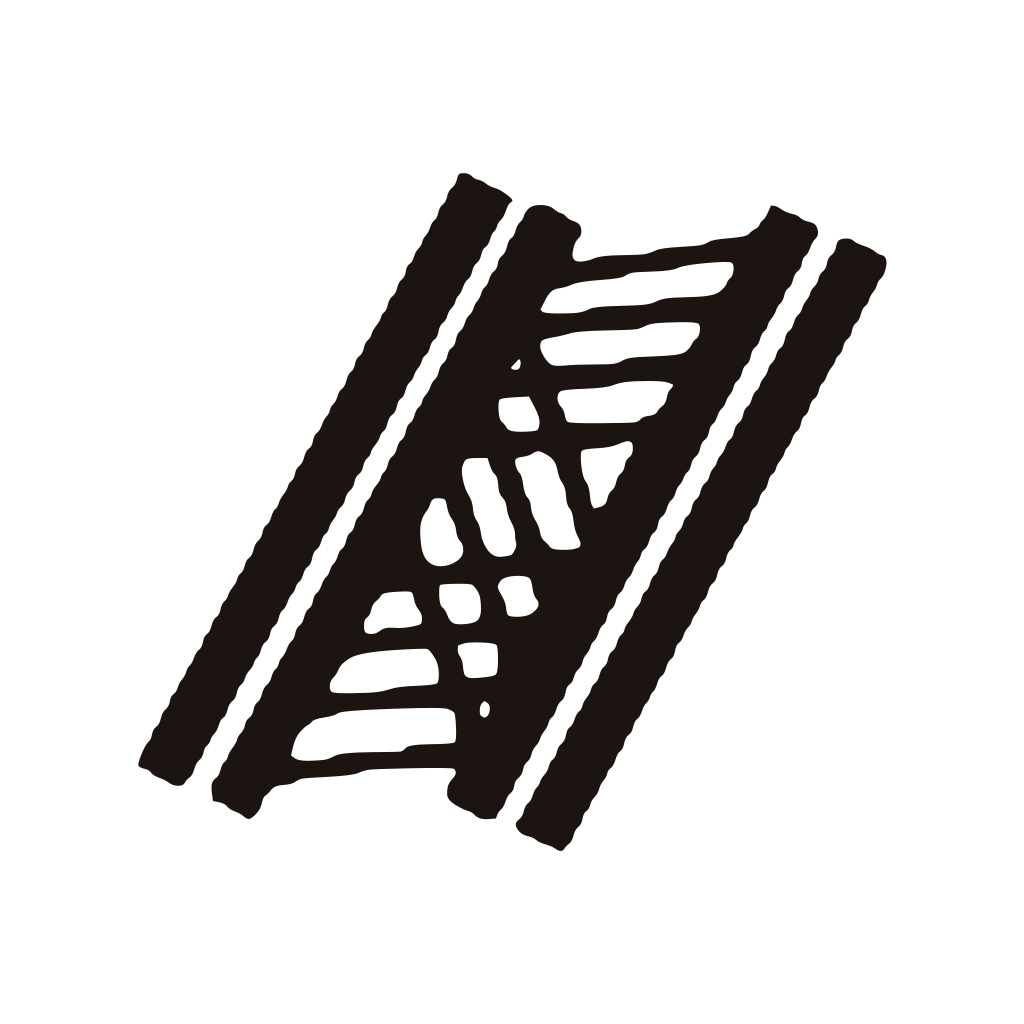
Owuo Atwedee: the ladder of death
Owuo AtwedeeOwuo Atwedee, the ladder of death, reminds people that life is short and everyone must climb it.
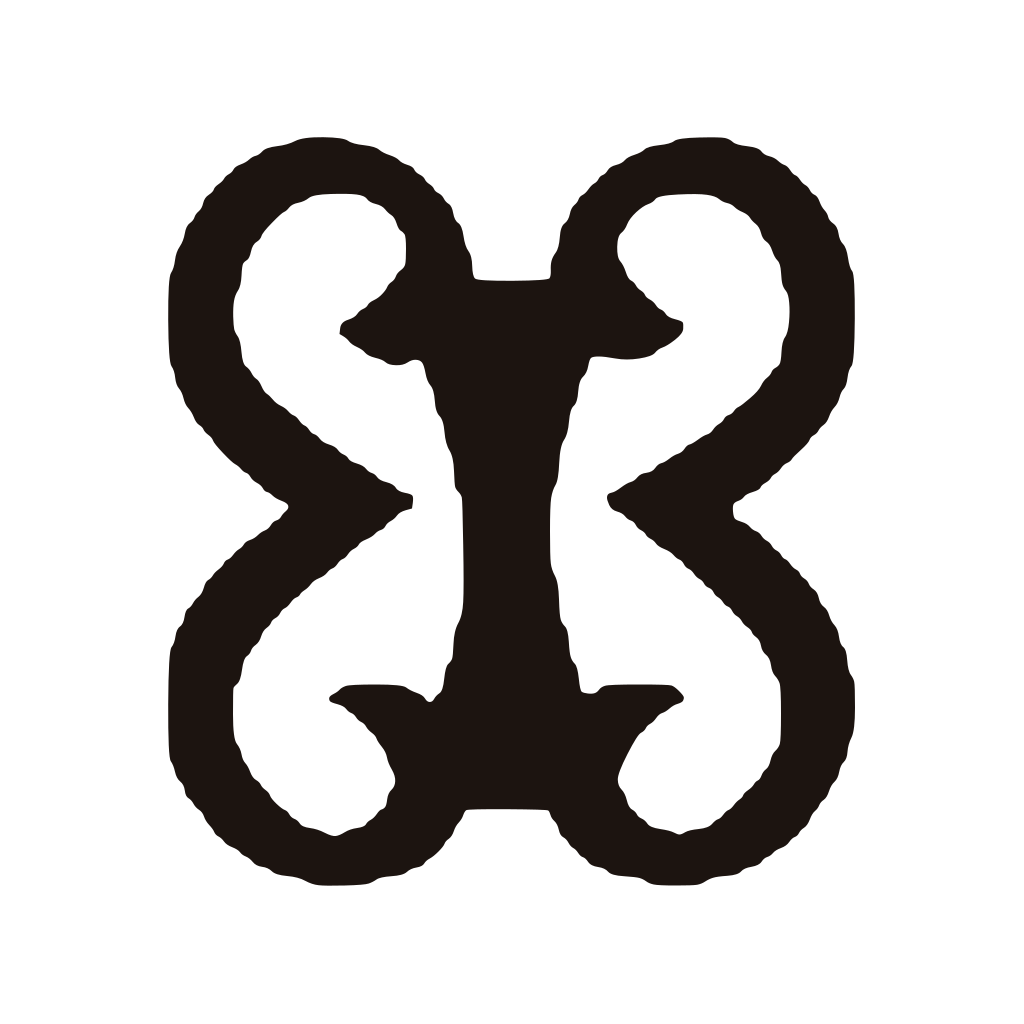
Pempamsie: sew in readiness
PempamsiePempamsie, sew in readiness, stands for readiness, steadfastness and strength through unity.

Sesa Wo Suban: change your character
Sesa Wo SubanSesa Wo Suban, change your character, shows a star inside a wheel and speaks of transforming oneself.
Note on the sources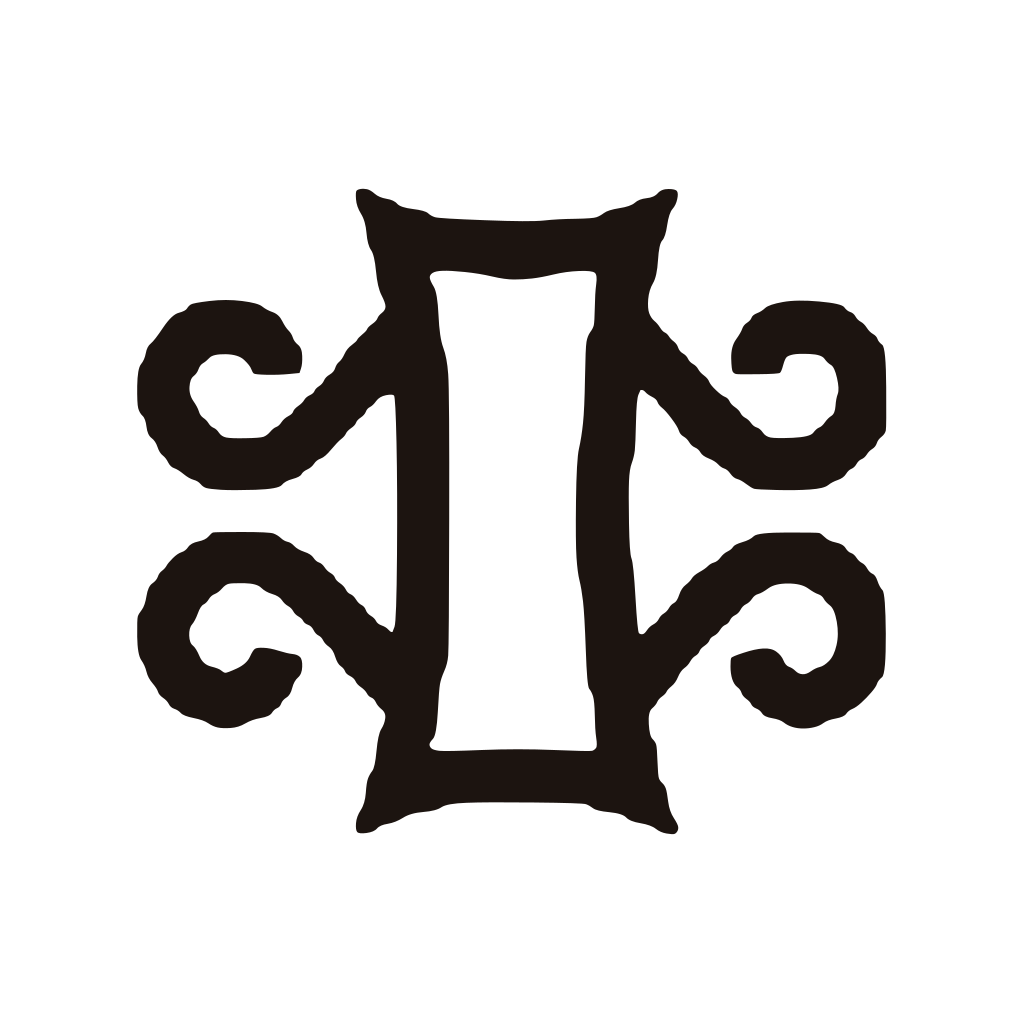
Tamfo Bebre: the enemy will suffer
Tamfo BebreTamfo Bebre, the enemy will suffer, stands for jealousy, envy and ill will.
Wawa Aba: seed of the wawa tree
Wawa AbaWawa Aba, seed of the wawa tree, stands for hardiness, toughness and perseverance.

Woforo Dua Pa A: when you climb a good tree
Woforo Dua Pa AWoforo Dua Pa A, when you climb a good tree, says whoever works for a good cause will find support.
Wo Nsa Da Mu A: if your hands are in the dish
Wo Nsa Da Mu AWo Nsa Da Mu A, if your hands are in the dish, stands for participatory government and democracy.
Asase Ye Duru: the earth has weight
Asase Ye DuruAsase Ye Duru, the earth has weight, stands for the divinity of Mother Earth, who sustains life.

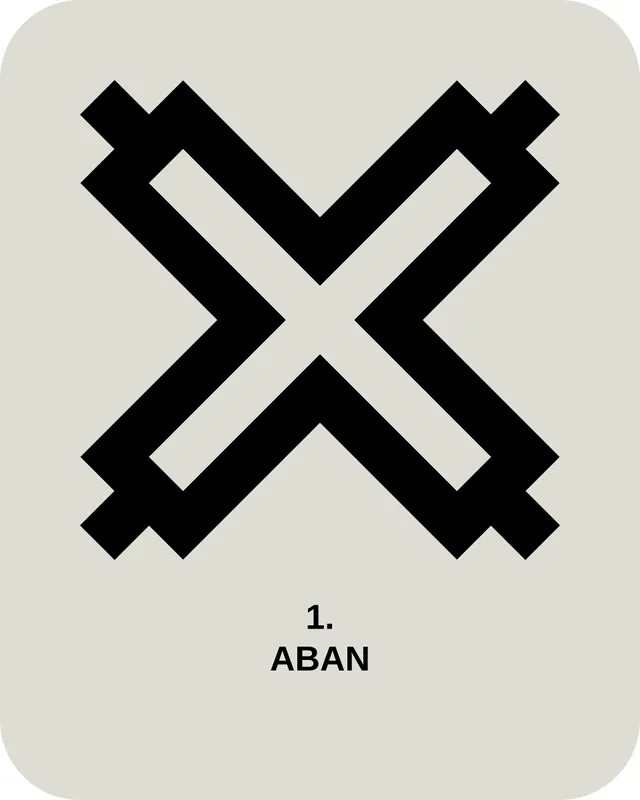
Aban: the castle
AbanAban, the castle, stands for strength, the seat of power and authority.
Agyindawuru: Agyin's gong
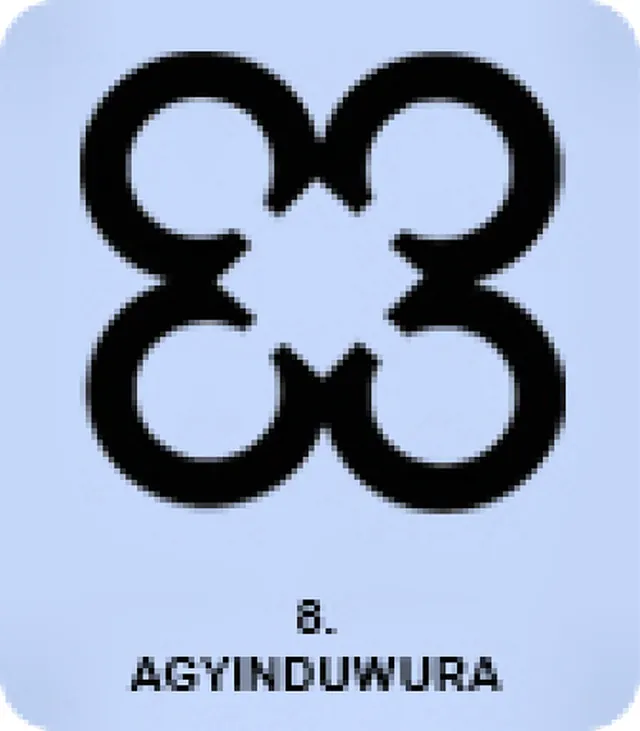
Agyindawuru; Agyin DawuruAgyindawuru, Agyin's gong, is explained either by a tree's juice or by a loyal gong-beater, and stands for faithfulness.
Note on the sources
Akoko Nan: the hen's foot
Akoko Nan; Akoko nan tia ba, na nkum ba (Rattray)Akoko Nan, the hen's foot, describes the good parent or ruler who corrects and protects at once.
Kuronti ne Akwamu
Kuronti ne Akwamu; Kronti ne AkwamuKuronti ne Akwamu, named after two senior divisions of an Asante state, stands for democracy and taking counsel.
Menso Wo Kenten: I am not carrying your basket
Menso Wo KentenMenso Wo Kenten, I am not carrying your basket, stands for self-reliance and industry.
Nkotimsefo Mpua: hairstyle of the court attendants
Nkotimsefo Mpua; Nkotimsefuopua (Rattray)Nkotimsefo Mpua, the hairstyle of court attendants, stands for loyalty and readiness to serve.

Ohene Aniwa: the king's eyes
Ohene Aniwa; Ohene niwa (Rattray)Ohene Aniwa, the king's eyes, is read as the king's favour or as the king's watchful vigilance.
Note on the sources
Sunsum: spirit
Sunsum; NtoroSunsum, spirit, stands for the purity of the soul, the part of a person that comes from God through the father.
UAC Nkanea: the UAC lights
UAC NkaneaUAC Nkanea, a twentieth-century design named after the lights of the United Africa Company, stands for technological advancement.

Mako: peppers
MakoMako, peppers, comes from the saying that peppers on one plant ripen at different times and stands for unequal development.

Krado (Mmra Krado): the Hausa man's lock
Krado; Mmra Krado; Mmara KradoKrado, the Hausa man's lock, is one of Rattray's designs referring to northern Muslim traders.

Kramo Bone Amma Yeanhu Kramo Pa: the bad Muslim hides the good one
Kramo Bone Amma Yeanhu Kramo Pa; Papani amma yenhu Kramo (Rattray)Kramo Bone Amma Yeanhu Kramo Pa warns against hypocrisy: the bad Muslim hides the good one.
Note on the sources
Dono: the hourglass drum
Dono; DonnoDono, the hourglass drum, stands for praise, goodwill and rhythm.

Dono Ntoaso: the double dono drums
Dono Ntoaso; Donno Ntoaso; Dono ntoasuoDono Ntoaso, the double dono drums, stands for united action, alertness and rejoicing.
Fafanto: the butterfly
Fafanto; AfofantoFafanto, the butterfly, stands for tenderness, gentleness and fragility.
Kokuromotie: the thumb
KokuromotieKokuromotie, the thumb, stands for cooperation and the person who cannot be left out.
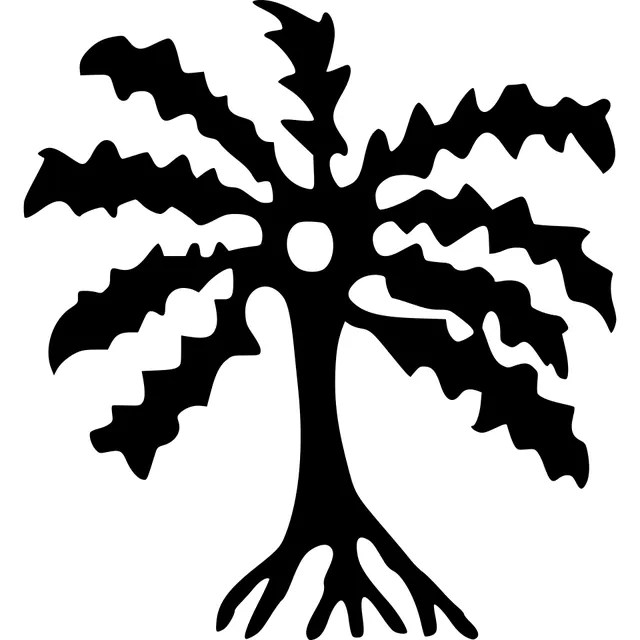
Abe Dua: the palm tree
Abe DuaAbe Dua, the palm tree, stands for wealth, resourcefulness and self-sufficiency.
Nteasee: understanding
NteaseeNteasee, understanding, is a symbol of understanding and cooperation.
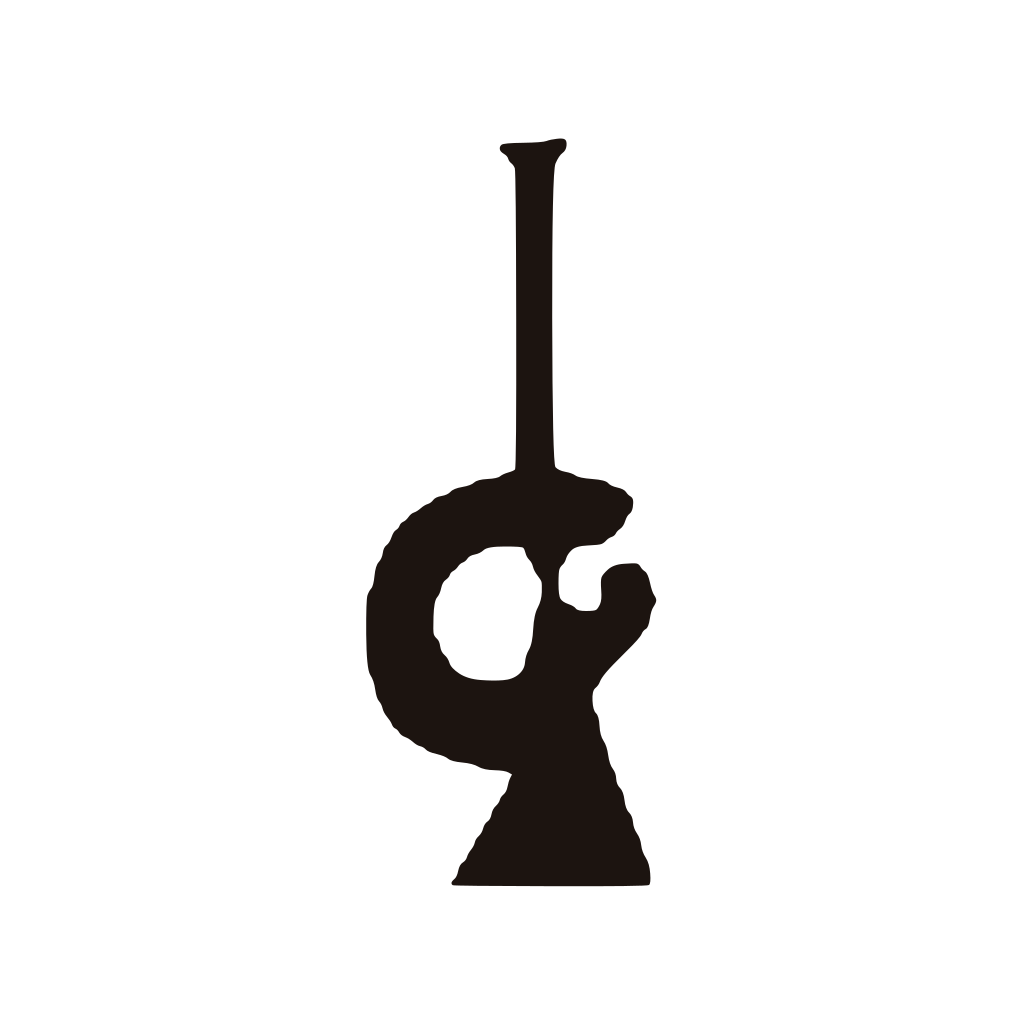
Ohene Tuo: the king's gun
Ohene Tuo; Ohen' tuo (Rattray)Ohene Tuo, the king's gun, appears in Rattray's list and recalls the gun in the Asantehene's regalia.
Kyemfere: the potsherd
KyemfereKyemfere, the potsherd, stands for experience, antiquity and heirlooms.
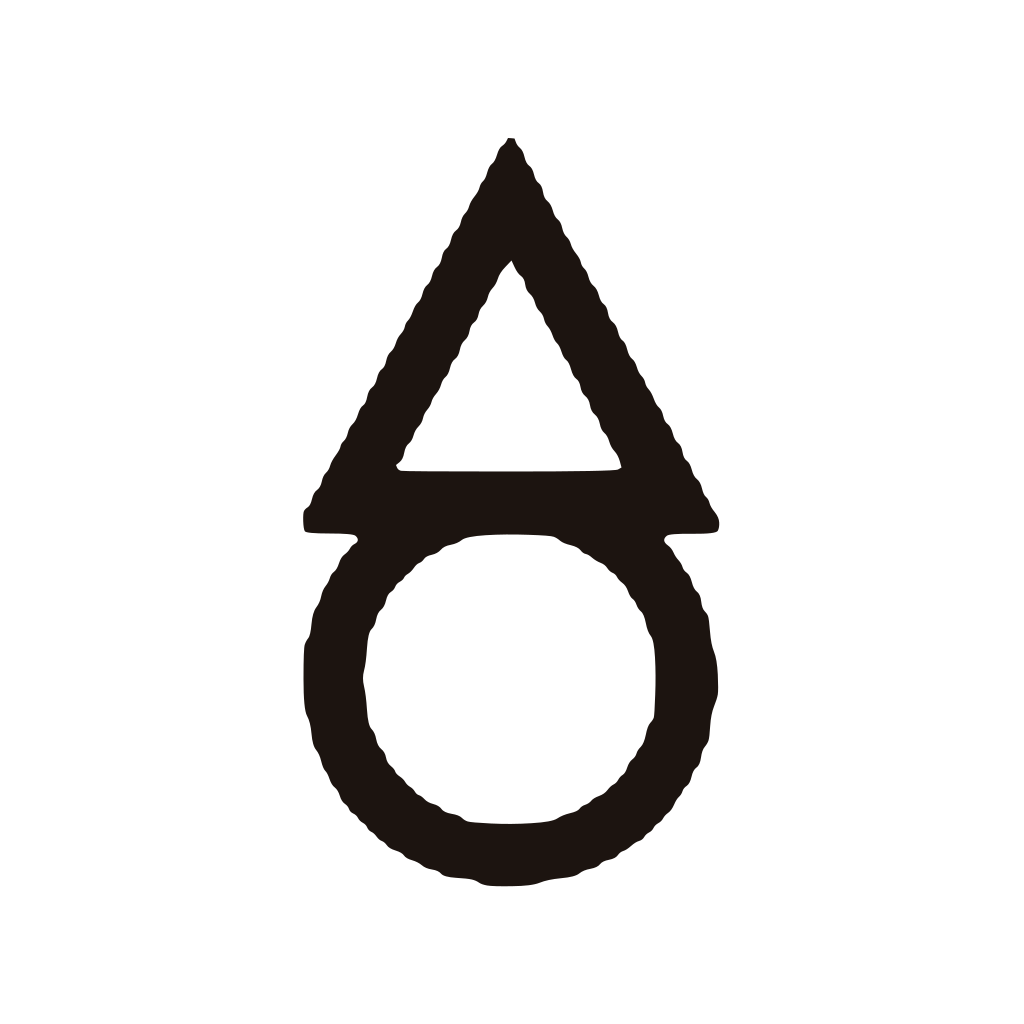
Sepow: the executioner's knife
SepowSepow, the executioner's knife, is read by modern catalogues as justice.

Nserewa: cowries
Nserewa; NsirewaNserewa, cowries, stands for affluence, and for sacredness when used by priests.
Obohemaa: queen of stones
ObohemaaObohemaa, queen of stones, is the diamond and stands for preciousness and treasure.
Abode Santann: the whole of creation
Abode SantannAbode Santann, the whole of creation, joins natural creation and human institutions to stand for the whole universe.

Abusua Pa: the good family
Abusua PaAbusua Pa, the good family, stands for family unity and kinship.
Esono Anantam: the elephant's footprint
Esono AnantamEsono Anantam, the elephant's footprint, stands for leadership and the protection of those who follow.
Dwantire: the ram's head
DwantireDwantire, the ram's head, is a symbol of innocence.
Nkrabea: destiny
NkrabeaNkrabea, destiny, says the destiny God gives cannot be avoided.

Tabono: the paddle
TabonoTabono, the paddle, stands for the strength, confidence and persistence of one who rows.
Mekyea Wo: I greet you
Mekyea WoMekyea Wo, I greet you, stands for greeting, recognition and respect.
Nea Oretwa Sa: the path-maker
Nea Oretwa SaNea Oretwa Sa, the path-maker, teaches that a leader should heed advice from those who see what he cannot.
Aponkyerene Wu A: when the frog dies
Aponkyerene Wu AAponkyerene Wu A, when the frog dies, says people and things are valued only after they are lost.

Ani Bere A Enso Gya: red eyes do not spark fire
Ani Bere A Enso GyaAni Bere A Enso Gya, red eyes do not spark fire, stands for patience and self-control.
Boafo Ye Na: a helper is rare
Boafo Ye NaBoafo Ye Na, a helper is rare, stands for support and teamwork.
Nnamfo Pa Baanu: two good friends
Nnamfo Pa BaanuNnamfo Pa Baanu, two good friends, is a symbol of friendship.

Okuafo Pa: the good farmer
Okuafo PaOkuafo Pa, the good farmer, stands for diligence, hard work and enterprise.
Asetena Pa: good living
Asetena PaAsetena Pa, good living, cautions that wealth can make one forget one's beginnings.
Anyi Me Aye A: if you will not praise me
Anyi Me Aye AAnyi Me Aye A, if you will not praise me, says do not spoil my name and speaks against ingratitude.
Asaawa: the sweet berry
AsaawaAsaawa, the sweet berry, stands for pleasure and its limits.
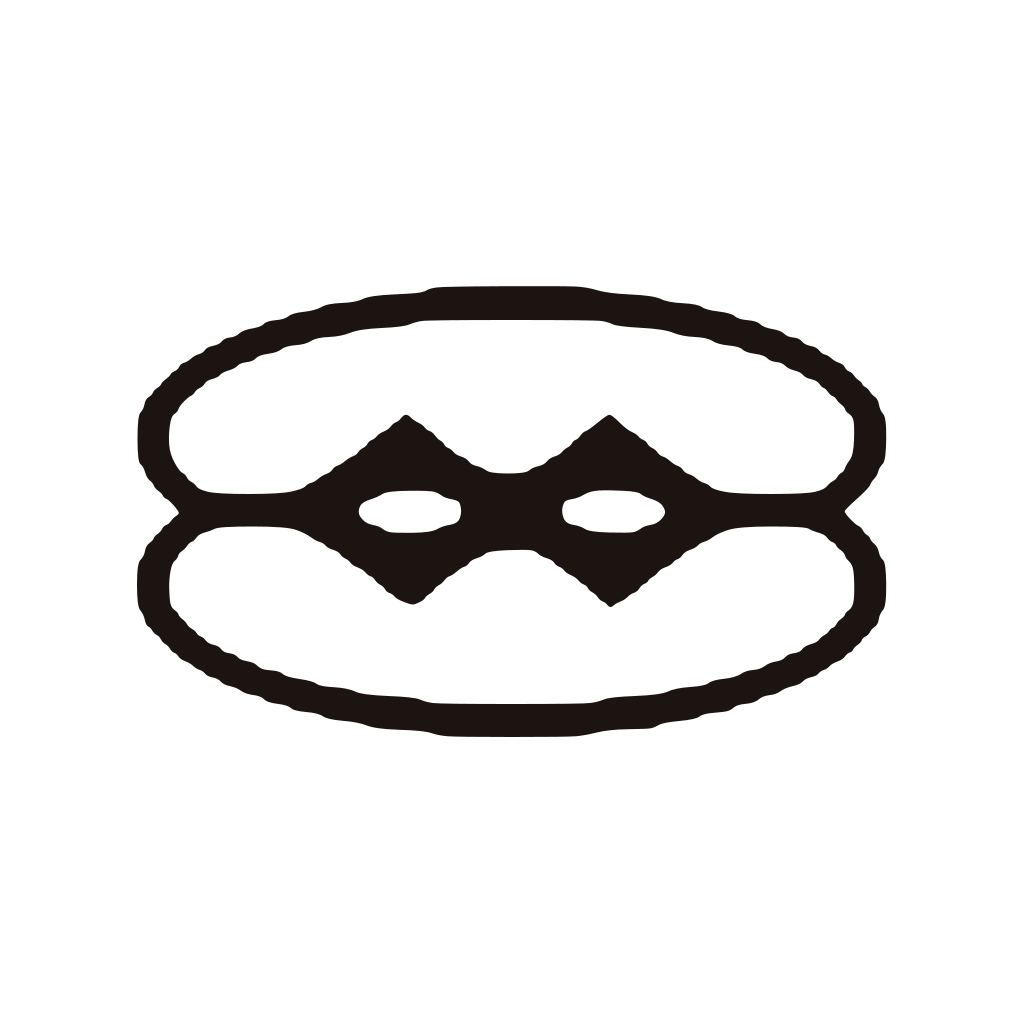
Adwo: calmness
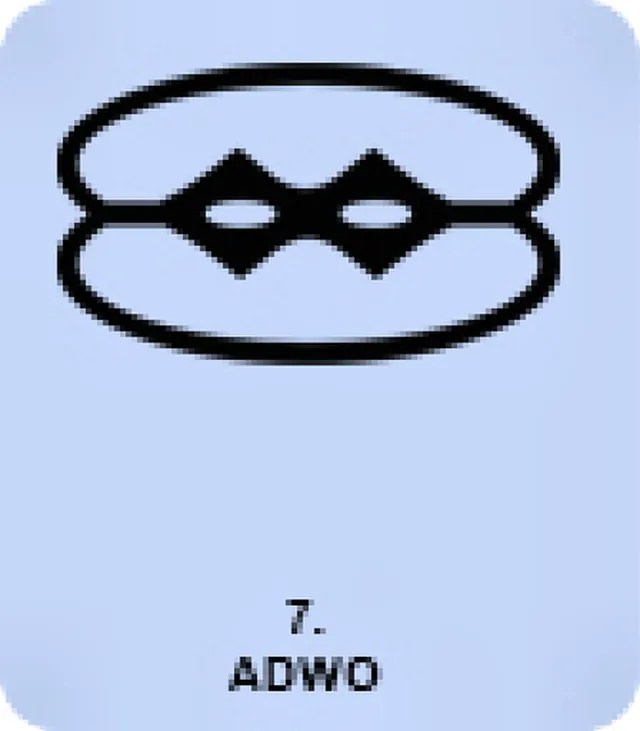
AdwoAdwo, calmness, is a symbol of peace, tranquillity and quiet.
Nyame Baatanpa: God the good parent
Nyame Baatanpa; Awurade BaatanfoNyame Baatanpa, God the good parent, stands for God's care for creation.
Som Onyankopon: worship God
Som OnyankoponSom Onyankopon, worship God, is a symbol of devotion and worship.
Mmeramubere and Mmeramutene: the female and male crosses
Mmeramubere; MmeramuteneMmeramubere and Mmeramutene, the female and male crosses, are paired designs read as warmth and as endurance.
Older designs in Rattray that have dropped out of the catalogues
Akam; Nkuruma kese; Pa gya; Mmrafo ani ase; Kojo BiadenSeveral names in Rattray's 1927 list are missing from today's popular catalogues. Akam is an edible plant, possibly a yam. Nkuruma kese is dried okra. Pa gya means to strike fire with a…
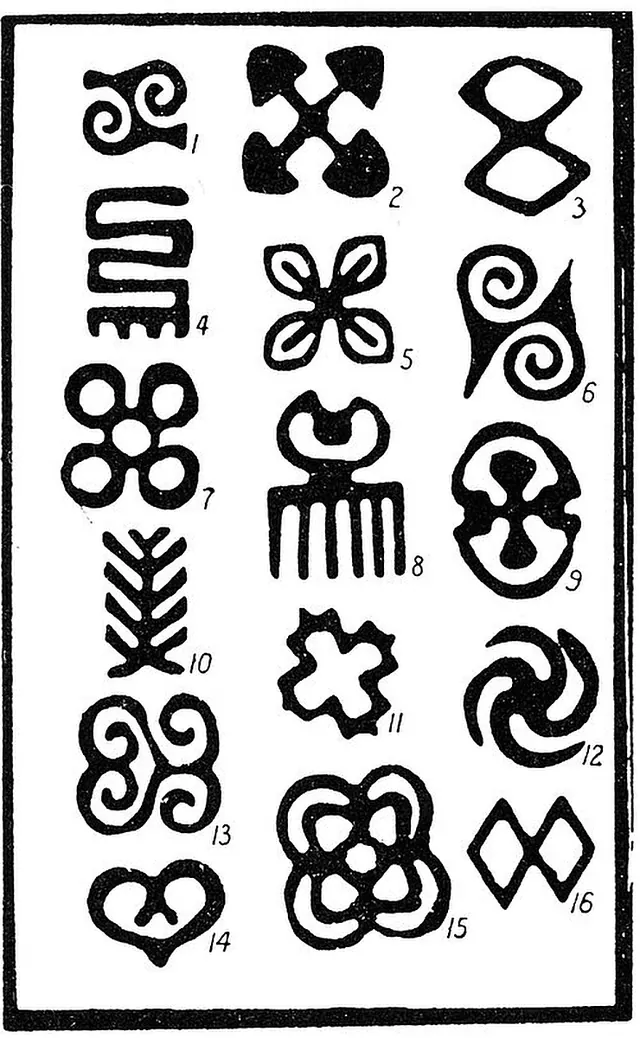
Rattray's 1927 list as a historical source
R. S. Rattray, the colonial government anthropologist, published drawings and names of adinkra stamps in Religion and Art in Ashanti (1927), pages 265 to 268. A British Museum record counts…
The symbols on the 1817 cloth in the British Museum
The cloth Thomas Bowdich brought from Kumasi (British Museum Af1818,1114.23) measures 276 by 202 cm and is of cotton strips sewn together and marked in black. It is laid out as a grid of…
Note on the sourcesNewer symbols and how far they are accepted
The stock of adinkra is not closed. Rattray drew about 53 designs in 1927. adinkra.org lists about 60 and adinkrasymbols.org about 100, and both rely heavily on two compilations from the…
Adinkra and kente in Ghana's Copyright Act, 2005
Ghana's Copyright Act, 2005 (Act 690) protects folklore, and its definition names kente and adinkra designs where the author is not known. Under section 4 the rights in folklore are vested…
Symbols of kingship
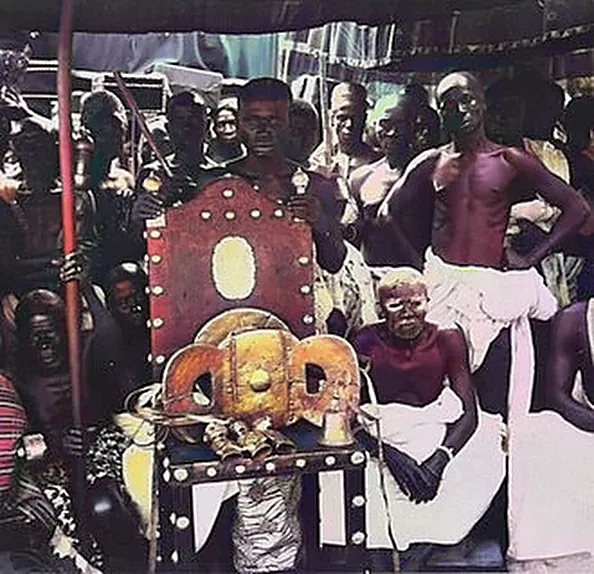
The form of the Golden Stool: bells, fetters and its own chair
Sika Dwa Kofi; hwedom dwaThe Golden Stool, Sika Dwa Kofi, is an ordinary-shaped stool hung with bells, never sat on, resting on its own chair.
Note on the sources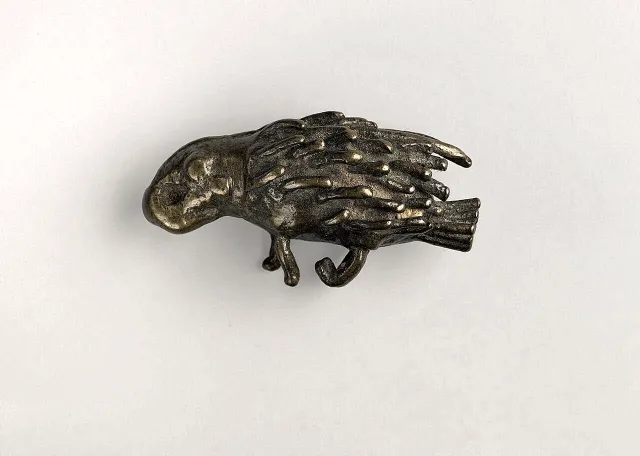
Kotoko: the porcupine
kotokoKotoko, the porcupine, is the animal of the Asante nation and king, its quills standing for fighting men who keep coming.
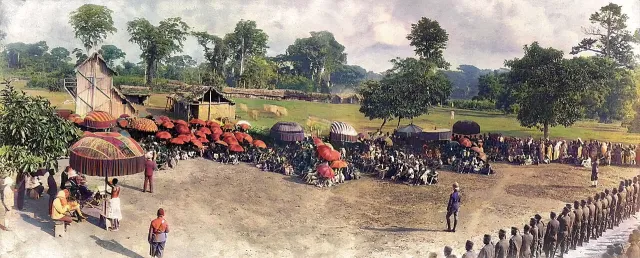
The state umbrellas as Bowdich saw them in 1817
kyinie; kyinyeWhen the British mission entered Kumasi in 1817, Bowdich counted at least a hundred large umbrellas or canopies, each able to shelter thirty people, which the bearers sprang up and down.…
How the Asantehene's umbrellas are ordered
benkyinye; kronponkyinye; patom kyinyeThe palace account published in 2016 by Kwasi Ampene and the treasurer Nana Kwadwo Nyantakyi III sets out the system. There are two kinds of umbrella. Benkyinye are the great umbrellas used…
Boaman: the umbrella called destroyer of nations
Boaman; Osei ne Poku BoamanBoaman, destroyer of nations, is an umbrella named with the founding kings Osei and Opoku and topped with a knotted cane.
The mirrored umbrella of the Golden Stool
Mahwehwe Me Ho Asie; NhwehwekyinyeMahwehwe Me Ho Asie, the mirror umbrella, covers the Golden Stool and was made by Osei Bonsu to mark his victories.
The keys: black, gold and silver
safoabre; sika nsafoa; dwete nsafoaThe black, gold and silver keys of the treasury servants show that every palace door is locked and guarded.
The treasury bags, scoop and great vessel
fotoo; nkotokuwaa; famfa; dwantaThe fotoo treasury bags, famfa scoop and dwanta vessel carry gold dust, including the king's burial gifts to bereaved families.
Gold dust and the king's heavier weights
sika futuru; suruGold dust was the currency, and the king's heavier weights paid the court officials who could not be paid directly.
Gyemirekutu: the hat that carries the nation
gyemirekutu kyeGyemirekutu is the hat of the Bosomuru sword-bearer, and to wear it is to carry the burden of Asanteman.
The great war coat and the knee rings
batakari kese; atutugyaAt installation the Asantehene wears the batakari kese, the great battle dress, after fitting six atutugya rings on his knees.
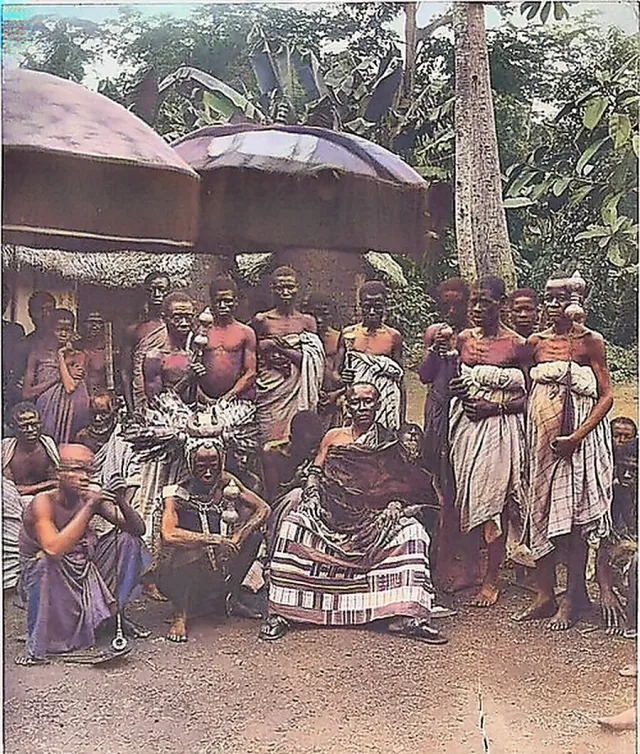
Soul discs on the sword-bearers
akrafokonmuEach of the king's sword-bearers wears a gold soul disc, hat and sword emblem that together make him a walking proverb.
Trophy heads and gold masks on swords
Gold trophy heads on state swords state a victory, such as the head of Worosa, a defeated king of Banda.
The palanquin and the swords at its edges
apakanThe king rides in a palanquin, the apakan, with his personal swords laid at its edges as they are at his bed.
Sandals
mpaboaThe king's sandals of 1817 were soft white leather with gold and silver cases of written charms across the instep.
Leopard skin and eagle feathers
etwie; okodeeLeopard skin and eagle feathers dress the Mponponsuo sword and its bearer, the leopard being the forest's royal animal.
Stools and their designs
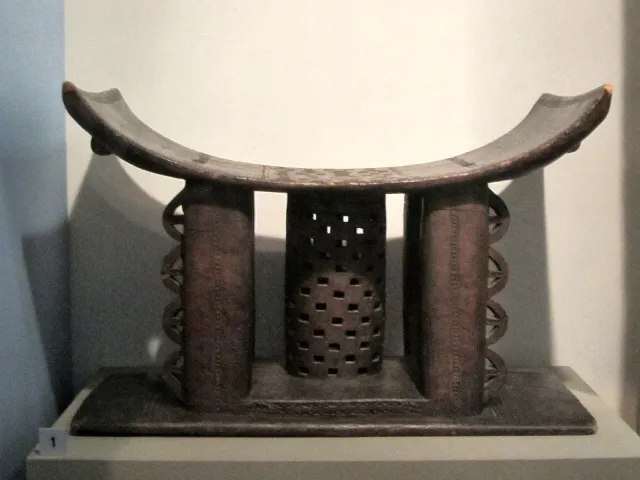
The parts of an Asante stool
sese dwa; asesedwa; dwaA conventional stool is carved from one block of pale sese wood. It has a rectangular base with incised steps, a central support that carries the design and gives the stool its name,…
Mmaa dwa: the woman's stool
mmaa dwa; ahenananMmaa dwa, the woman's stool, has a central pillar for the queen mother and four posts for the community that protects her.
Kotoko dwa: the porcupine stool
kotoko dwa; Kotoko 'gwaKotoko dwa, the porcupine stool, is a men's design for the king's council, more or less elaborate according to rank.
Note on the sourcesKontonkowori: the stool only the Asantehene may have
Kontonkowori; kontonkorowiKontonkowori is the elaborate form of the porcupine stool that only the Asantehene may have.
Note on the sourcesEsono dwa: the elephant stool
Esono dwa; Esono 'gwaEsono dwa, the elephant stool, is supported by a carved elephant and is reserved to the king according to Rattray.
Note on the sourcesSakyi dua koro: the stool with a single support
Sakyi dua koro 'gwaSakyi dua koro, the stool with a single support, was used only by the priesthood.
Ahema dwa: the queen's stool
Ahema 'gwa; ahemmaa dwaAhema dwa, the queen's stool, is identified as the stool of the early queen mother Nyako Kusi Amoa.
Me fa asa dwa: 'my half is finished'
Me fa asa 'gwaMe fa asa dwa, 'my half is finished', is a women's stool whose name Rattray explains as 'half my clan is dead'.
Pantu dwa: the gin-bottle stool
Pantu 'gwaPantu dwa, the gin-bottle stool, has a bottle-shaped central column and is used by the Offinsohemaa.
Obi-te-obi-so: someone sits on someone else
Obi-te-obi-so dwaObi-te-obi-so, someone sits on someone else, is a two-tiered stool whose upper stool marks the superior.
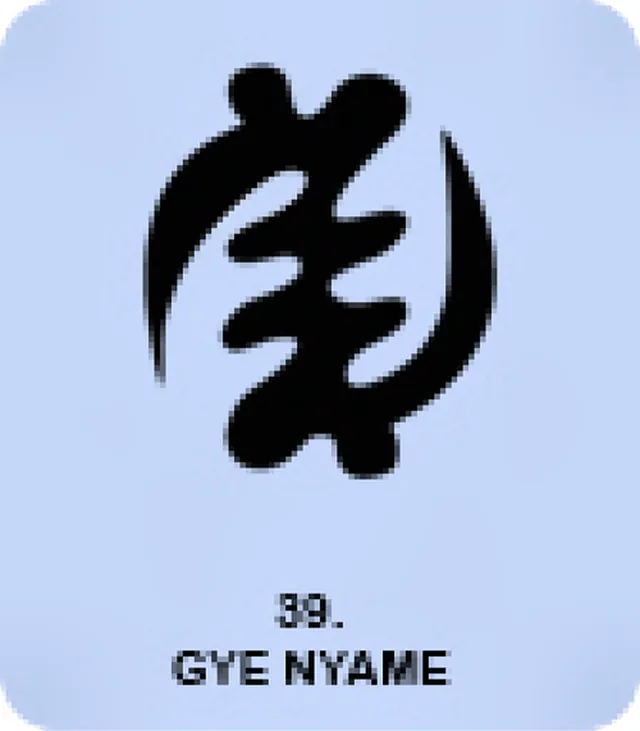
Adinkra as stool supports: nyansapo and gye nyame
nyansapo dwaSome stools use an adinkra symbol as support, such as the nyansapo wisdom knot and the Gye Nyame design.
Men's stools and the 'two-penny' stool
mmarima dwa; adamma dwaMmarima dwa are men's stools and mmaa dwa women's. Adamma dwa, literally the two-penny stool, was the plain stool of poor people.
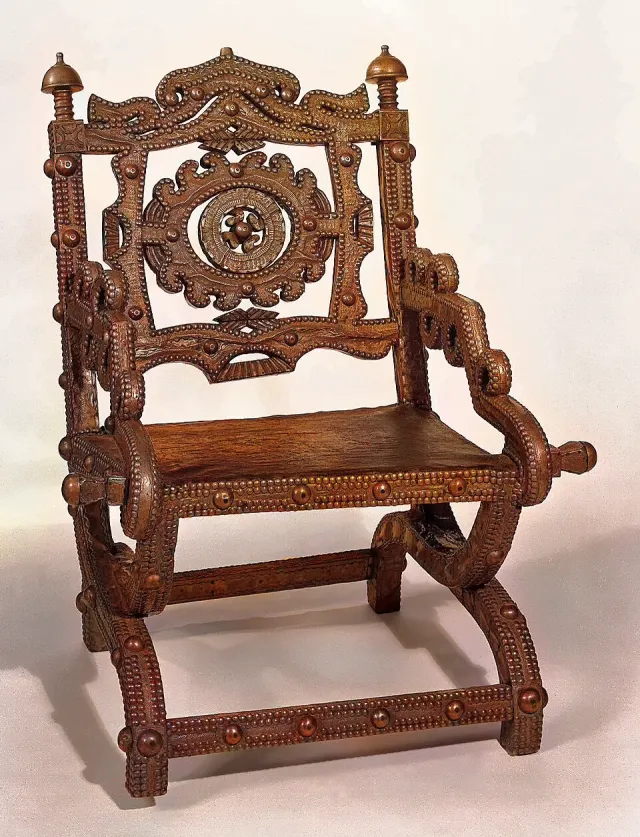
Asipim, akonkromfi and hwedom: the chairs of chiefs
asipim; akonkromfi; hwedomChiefs sit in state on chairs called asipim, akonkromfi and hwedom, the last being the seat of the Golden Stool.
A clan emblem as a stool: the Aduana dog
At Mpobi a lineage stool shows the Aduana clan emblem, a dog with fire in its mouth.
The Silver Stool of Mampong
dwete dwaMampong holds the Silver Stool, second to the Golden Stool, and silvery metal marks high status.
Rattray's stool catalogue and its critics
Rattray's Religion and Art in Ashanti (1927, pp. 272-273) illustrates stool designs with their names and the rank or sex of those entitled to them. Peter Sarpong's The Sacred Stools of the…
Swords and their emblems
The classes of state sword
afena; keteanomfena; akrafena; abosomfena; asomfomfena; afenateneThe king's own swords are the keteanomfena. They divide into akrafena, swords of the soul, carried on his right, and abosomfena, swords of the gods, on his left. The palace gives their…
Bosomuru
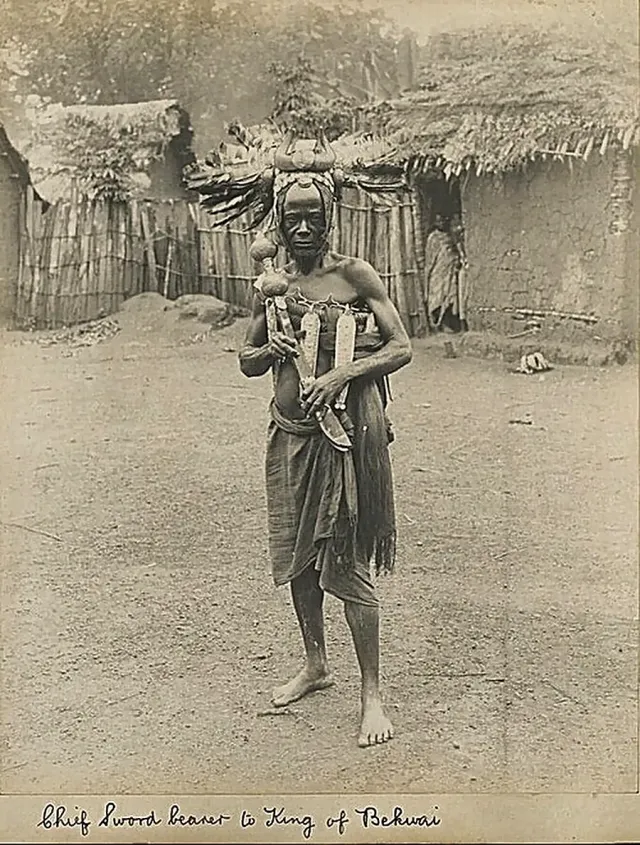
Bosomuru; BosommuruBosomuru is the senior state sword, sworn on only by the Asantehene, with a gold skull for the burden of the nation.
Mponponsuo
Mponponsuo; MponponsonMponponsuo, the king's personal sword, shows a viper holding a hornbill and teaches that patience brings what seems out of reach.
Note on the sourcesAhwebaa
AhwebaaAhwebaa commemorates Osei Tutu's cry 'Asanteman gye me' when the first five states were joined.
Denkyem: the crocodile sword
DenkyemThe Denkyem sword carries a crocodile, for the king who guards the nation as a crocodile guards its eggs.
Bosompra Panin
Bosompra PaninBosompra Panin represents the Asantehemaa and is sent to fetch her; its emblem is a treasure casket with adwera leaves.
Note on the sourcesBosompra Kumaa: the hen and her chicks
Bosompra Kumaa; akokobaatanBosompra Kumaa carries a hen with her chicks, for a king who protects his children.
Bosomurutwe: the duiker of 1935
BosomurutweBosomurutwe carries a gold duiker, a pun on twe, to pull, marking the restored Asante Confederacy of 1935.
Kra Kofi: the plantain that never lacks shoots
Kra Kofi; Apem ase nhye daKra Kofi carries a plantain with shoots, saying the royal lineage will never die out.
Kraku Panin and Kraku Kumaa
Kraku Panin; Kraku KumaaKraku Panin, with shield and sword, and Kraku Kumaa, with a gold heart, recall a peaceful king and a calm one.
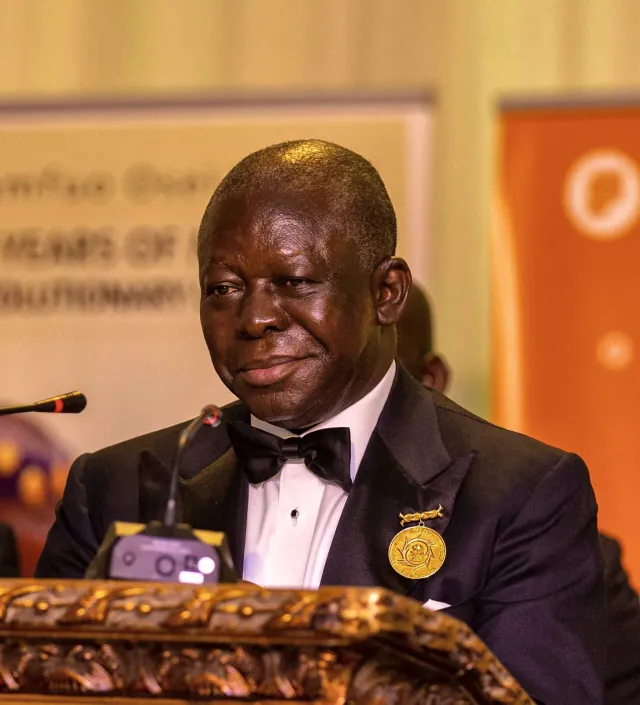
The four swords of Osei Tutu II
Abubummabaa; Sakatempobi; Esie; Esrem Sei GyataThe present king added four swords: bagworm, forest ants, a mound and a lion, each stating a proverb about him.
Note on the sourcesThe Kotoko sword: gun and pen
KotokoThe Kotoko sword shows a porcupine with a gun and a pen, saying the king should now win by learning.
Gyapetia
GyapetiaGyapetia is one of the oldest swords, without a cast emblem, sworn on by town heads.
Note on the sourcesCourier swords: Gyegyetire, Nsoroma, Akuma
gyegyetire; worosatire; nsoroma; akumaCourier swords travel with the court criers as proof of their messages; Gyegyetire, Nsoroma and Akuma are the examples.
The sword of palm fruit and heart
Prempeh II's sword of palm fruit and a heart says the king set his heart on reuniting the kingdom.
Linguist staffs and umbrella tops
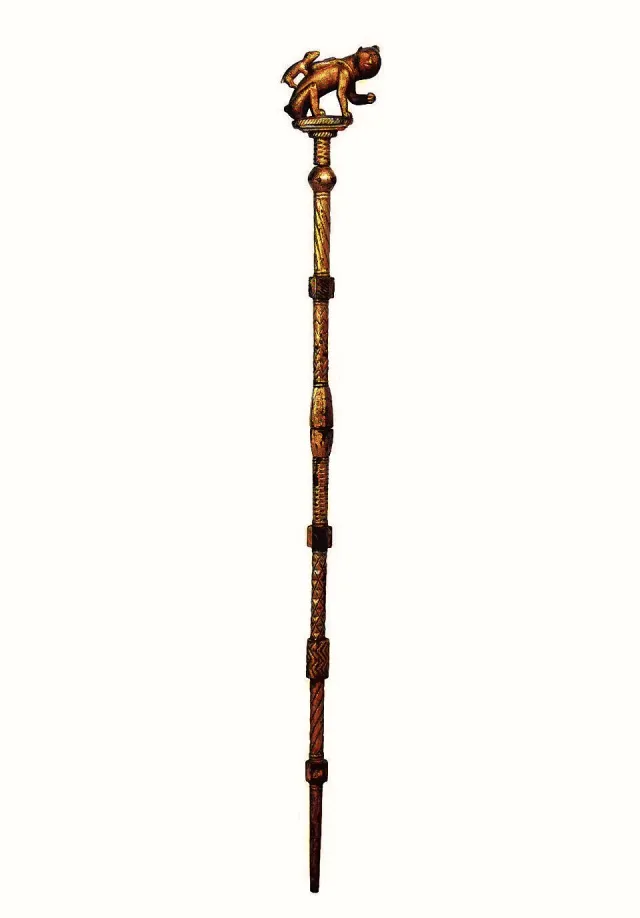
What the top of a linguist staff says
akyeame poma; okyeame pomaThe okyeame, the chief's spokesman, carries a staff as the sign that he speaks with the chief's voice. A 2023 feature in the Daily Graphic notes that he moves it from his right hand to his…
Two men at a table: food is for its owner
Two men at a table says the food belongs to its owner, so office belongs to the rightful heir.
The hen and the cock
The hen and the cock says the hen knows when it is dawn but leaves the cock to announce it.
The spider on its web
ananseThe spider on its web says no one teaches the spider wisdom, asking respect for the skilled speaker.
A bird on its eggs
A bird on its eggs speaks of office-holders who depend on one another.
The snail, the tortoise and the gun
The snail, the tortoise and the gun praises peaceable people who need not be shot to be caught.
The mouse and the cat's bag
The mouse and the cat's bag warns that only a foolish mouse challenges authority.
The leopard
oseboThe leopard on a staff stands for strength, intelligence and hidden power.
The hand holding an egg
The hand holding an egg is read as a warning that power is fragile and must be handled with care.
Umbrella top: a hand holding a sword
ntuatire; akofenaA gilded hand holding a sword tops the Golden Stool's umbrella and marks that no enemy remained.
Umbrella top: prekese
prekeseThe prekese umbrella top says that, like the scented pod, the king's presence fills everywhere.
Note on the sourcesUmbrella top: the snake that caught the hornbill
The snake that caught the hornbill tops an umbrella as a symbol of unequalled patience.
Umbrella top: babadua
babaduaThe babadua cane tops several great umbrellas and reminds the king to be always vigilant.
Umbrella top: the hen with her chicks
akokobaatan ne ne mmaThe hen with her chicks tops the umbrella of the Bosomuru sword and says the hen's foot corrects but does not kill.
Umbrella top: the clenched fist
The clenched fist umbrella top says no adversary can open the king's closed hand.
Umbrella top: two ahahrata leaves
ahahrataTwo ahahrata leaves joined top a small umbrella and stand for unity.
Umbrella top: the elephant and the war horn
osono ne akobenThe elephant and war horn umbrella top, given by the Kokofuhene, declares the Asantehene his overlord.
Umbrella top: the pineapple
aborobeThe pineapple umbrella top warns that those who clash with the king carry the scars.
Umbrella tops: the crocodile and the covered basin
denkyem; yaawaA crocodile tops the Ntotoyehene's umbrella and a covered brass basin tops a black royal umbrella.
Goldweights and proverbs
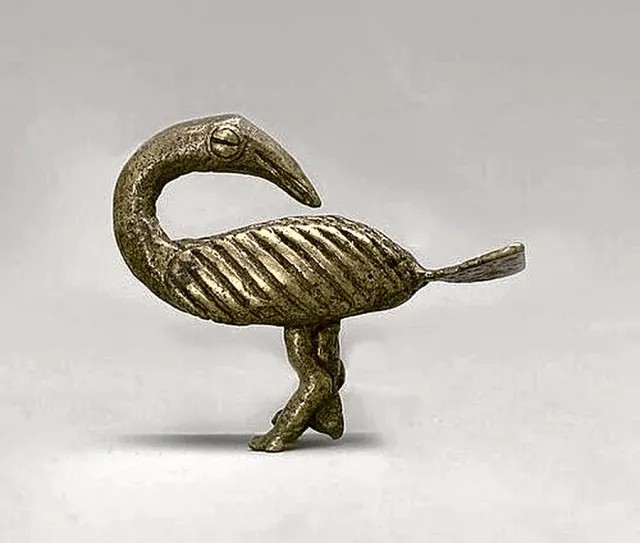
Three kinds of weight
abrammuo; mrammuoRattray, who collected nearly a thousand weights in 1921-22, sorted them into three groups: figures of people, animals, birds and insects, alone or acting out a scene or a saying; models of…
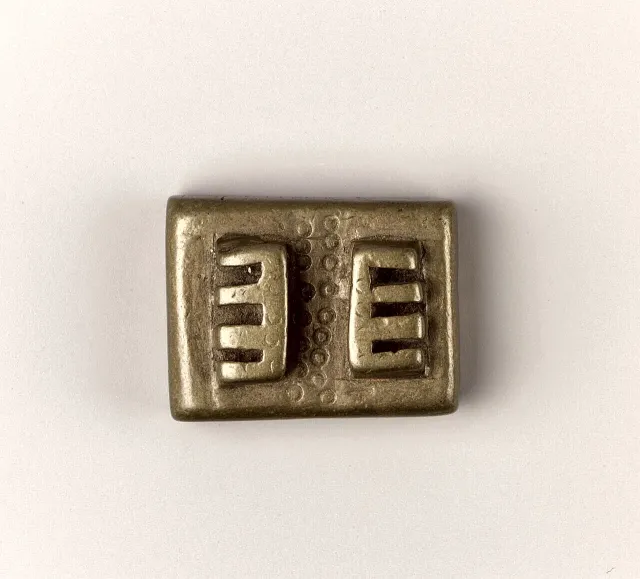
Geometric weights and the 'monkey's foot'
Rattray judged the geometric weights the oldest. Their designs seemed standardised, new ones were only copies, and he never met an Asante who could explain the signs. The swastika, common…
Note on the sourcesThe units of weight
Rattray printed the names given him by goldsmiths with rough values in the money of 1921. The smallest, from powa to nkokoa, were seeds. Then came, among others, taku (about sixpence), soa…
Who cast the weights
adwumfoGoldsmiths (adwumfo) formed a brotherhood and were allowed to wear gold. The craft stayed in families: if a son did not follow his father, a sister's son had to; a son who did follow could…
Weight: the talking drums
ntumpaneThe talking drums weight carries the proverb that no one beats his drums in the camp he has fled to.
Weight: doves round a lamp
Doves round a lamp is a goldweight carrying the proverb that he who has eaten will also drink.
Weight: the old man with firewood
The old man with firewood carries the proverb that only a poor man fetches his own firewood.
Weight: the executioner
obrafoThe executioner weight carries the proverb that after the first head the executioner fears nothing.
Weight: the man holding his belly
The man holding his belly carries the saying that the intestines do not help the belly.
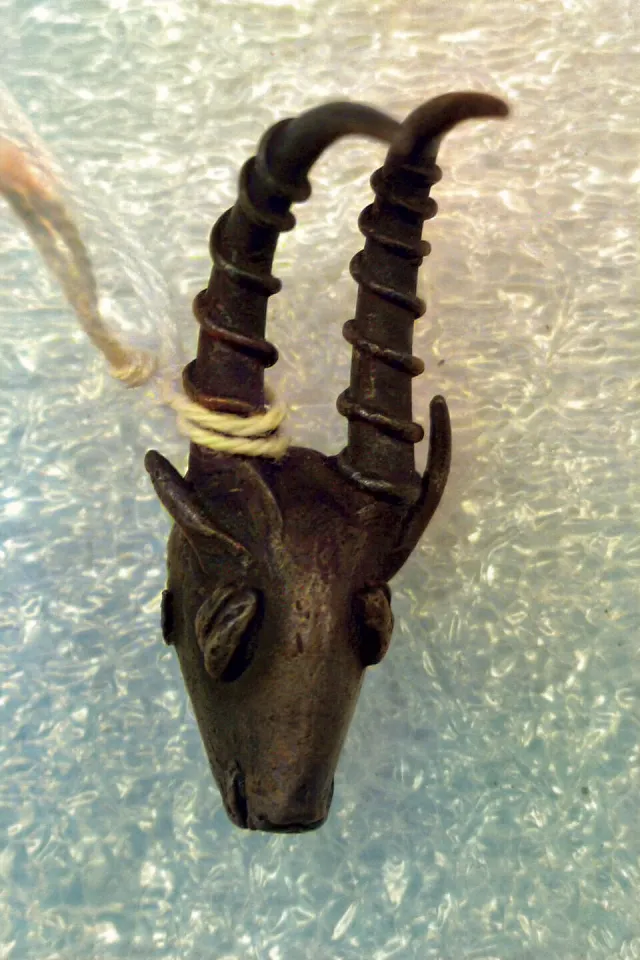
Weight: the antelope with long horns, 'had I known'
nim sa; nim saa ka akyiThe long-horned antelope, nim sa, 'had I known', says regret comes too late.
Weight: the priest with a fowl over a charm
nkabereThis weight shows a priest sacrificing a fowl to the nkabere charm, once misread as a bird trap.
Weight: scraping the odom tree
odomScraping the odom tree carries the proverb that when you scrape the odom, the bark falls.
Weight: the hunter, the monkey and the trap
The hunter, the monkey and the trap carries the saying that if one had not helped me, another would have.
Weight: a fowl on God's altar
Nyame duaThis weight shows a fowl offered on the forked Nyame dua altar.
Weight: Amoako and Adu
Amoako ne AduAmoako and Adu are legendary friends who met again after many years, both ruined.
Weight: the beetle among the fowls
The beetle among the fowls shows a victim fallen among enemies.
Weight: the man on his back and the man on his belly
The man on his back and the man on his belly carries a proverb about the limits of knowing God.
Weight: the bird in the trap
The bird in the trap says the trapped bird sings sweetest to persuade you to spare it.
Weight: the crocodiles with one belly
funtum frefu, denkyem frefuThe crocodiles with one belly, a goldweight, is quoted against a relative who grows greedy.
Weight: the scorpion
The scorpion weight says to answer the scorpion's sting in kind.
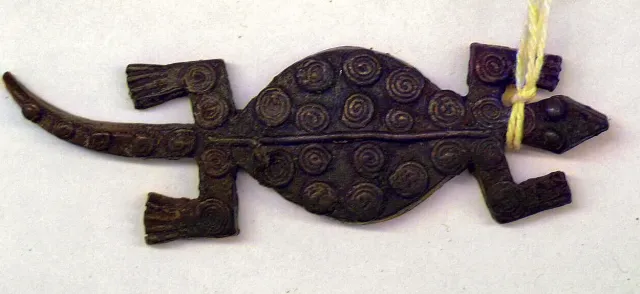
Weights: cutlass, cartridge belt, crocodile, ram
Four goldweights, quoted from Garrard, carry proverbs on death, resourcefulness, misfortune and courage.
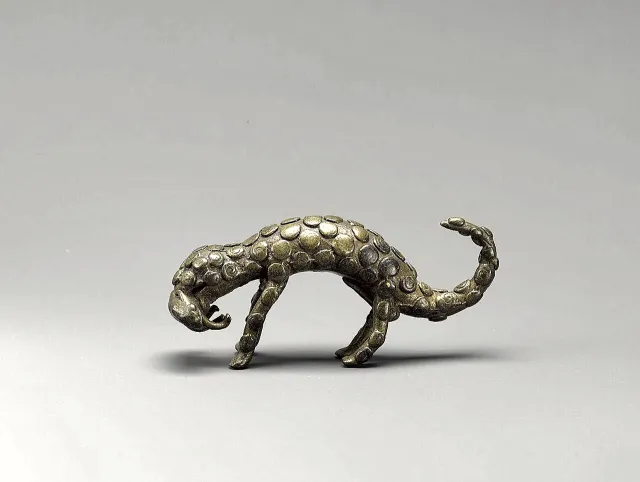
Weights: shields, double swords and the leopard
Shield weights stand for bravery, double-bladed swords for shared rule, and the leopard is the forest's emblem of strength.
Kente patterns and colours
Adwinasa: all the motifs are used up
Adwinasa; Adwini Asa; AdweneasaAdwinasa, all the motifs are used up, is the finest kente, woven with every motif and once reserved to royalty.
Note on the sourcesSika Futuro: gold dust
Sika FuturoSika Futuro, gold dust, is a kente in orange, red and yellow standing for wealth and royalty.
Oyokoman: the cloth of the royal clan
OyokomanOyokoman is the cloth of the Oyoko clan of the Asantehene and appears on a royal umbrella.
Emaa Da: it has not happened before
Emaa Da; Emmaa DaEmaa Da, it has not happened before, was named from a king's remark that the cloth had no precedent.
Obaakofo Mmu Man and Fathia Fata Nkrumah
Obaakofo Mmu Man; Fathia Fata NkrumahObaakofo Mmu Man, one person does not rule a nation, began as Fathia Fata Nkrumah and became a comment on one-man rule.
Note on the sourcesAbusua Ye Dom: the family is a force
Abusua Ye DomAbusua Ye Dom, the family is a force, stands for family unity and shared responsibility.
Kyeretwie: the leopard-catcher
KyeretwieKyeretwie, the leopard-catcher, is a kente with black stripes for a leopard's coat and was woven for the king alone.
Note on the sourcesToku Kra Toma: Toku's soul cloth
Toku Kra Toma; Toku akra ntomaToku Kra Toma honours the soul of Toku, a warrior queen mother killed in battle, and was worn at ancestor ceremonies.
Note on the sourcesNyankonton: the rainbow
NyankontonNyankonton, God's eyebrow, is a kente whose warp colours imitate the rainbow and signify divine beauty and good omen.
Akyempem: a thousand shields
AkyempemAkyempem, a thousand shields, is named for the shields of the army and stands for military strength and protection.
Woforo Dua Pa A, Na Yepia Wo
Woforo Dua Pa A Na Yepia WoWoforo Dua Pa A, Na Yepia Wo says whoever climbs a good tree gets a push; it suits those seeking worthy office.
Apremo: cannon
ApremoApremo, cannon, is a weft motif that the Cleveland Museum reads as a sign of Asante resistance to European weapons.
Sika Fre Mogya: money calls blood
Sika Fre MogyaSika Fre Mogya, money calls blood, says relatives who drift away from a poor man return when he prospers.
Obi Nkyere Obi Kwan Mu Si
Obi Nkye Obi Kwan Mu SiObi Nkyere Obi Kwan Mu Si says people sooner or later offend one another, so they should be ready to forgive.
Weft motifs named for things
Bonwire weavers name small weft designs after what they resemble: nkyinkyim (zigzag), mpuankron (nine tufts of hair), kyemfere (potsherd), akyem (shields), nanka tire (python's head),…
Four weaves and who they were for
asasia; ahwepan; topreko; faprenuAhwepan is plain weave with or without stripes. Topreko uses one extra heddle for the design; faprenu, the double weave, covers the warp with paired wefts and is associated with queen…
Colour meanings: what is and is not sourced
Tables giving one meaning per colour are everywhere online: gold for royalty and wealth, green for growth, blue for peace, red for blood and sacrifice, black for maturity and the ancestors,…
Note on the sourcesMourning cloth: kuntunkuni, kobene, birisi
kuntunkuni; kobene; birisiFuneral cloths are named by colour: dark kuntunkuni, red kobene and blue-black birisi, worn according to closeness to the dead.
Note on the sourcesClan totems
Oyoko: the falcon
OyokoOyoko, the clan of the Asantehene, has the falcon or hawk as its emblem.
Note on the sourcesBretuo: the leopard
BretuoBretuo, the clan of Mampong, has the leopard as its emblem, for courage.
Aduana: the dog
AduanaAduana has the dog as its emblem, led from Asumanya by a dog with fire in its mouth, for loyalty.
Note on the sourcesAsona: the crow
AsonaAsona, the largest clan, has the crow as its emblem, linked with wisdom.
Note on the sourcesAgona: the parrot
AgonaAgona has the parrot as its emblem, for eloquence.
Asenie: the bat
Asenie; AseneAsenie has the bat as its emblem, linked in popular accounts with adaptability.
Ekuona: the buffalo
EkuonaEkuona has the buffalo as its emblem, for strength and endurance.
Note on the sourcesAsakyiri: the vulture
AsakyiriAsakyiri, the smallest clan, has the vulture as its emblem and claims to have been created first.
Note on the sourcesEmblems of the nation
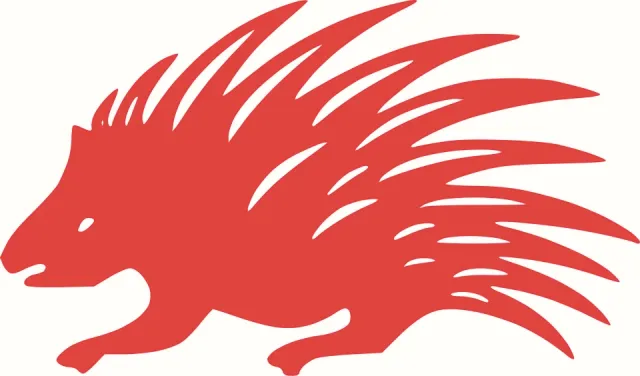
The porcupine emblem and its motto
Asante Kotoko; Kum apem a, apem bebaThe Asante emblem is a porcupine with the motto 'Kum apem a, apem beba': kill a thousand, a thousand will come.
Note on the sources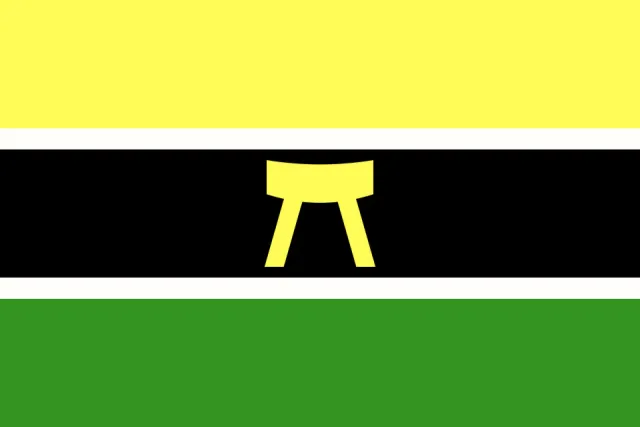
The flag of Asante
The Asante flag has gold, black and green bands with the Golden Stool at the centre, with no documented designer or date.
Note on the sourcesFlags of the 1950s: cocoa, porcupine and the NLM
Two 1950s flags are recorded: one with a cocoa pod and a porcupine, and a 1956 National Liberation Movement proposal.
The crest of Asante Kotoko SC
Asante Kotoko SC took its porcupine crest and name by the Asantehene's leave in 1935.
Adinkra in the symbols of Ghana
Adinkra appear on Ghana's banknotes and university crests, and a sword and linguist staff cross in the coat of arms.
Reading the symbols
How image and proverb work together
An Asante emblem is not a picture to be decoded once. It is a prompt for speech. Rattray saw this in 1922: a simple figure will draw half a dozen proverbs from as many people, all correct,…
Who may display which symbol
Many symbols were restricted. Rattray recorded that the Aban design was once worn by the king alone and that gold ornaments were limited to kings, their wives and great chiefs. Among…
Symbols on walls
Bowdich described and drew the relief ornament of Kumasi houses in 1817, made on cane frames filled with plaster. At the temple of Ta Kora in 1922 Rattray had some wall designs explained: a…
Three, seven, right and left
Acts are done three times: the king set his left foot three times on the musuyidie cloth, touched the lintel and repeated a prayer three times, and palace doors are knocked three times with…
Hair as a sign
mpese; dansinkranHair identifies office. Executioners wore mpese locks, later kept only by priests. Captains' Odwira haircuts became adinkra designs; the queen mother's attendants had their own style.…
Note on the sourcesWhy the lists disagree
Compare Rattray's notes of 1927 with the catalogues of today and the direction of change is clear. Sayings tied to court life become general virtues: 'in the king's favour' becomes…