recorded 1927; in use today
Dwennimmen: ram's horns
Dwennimmen; Dwenini aben (Rattray); Dwenini mmen


Dwennimmen, the ram's horns, teaches that even the strong should be humble.
- Literal meaning
- ram's horns
- Stands for
- strength joined with humility
- What it shows
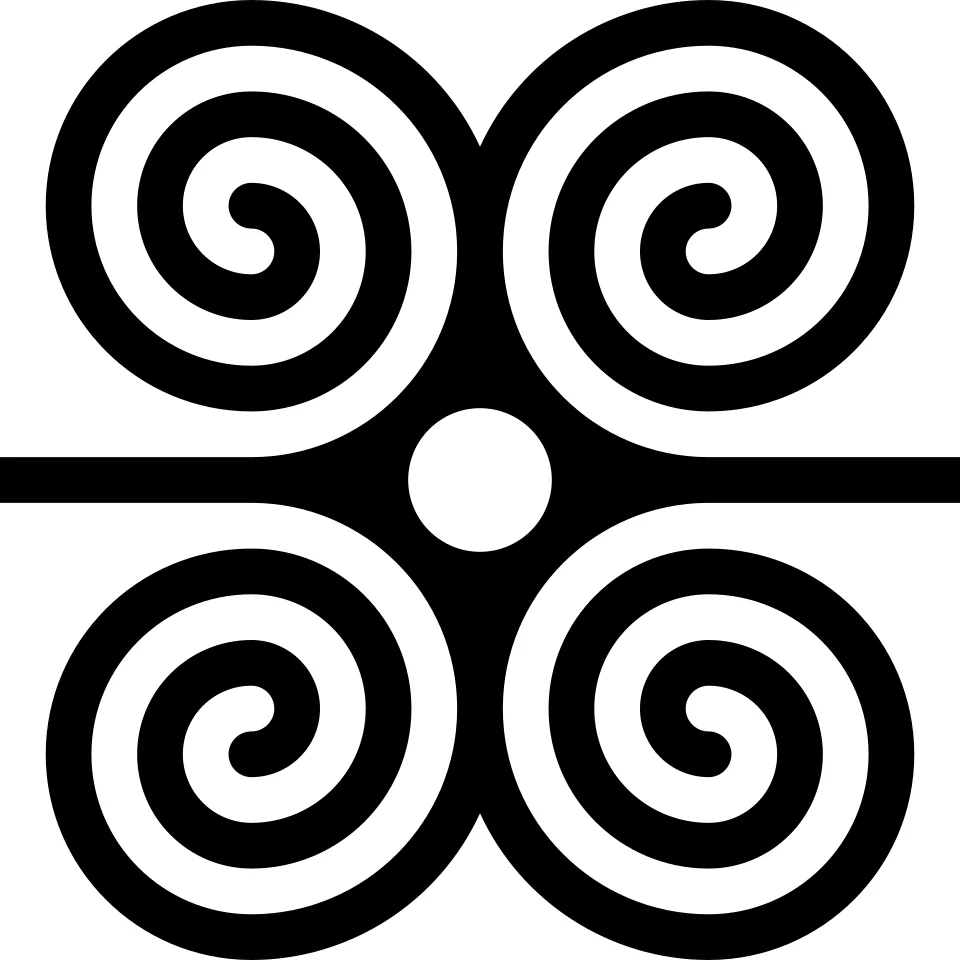
- Ram's horns curling outward from a centre.
- Where it is used
- It features in the crest of the University of Ghana.
- Also written
- Dwenini aben (Rattray), Dwenini mmen
- How sources differ
- Rattray (1927) listed it simply as the ram's horns; a 2025 British Museum study links the ram motif with the Muslim festival of sacrifice, Tabaski.
The sign is traced from a licensed reference and shown in this platform’s own style. Its shape is not changed.
Dwennimmen shows ram's horns curling outward from a centre. The usual reading is strength joined to humility: the ram fights hard, yet it submits quietly to slaughter, so even the strong should be humble. Rattray listed it in 1927 simply as the ram's horns. It features in the crest of the University of Ghana. A 2025 study of early adinkra in the British Museum links the ram motif with the Muslim festival of sacrifice known in West Africa as Tabaski, one of several northern connections it sees in early adinkra. Status: in Rattray's list of 1927, and in the modern catalogues consulted.
Key facts
- Meaning: strength with humility
- In the crest of the University of Ghana
- Rattray (1927): 'the ram's horns'
- Status: in Rattray's list of 1927, and in the modern catalogues consulted.