History › Inside the kingdom
Movements and lives
The struggles inside Asante society across two centuries: court and commoners, slavery and freedom, women and power, faiths on the move, cocoa and money, colonial rule and the National Liberation Movement, with the lives of the people who drove them.
103 sourced entries · every source listed
Power and politics inside the kingdom
Two royal 'houses' and Kwaku Dua's attempt to add a third
Osei ne Opoku sika dwa (the Golden Stool of Osei and Opoku)T. C. McCaskie's account of the dynasty explains a tension that shaped succession for two centuries. Royal status came through the mother: an Asantehene had to belong to the Oyoko lineage…
c. 1764 - 1824The rise of the appointed office-holders of Kumase
Ivor Wilks argued in 1966 that the government seen by nineteenth-century visitors was the product of deliberate reform. Osei Kwadwo began it, and Osei Kwame and Osei Bonsu carried it on.…
Note on the sources1777 - 1803Osei Kwame: a boy king, a regency and a fall, 1777-1803
The Encyclopaedia Africana life of Osei Kwame shows how much could be contested inside the palace. When Osei Kwadwo died in 1777 the ruler of Kokofu, Kyei Kwame, had support in Kumase, but…
Note on the sources1824 - 1833Osei Yaw Akoto, the war party and the breaking of Dwaben, 1824-1832
Ivor Wilks's entry on Osei Yaw Akoto presents a king who took the Golden Stool irregularly and then used it to assert Kumase over the other great states. When Osei Bonsu died in January…
Note on the sources1834 - 1867Kwaku Dua I: how one king gathered power
Kwaku Dua I is remembered for peace and trade, but the sources opened here stress how tightly he held the state. The Encyclopaedia Africana entry records a purge in 1839 of the senior…
Note on the sources1869 - 1874Who ruled? The 'Asante Kotoko' council as the captives saw it
Asante Kotoko (the Asante porcupine)The Basel missionaries Ramseyer and Kuhne, prisoners in Kumase under Kofi Kakari, left a description of government that historians still quote; William Tordoff opened his 1962 study of the…
1820s - 1880s'Peace party' and 'war party': a reading and its critics
Ivor Wilks read nineteenth-century Asante politics as a contest between two broad tendencies in council. One, which he called the peace party, held that the nation's interest lay in trade…
Note on the sources1867 - 1883Why two brothers lost the stool: the 'caretaker' argument, 1874 and 1883
Kofi Kakari was removed in 1874 and his full brother Mensa Bonsu in 1883. The immediate causes were public: the British invasion and, in McCaskie's words, maladministration of the state's…
1883 - June 1884The 'war of promises' and the two deaths of June 1884
bohyee ade sa (war of promises)After Mensa Bonsu's removal the new Asantehemaa Yaa Akyaa was, by constitution, the central figure of the interregnum. McCaskie's reconstruction shows her making a compact with the leaders…
Note on the sourceslate 1884 - early 1887Akyampon Panin, 'the boulder' who sat on Kumase, 1884-1887
bokokuroko (boulder)With two kings dead in a month, Yaa Akyaa tried to keep the stool for her line. McCaskie describes her putting forward candidates she expected to fail, her easy-going second son Kwabena…
Note on the sources1886 - June 1888Yaw Twereboanna against Agyeman Prempeh, 1886-1888
Yaw Twereboanna was, like Prempeh, a grandson of Kwaku Dua I through his father, but his claim carried a stain. His mother Yaa Afere, a younger sister of the queen mother Afua Kobi, had…
1888 - 1890The price of victory: Kumase's concessions of 1888-89
Ahyiamu (a place of meeting)Prempeh's party won the civil war, but McCaskie argues that the settlement reversed a century and a half of Asante history. Until about the middle of the nineteenth century, he writes, the…
1888 - 1891The 'silence' of 1891: a mother, a son and the death penalty
kommyɛ (silence)After the war Yaa Akyaa insisted that Prempeh formally renew the exclusion of Yaw Twereboanna and his kin from the royal line. The ban was widened: sexual relations with any of…
1891 - 1895The assembly of June 1894 and the plan to develop Asante
Asantemanhyiamu (assembly of the nation)In April 1891 the Gold Coast government invited Prempeh to place Asante under British protection because it was said to be decaying. He declined, writing on 7 May 1891 that Asante must…
4 - 20 January 1896January 1896: the debate over resistance
The Owusu Ansa brothers reached Kumase on 4 January 1896, having passed the British camp at Praso, and found the government in emergency session. McCaskie sets out the two positions. The…
1875 - mid-1890sA priest at the head of a secession: the Bron confederation, 1875-1890s
Defeat in 1874 loosened Kumase's hold on its eastern provinces. D. J. E. Maier traced what followed: a group of small provinces broke away from Asante in 1875 and stayed independent until…
Note on the sources1874 - 1900How the state made men fight, and why it stopped working
ntam (oath); nkwansrafoɔ (road wardens)Manuel Manu-Osafo's study of 1874-1900 asks how the Asante state got armies into the field and why it could no longer do so by the 1890s. He lists the instruments. War oaths bound chiefs…
Commoners, youth and protest
The nkwankwaa: Asante's 'young men'
nkwankwaa (sing. akwankwaa)Nkwankwaa is usually translated 'young men', but age is not the point. McCaskie glosses the singular akwankwaa as an aspirant young man: someone without office who had to find his own way…
1877 - 8 March 1883The rising of 1883: commoners against a king
Mensa Bonsu came to a treasury emptied by a decade of war and an indemnity. Wilks's entry on him describes a programme of reconstruction: a new civil service organised by Owusu Ansa, with…
Note on the sources1883 - 1896Asante exiles on the coast, 1883-1896
The civil wars sent thousands of Asante south across the Pra into British territory. After the battle of June 1888 Yaw Twereboanna, the Kokofuhene and thousands of followers fled to the…
1896 - 1930The akonkofo and the Kumasi Gentlemen's Club
akonkofoKwame Arhin gave the name akonkofo to a group of men who became prominent in Kumasi and in the capitals of other Asante states, especially Bekwai, Juaben and Mampon, in the first phase of…
1916 - 1926The Asante Kotoko Society, 1916
The first organisation of educated Asante was founded in Kumasi in 1916. A. Adu Boahen describes it as formed by educated young men with the main purpose of campaigning for the return of…
Note on the sources1918 - 1921'Restless and discontented': the young men after the First World War
Colonial officials in Ashanti watched the young men closely. Boahen quotes the Chief Commissioner explaining why Prempeh's return could not be considered straight after the war: the normal…
November 1934 - February 1935Opponents of 1935: the 'Friends of Ashanti Freedom Society'
Not everyone in Asante welcomed the restoration of the Confederacy on 31 January 1935. The government's printed report of the ceremonies preserves a trace of organised opposition. In a…
Note on the sources1930 - 1938Holding up the cocoa, 1930-31 and 1937-38
Twice in the 1930s farmers in the Gold Coast and Ashanti refused to sell their cocoa. The second hold-up is the better documented in the sources opened. In mid-1937 the large European…
Note on the sourcesJuly 1947 - 1954The Asante Youth Association, 1947-1954
In 1947 the young men of Kumasi organised again, this time as the Asante Youth Association. The life of Krobo Edusei dates its founding to July 1947 and names him among the founders; he was…
Note on the sourcesSlavery, pawnship and freedom
Five words for servitude: akoa, awowa, odonko, domum, akyere
akoa, awowa, ɔdɔnkɔ, domum, akyereR. S. Rattray, the colonial government anthropologist, recorded in the 1920s that Asante had at least five terms for conditions of servitude, and warned that interpreters blurred them by…
nineteenth century (recorded 1920s)Buying a person at Salaga: one trader's memory
tramma (earnest money)Rattray took down an account from an Asante man who had often traded at Salaga, which he called the great slave market of former times. The market had stands for slaves, cattle, sheep and…
nineteenth centuryRights, marriage and absorption: how slaves became Asante
nnɔnkɔmma (children of slaves)Rattray quoted Mary Kingsley's phrase for West African slavery, 'a state of servitude guarded by rights', and listed what he was told an Asante slave could do: marry, own property, own a…
Note on the sources1807 - 1883Slaves in Kumase households and a treasurer's warning, 1817
The end of the Atlantic slave trade did not end the flow of captives and purchased people into Asante; it kept more of them there. In 1817 the treasurer Opoku Frefre, who then oversaw the…
nineteenth century; debate 1980sKilling at royal funerals: reports and historians' arguments
akyereEuropean visitors from Bowdich onward reported that people were put to death at the funerals of kings and great men and at the annual Odwira, and nineteenth-century Britain made 'human…
Note on the sources1896 - June 1908Twelve years' delay: British rule and slavery in Ashanti, 1896-1908
Britain had ended the legal status of slavery in the Gold Coast Colony in 1874. In Ashanti, occupied in January 1896, slavery was not prohibited until June 1908. Sir Francis Fuller, Chief…
Note on the sources1896 - c. 1950Emancipation in practice: cocoa, kin and who got free
Gareth Austin's work replaces the official story of a quick abolition with a slower and more uneven one. The early suppression of slave trading cut off the supply of new captives, and the…
Women and power
What a queen mother does: nominator, adviser, judge
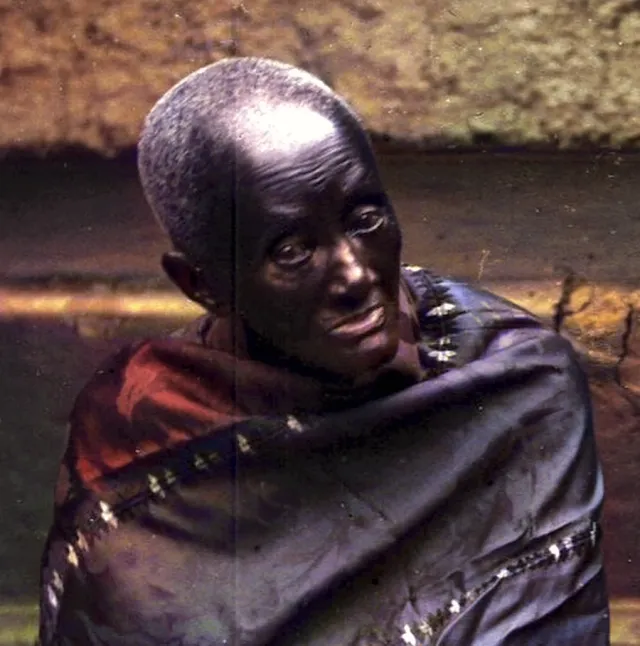
ɔhemaaThe English phrase 'queen mother' for the Asante ohemaa is often credited to Rattray, but Beverly Stoeltje points out that it already appears in the English edition of Ramseyer and Kuhne in…
 1857 - 1883
Queen mothers who fell: Afua Sapon and Afua Kobi
The Asantehemaa's place beside the king did not make her safe from him or from the council. Afua Sapon held the stool under Kwaku Dua I. The Encyclopaedia Africana records that between 1857…
nineteenth centuryMarriage, adultery fees and the power of men over men
ayɛfere sika (adultery compensation); aseda (thank-offering)Rattray listed six forms of union recognised in Asante. The marriage of a free man and a free woman needed little ceremony: the giving and acceptance of aseda, a thank-offering that served…
1850s - 1880sRoyal women as dynastic capital
McCaskie's account of Prempeh I's birth shows royal marriage used as an instrument of state. Asante lineages married out, and the most valued match was between cross-cousins, repeated…
1924 - 1931Stool wives and the politics of the royal household, 1926
ayete (stool wives)Prempeh I returned from exile in 1924 a confirmed Anglican who had become monogamous in order to take communion. Late in 1926, after his recognition as Kumasihene, he restored the royal…
1929 - 1932The 'spinster' round-ups, 1929-1932
Between 1929 and 1932, in a number of towns and villages of rural Asante, chiefs ordered the arrest of every woman over about fifteen who was not married. Jean Allman reconstructed the…
Note on the sourcesc. 1900 - 1950Women, cocoa and unequal freedom
Three strands of research meet on the position of women in colonial Asante's cocoa economy. Jean Allman observes that during the first planting of cocoa wives were the most common form of…
Note on the sources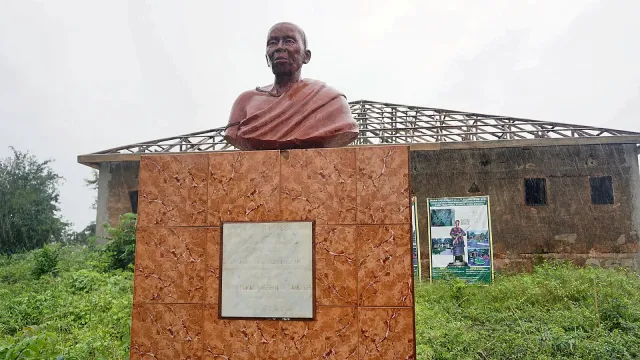 2000 - present
Whose Yaa Asantewaa? The centenary of 2000
T. C. McCaskie's article 'The Life and Afterlife of Yaa Asantewaa' treats the queen mother of Edweso as two subjects: a woman of the nineteenth century, and a reputation still being made.…
Note on the sourcesnineteenth centuryWomen's rites in wartime
mmomommeWhen Asante armies marched, the women who stayed behind had a recognised part in the war. Manuel Manu-Osafo, listing the means by which the state sustained its soldiers in the field, places…
Note on the sourcesReligion on the move
Domankama, 1879-80: a movement that tried to kill the king
domankama ('the Creator'); abonsamkɔmfoɔIn the last years of the 1870s a religious movement called Domankama, a name meaning 'the Creator', spread in Asante. T. C. McCaskie counts it the first of three anti-witchcraft cults he…
Note on the sources1906 - August 1908Aberewa, 'the Old Woman', 1906-1908
aberewa ('the old woman')A new witch-finding cult swept Asante in the first decade of British rule. Sir Francis Fuller, who suppressed it, wrote that 'Abirewa' appeared suddenly in 1907, came from the French Ivory…
Note on the sources1920s - 1940sWitch-finding shrines and colonial 'discipline', 1920s-1940s
hwe me so ('watch over me')Suppressing Aberewa did not end the demand it met. McCaskie's third cult, Hwe me so, 'watch over me', flourished in the 1920s. William Olsen's study of the period opens in the spring of…
Note on the sourceseighteenth century - 1867Scholars from Gonja at the Asante court
Asante Nkramo (Asante Muslims)The Muslims closest to the Golden Stool came from one learned family. Ivor Wilks traced them to Buipe in western Gonja, where two scholars of the Kamaghatay family, Muhammad ibn al-Mustafa…
 1896 - 1950s
The Kumasi Zongo and the growth of Islam after 1896
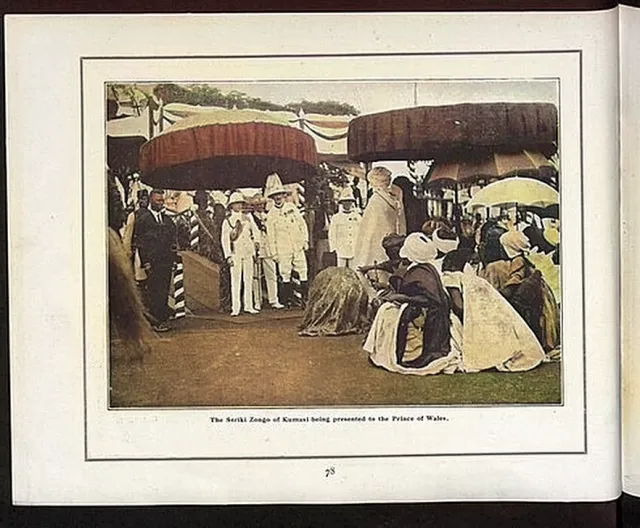
zongo (Hausa: caravan halting-place)The Muslim quarter of modern Kumasi is a creation of the colonial period. Enid Schildkrout dates the settlement of northern and foreign immigrants to about 1896, when a British Resident was…
Note on the sources1839 - 1876Christianity admitted and refused, 1839-1876
For most of the nineteenth century the Asante court dealt with missionaries on its own terms. Thomas Birch Freeman reached Kumase on 1 April 1839 and was refused leave to build a church or…
Note on the sources1896 - 1921Converts, chiefs and service: missions in Ashanti by 1920
Under British rule the missions came in behind the troops. By the time Fuller wrote, six were at work in Ashanti: the Church of England, the Wesleyans, the Roman Catholics, the Scottish…
June 1918 - March 1922From 'give up the Stool' to 'we make no claim', 1918-1922
Sika Dwa KofiThe desecration of the Golden Stool in 1921 is usually told as an Asante story. Boahen's account shows it was also the moment British policy turned. As late as 1 June 1918 Fuller, a…
Note on the sources1924 - 1929The Golden Stool in an Anglican church, 1929
Prempeh I's Christianity was sincere and partial, and he used it. Akyeampong's studies describe a king who had been baptised and confirmed in exile, who took the Church of England because,…
Money, cocoa and change
Wealth, the Golden Stool and death duties
asikafoɔ (the wealthy); ɔbirɛmpɔn (big man)In pre-colonial Asante a man could grow rich, but his gold was never wholly his own. Ivor Wilks's essay 'The Golden Stool and the Elephant Tail' (1979) set out the principle, and McCaskie's…
Note on the sources1807 - 1896Rich commoners and small producers, 1807-1896
asikafoɔ; ahiafoɔ (the poor)Older accounts described the nineteenth-century Asante economy as dominated by the state: royal traders, state monopolies, and chiefs who owned most of the slaves. Gareth Austin's article…
1884 - c. 1910The rubber boom, 1884-1900s
Before cocoa there was rubber. Raymond Dumett showed that wild rubber, tapped from forest trees and vines, became a major export of the Gold Coast and Asante in the 1880s at a moment when…
Note on the sourcesnineteenth century - 1918Kola and the northern trade
Kola was the older of Asante's forest exports and went north, not south. Rattray's Salaga informant describes the nineteenth-century pattern: a trader carried kola to the great market, sold…
c. 1900 - 1918Cocoa takes hold, c. 1900-1918
Cocoa reached Asante from the Gold Coast Colony at the turn of the century. Fuller, writing of 1906, said its cultivation had been introduced 'a few years earlier', and the export that year…
Note on the sourcesc. 1916 - mid-1930sWages, advances and mortgages: south Asante, 1916-1933
Gareth Austin's study of Amansie district follows what happened once the first cocoa boom was over and prices were lower and growth slower. In those years the farms changed character.…
1930s - 1950sWhen land ran short: the 1940s and the move west
For most of Asante's history land was plentiful and labour scarce; cocoa reversed the ratio in the oldest planting districts within two generations. Austin gathers the evidence for the…
Note on the sources1903 - 1925Railway town: Kumasi's growth, 1903-1925
Fuller records that the first train steamed into Kumasi in October 1903, completing the line from the port of Sekondi through the gold-mining town of Obuasi. A second line, from Accra,…
Note on the sources1905 - 1910Whose wealth is a chief's wealth? The rule of 1910
Colonial rule removed the king who had taxed estates and left the chiefs of Kumase to decide what happened to a chief's property when he died. McCaskie's two biographical studies show the…
Colonial rule and Asante nationalism
Residents and Chief Commissioners of Ashanti, 1896-1957
From 1896 Ashanti was governed by a British officer in Kumasi answering to the Governor at Accra. Fuller names Lieutenant-Colonel Piggott as the first Resident appointed after the…
Note on the sources1901 - 1907Cutting Kumase off: the four provinces and the Council of Chiefs, 1901-1905
The first principle of British administration after the 1900 war was to separate Kumase from the rest. Fuller states it bluntly: because the Kumase chiefs' interference in the affairs of…
1900 - 1905Stools for loyalists, 1901
The war of 1900 emptied many stools. Fuller lists those left vacant by death or dismissal: Adanse, Kokofu, Nsuta, Bekyem, Nkwanta, Abodom, Edweso, Offinso, Atwoma, Nkawie, and six of the…
1917 - 12 July 1924The terms of return: petitions and the bond of 1924
Boahen's documented account shows the stages by which Prempeh's repatriation became possible. The exile's own petition of 21 January 1918 was widely printed in the Gold Coast press.…
Note on the sources1924 - 1931Private citizen, public king: Asante opinion and Prempeh, 1924-1931
Akyeampong describes kingship after 1924 as having two faces. Officially 'Mr Edward Prempeh' was a private citizen; to his people he had never ceased to be Asantehene, since they had…
1926 - 1930Rebuilding Bantama and asking for the Aya Kese, 1926-1930
Aya Kɛseɛ (the great brass pan)Among Prempeh I's quieter acts of restoration was the rebuilding of the royal mausoleum at Bantama, which Akyeampong says British troops destroyed in 1896. It had held, in separate rooms,…
Note on the sources1935 - 1950The Asantehene-in-Council, 1935-1950
The Confederacy restored in 1935 was a colonial institution as well as a revival. Alessandro Triulzi's study describes its council as governed by legislation that defined the area of its…
Note on the sources1934 - 1946From the 1934 delegation to the Burns constitution of 1946
Asante's entry into Gold Coast politics came in stages. In 1934 a delegation went to London to oppose two measures of the Gold Coast government, the Sedition Bill and the Waterworks Bill.…
Note on the sourcesThe National Liberation Movement
Seats, rebels and the price of cocoa: the triggers of 1954
Three grievances met in Asante in the middle of 1954. The first was representation. The commission that drew constituencies for the election of June 1954 gave Ashanti twenty-one seats in an…
Note on the sources19 September 1954The launch of 19 September 1954
The National Liberation Movement was inaugurated in Kumasi on 19 September 1954. Its chairman was Bafuor Osei Akoto, a senior spokesman of the Asantehene and a substantial cocoa farmer, who…
Note on the sourcesOctober 1954 - 1956Violence in Kumasi, 1954-1956
Within weeks of the launch the contest between the movement and the governing party turned violent. In October 1954 E. Y. Baffoe, the movement's propaganda secretary and a former Convention…
Note on the sources1955 - April 1956Federation, the Bourne mission and the Achimota conference, 1955-1956
mate me ho ('I have separated myself')The movement's constitutional demand was federation: regions with control of their own internal affairs, which its leaders presented as a safeguard against dictatorship. Its statement that…
Note on the sources17 July 1956The election of 17 July 1956
The election that decided the form of independence was held on 17 July 1956. Across the Gold Coast the Convention People's Party won 71 of 104 seats with about 57 per cent of the vote. The…
Note on the sourceswritten 1964 - 2000How historians read the National Liberation Movement
Three bodies of work frame discussion of the movement. The first full narrative is Dennis Austin's Politics in Ghana, 1946-1960 (1964), which later writers and Ghanaian commentators still…
Note on the sources1957 - 1966After independence: the United Party and preventive detention
Independence did not end the conflict. At the end of 1957 the Avoidance of Discrimination Act outlawed parties based on region, religion or ethnicity, which covered the National Liberation…
Note on the sourcesLives
 late seventeenth - early eighteenth century
Okomfo Anokye: what is recorded and what is told
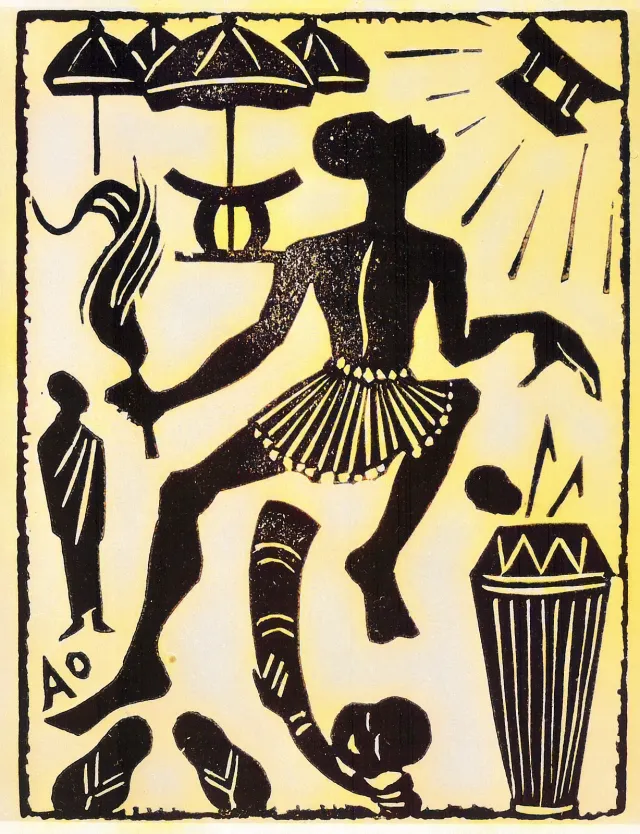
ɔkɔmfo (priest)Almost everything said about Okomfo Anokye comes from tradition written down two centuries or more after his time. J. K. Fynn's entry in the Encyclopaedia Africana calls him both a folk…
Note on the sourcesc. 1760 - 1826Opoku Frefre (c. 1760-1826): doorkeeper, treasurer, general
frefre (nimble)Opoku Frefre is the best-known example of a man raised by royal favour. He was born about 1760 at Anyatiase near Lake Bosomtwe; his mother was Ama Nyaako Pakyi and little is known of his…
Note on the sourcesc. 1773 - c. 1838Adoma Akosua (c. 1773 - c. 1838): the queen mother who plotted
Adoma Akosua became Asantehemaa in 1809 on the death of Konadu Yaadom. She was born in Kumase about 1773 into a branch of the royal Oyoko that had been shut out of the succession and was…
Note on the sourceseighteenth century - c. 1832Akyaawa Yikwan: 'she who blazed the trail'
Yikwan ('one who makes a new path')Akyaawa was a mature woman of the royal family when she entered the record. Ivor Wilks, whose essay on her gives the usual account, identifies her as a daughter of the Asantehene Osei…
Note on the sourcesactive 1860s - 1874Asamoa Nkwanta, the general called Srafo Kra
Srafo KraAsamoa Nkwanta held the office of Anantahene and was the most respected soldier of his generation; Fynn calls him the veteran general who taught Amankwatia military science. Fuller…
Note on the sourcesc. 1833 - January 1874Amankwatia (c. 1833-1874), commander in 1873
The Amankwatia who led the invasion of the British protectorate in 1873 was the third commander of that name. J. K. Fynn's entry says he was born about 1833 at Akrofuom in Adanse and was of…
Note on the sourcesactive 1860s - 1883Adu Bofo (d. 1883), treasurer and general
Adu Bofo was a son of Opoku Frefre and held his father's office at the head of the royal treasury, with a permanent seat on the Kumase council. In the 1870s a European described him as…
Note on the sourcesc. 1818 - November 1884Boakye Tenten (c. 1818-1884), counselor and stepfather of kings
Boakye Tenten was the son of Oti Panin, a spokesman of Osei Bonsu who died in 1826. In his early thirties he was resident commissioner at Salaga, the great northern market. About 1852 he…
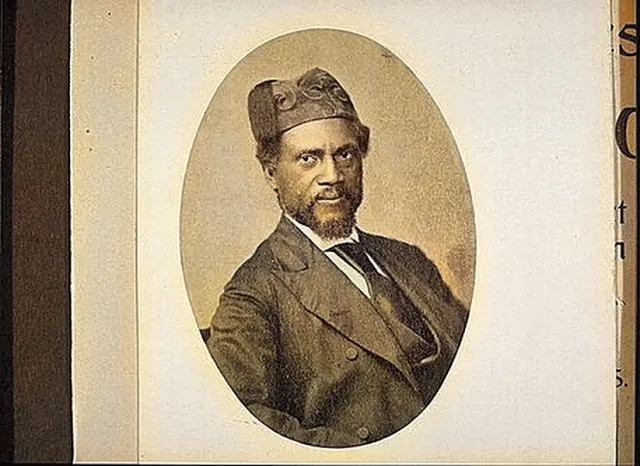 c. 1822 - 13 November 1884
Owusu Ansa (d. 1884): hostage, catechist, royal secretary
ɔheneba (king's son)Owusu Ansa was a son of Osei Bonsu. In 1831, as security for the peace treaty, he and his cousin Owusu Nkwantabisa were handed to the British at Cape Coast. They attended the castle school…
Note on the sourcesactive 1884 - 1896John and Albert Owusu Ansa: ambassadors of 1895
When the elder Owusu Ansa died in 1884 his sons John and Albert were already launched on careers in the Gold Coast civil service and in business. Both were grandsons of Osei Bonsu through…
Note on the sources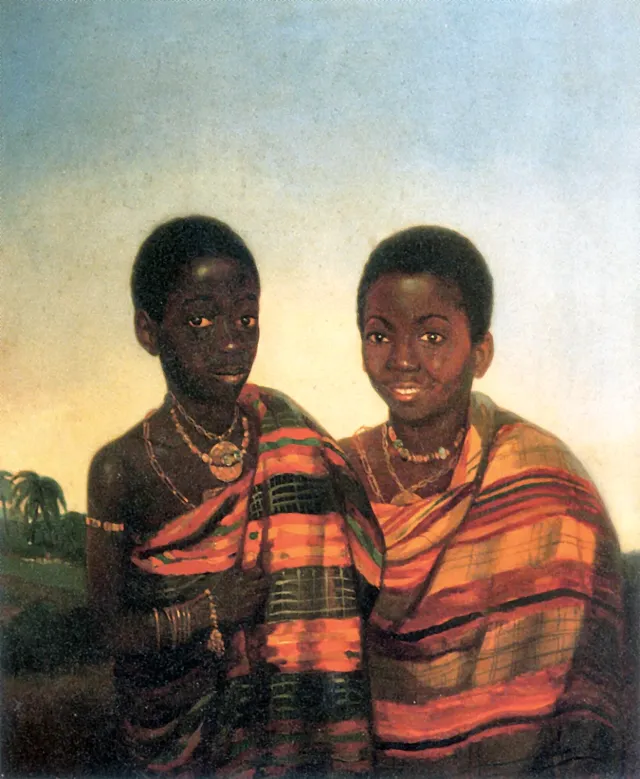 1827 - 1904
Kwasi Boakye and Kwame Poku: two princes sent to Holland
Kwasi Boakye was born in Kumase in 1827, one of the eldest sons of the future Kwaku Dua I; his mother was related to the head of the royal blacksmiths. In 1837, as part of the dealings by…
Note on the sourcesc. 1820s - 1885Asafo Agyei of Dwaben (d. 1885)
Asafo Agyei's life followed the fortunes of Dwaben. His father Boaten Panin was Dwabenhene from about 1800 to 1837; his mother came from Kwawu. He served as the state's war leader before…
c. 1840s - 1917Yaa Akyaa (d. 1917): queen mother, kingmaker, exile
Yaa Akyaa, whom McCaskie calls Yaa Kyaa, was the elder daughter of the Asantehemaa Afua Kobi. Kwaku Dua I married her to two of his sons in turn, and she bore thirteen children; in the…
Note on the sourcesc. 1830s/1840s - 17 October 1921Yaa Asantewaa of Edweso (d. 1921)
Yaa Asantewaa was born at Besease in the state of Edweso; Boahen puts her birth in the 1840s or 1850s, McCaskie in the 1830s, and popular accounts about 1840. She farmed near Boankra and…
Note on the sources1900 - 1901Kofi Kofia and the war leaders of 1900
The fighting men of 1900 are poorly served by the record, which is mostly British. Fuller's account, drawn from Kumase informants after the war, says that on the night of the governor's…
Note on the sourcesc. 1860s - c. 1950Kwame Tua (d. c. 1950): a hornblower made chief
ntahera (horn ensemble)Kwame Tua was a younger brother of Kwasi Apea Nuama and belonged to the Asokwa stool, whose people served the king as hornblowers and as traders. He was a court musician, and Mensa Bonsu, a…
c. 1862 - 22 October 1936Kwasi Apea Nuama (c. 1862-1936), the Chief Commissioner's spokesman
ɔkyeame (spokesman)Kwasi Apea Nuama was the eldest child of the Asokwahene Kwasi Ampon and Yaa Mena of Amoaman. His father trained him as a royal trader, and he travelled to the coast for Kofi Kakari and…
6 December 1809 - 12 August 1890Thomas Birch Freeman (1809-1890)
Freeman was born at Twyford in Hampshire to an African father, Thomas, and an English mother, Amy Birch. He trained as a gardener and botanist and rose to be head gardener on a Suffolk…
c. 1884 - c. 1960/1965Samson Oppong (c. 1884 - c. 1960), prophet of the Methodist revival
Kwame Oppong told his biographer Hans Debrunner in 1957 that he had been about twelve when the British took Prempeh. He was born at Akuntanim near Berekum, the son of a man described as a…
Note on the sources1881 - 1938R. S. Rattray (1881-1938): a critical life
Robert Sutherland Rattray was born in India to Scottish parents. He joined the Gold Coast customs service in 1906, became an assistant district commissioner at Ejura in 1911, qualified as a…
Note on the sources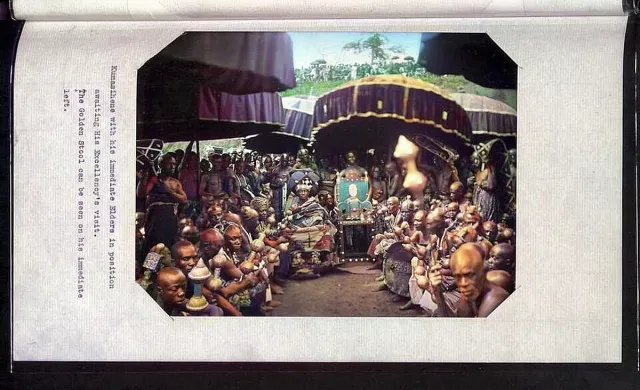 1892 - 1931
Edward Prempeh Owusu: Prempeh II before the stool
The man who became Osei Agyeman Prempeh II was born in 1892 to Akua Bakoma, a royal woman, and the spokesman Kwaku Owusu of Besease near Edweso. He was a nephew of the exiled king and was…
Note on the sources1903 - 27 February 1976E. O. Asafu-Adjaye (1903-1976), first Asante lawyer
Edward Okyere Asafu-Adjaye was born in 1903 at Calabar in Nigeria, where his father was working; the family was of Asante royal descent and his father later became Adontenhene. He went to…
21 September 1904 - 10 September 1963J. W. Tsiboe (1904-1963) and the Ashanti Pioneer
John Wallace Tsiboe was not Asante by birth. His father was a military chief in the Assin Attandaso area and his mother came from a royal house of Abora. Educated at the Wesleyan boys'…
1904 - 2002Bafuor Osei Akoto (1904-2002)
ɔkyeame (spokesman)Bafuor Osei Akoto was born in 1904. His parents, Kofi Owusu Sekyere and Akosua Apea, were from Kwabre, and he claimed descent from former kings on both sides. As a young man he was a…
Note on the sources11 July 1913 - 28 August 1978K. A. Busia (1913-1978): scholar of chieftaincy, leader of the opposition
Kofi Abrefa Busia was born at Wenchi, then part of Ashanti, on 11 July 1913. He was schooled at the Methodist school there and at Mfantsipim, taught at Wesley College in Kumasi and joined…
Note on the sources1918 - 1990J. W. K. Appiah and Joe Appiah
Joseph Emmanuel Appiah was born in Kumasi in November 1918. His father, James W. K. Appiah, was a schoolmaster, a leader among Kumasi Methodists and a man of chiefly family who became chief…
Note on the sources26 December 1915 - 13 February 1984Krobo Edusei (1915-1984)
Krobo Edusei was born on 26 December 1915 at Ampabame in Ashanti to Kwabena Edusei and Ama Darkowah, and grew up at the court of a sub-chief. After elementary school at the government boys'…
Note on the sources1919 - 2009Victor Owusu and R. R. Amponsah
Two of the National Liberation Movement's educated leaders came from Asante states north of Kumasi. Reginald Reynolds Amponsah was born on 30 December 1919 at Daaman near Mampong. He left…
Note on the sources