History › Where the people came from
Origins and the great movements
The origin stories as each clan and each state tells them, set beside what archaeology, language and the written record can show, and the movements of peoples that made the forest kingdoms.
91 sourced entries · every source listed
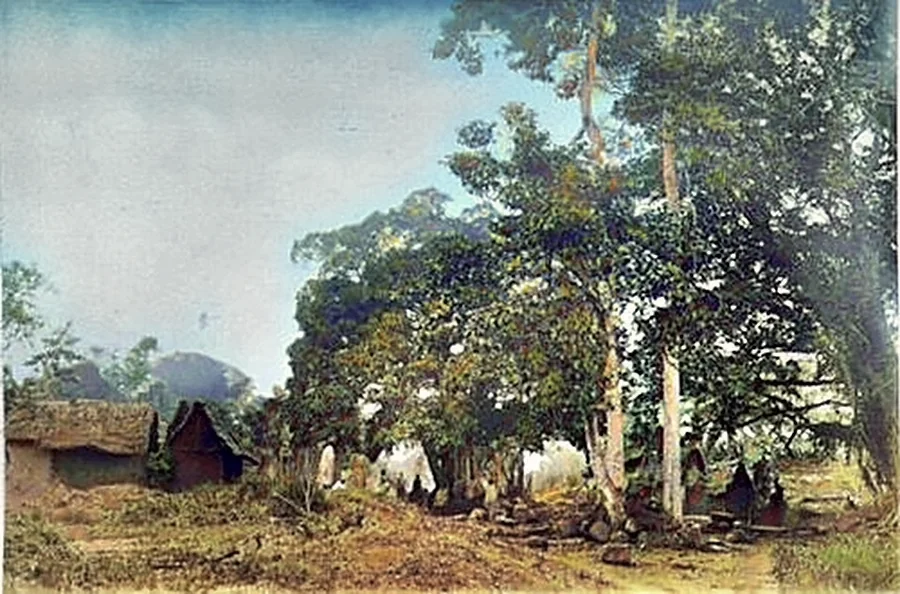
Theories of Akan origins
Where did the Akan come from? Two centuries of answers
Writers have given three kinds of answer to the question of Akan origins. The first, from European visitors of the early nineteenth century, repeated or elaborated traditions of a movement…
recorded 1817, published 1819Bowdich's version, 1817: an emigration and a guess at its direction
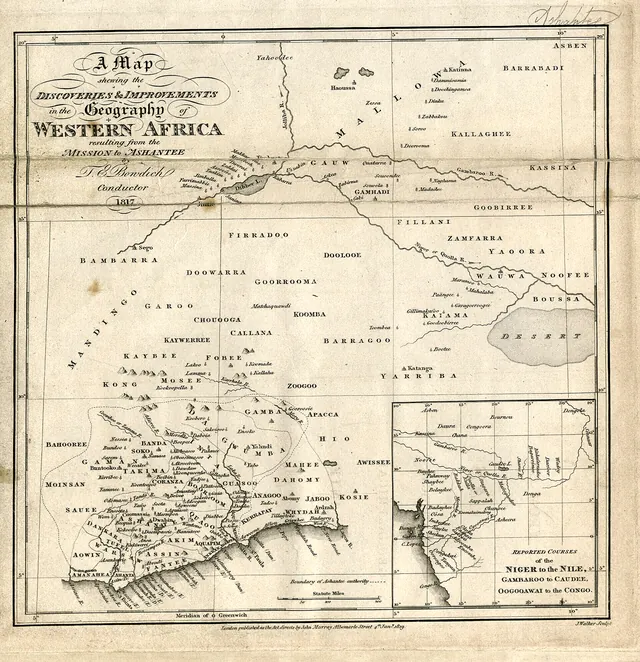
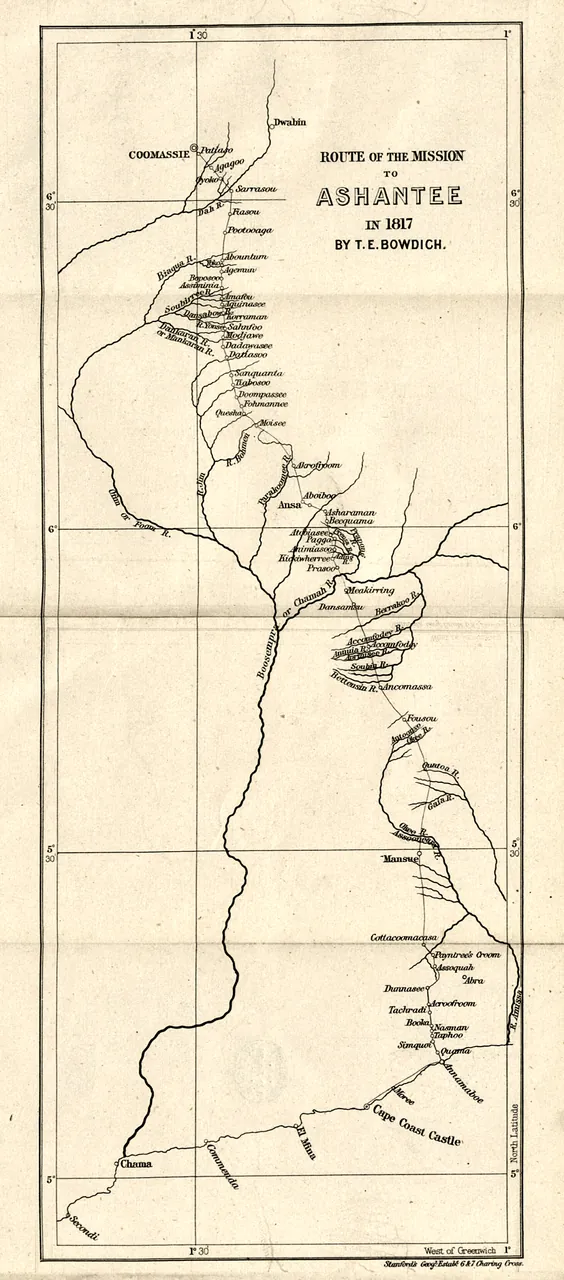
Thomas Bowdich spent some months in Kumasi in 1817 and opened the history chapter of his book with what he called the common tradition: that the Asante had come from a country nearer the…
Note on the sourcesrecorded 1820, published 1824Dupuis's version, 1820: driven into the forest by 'believers'
Joseph Dupuis, British consul in Kumasi in 1820, took his history largely from the town's Muslim residents, among them the men he calls the Bashaw, Aboubecr and Kantoma, and from the king.…
Note on the sourcespublished 1895Reindorf's version, 1895: from 'Central Africa' to the land between the Kong mountains and the Pra
Carl Christian Reindorf, a Ga pastor of the Basel Mission, gathered traditions along the coast and inland for his History of the Gold Coast and Asante. His opening chapter says the…
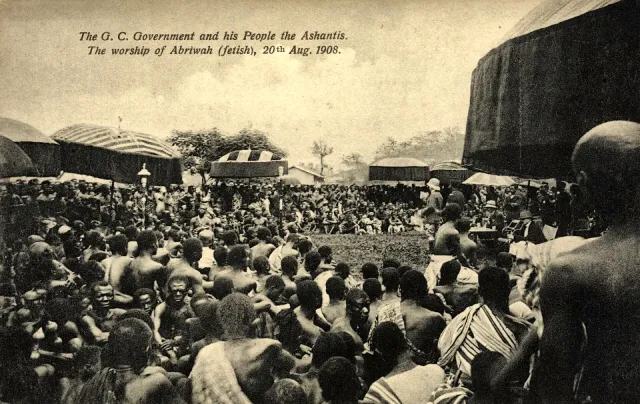 1921 - 1929
Colonial officials on origins: Fuller's 'sensible' northern theory and Rattray's north-then-south
The two British officials who wrote most on Asante between the wars both assumed a northern origin while recording traditions that said otherwise. Sir Francis Fuller, Chief Commissioner…
early 20th century - 1957The Ghana hypothesis: Balmer, Danquah and the naming of a country
In the early twentieth century the missionary historian W. T. Balmer proposed that the Akan had come from the medieval empire of Ghana, the Soninke kingdom of the western Sudan described by…
Note on the sources1940s - 1976Eva Meyerowitz's theories and why historians rejected them
Eva Meyerowitz worked at Techiman in the 1940s with the support of the Techimanhene, Nana Akumfi Ameyaw III, and published a series of books that brought the Bono, and through them all the…
Note on the sources1960s - presentThe forest-origin view: language, digging and the Pra-Ofin heartland
From the 1960s Ghanaian and other historians moved the search for Akan origins from distant empires to the forest itself. A. Adu Boahen's short paper 'The Origins of the Akan' (Ghana Notes…
Note on the sources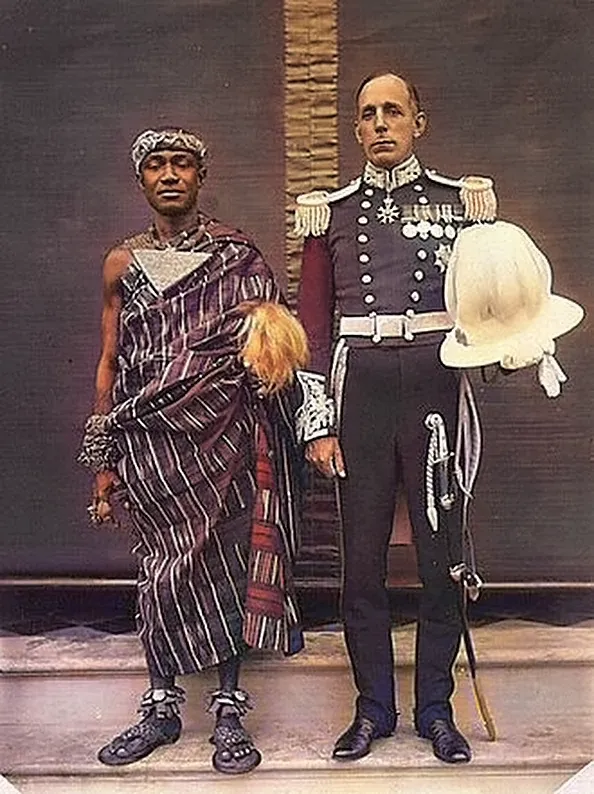 1907 - 1940s
A king's doubt: Prempeh II on the Asantemanso story
The origin story was debated inside the royal house as well as among scholars. Agyeman Prempeh I, writing in exile in Seychelles in 1907, opened his History of Ashanti Kings with the…
Note on the sourcesArchaeology and language
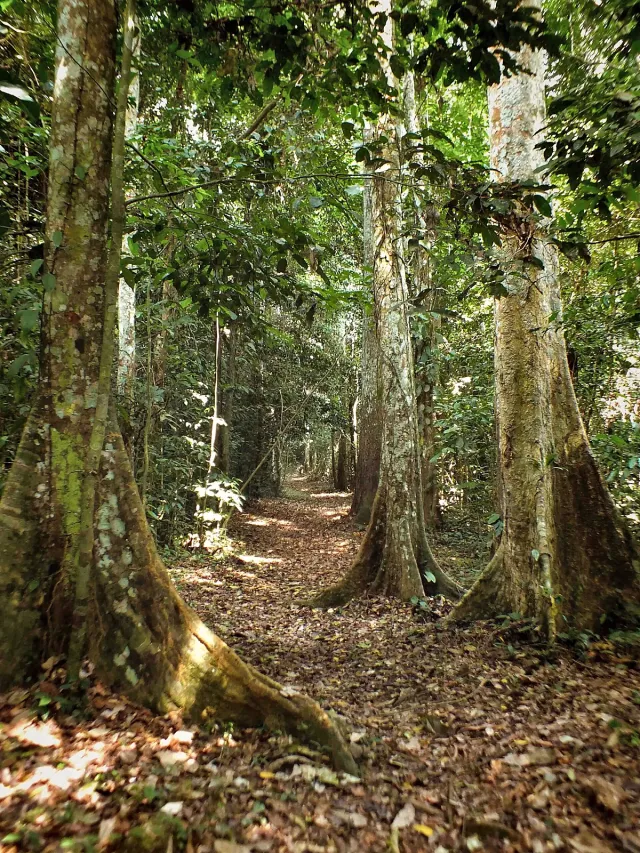 excavated 1986-1991; occupied from c. 9th century CE
Digging at Asantemanso, 1986-1991
AsantemansoPeter Shinnie's Asante Research Project chose Asantemanso because Rattray's 1923 description and local tradition both pointed to it as the place where the Asante began. A survey in 1986 was…
Note on the sourcesexcavated 1991 and 1995; peak 13th-15th centuriesAdansemanso: the largest old town yet found in the central forest
AdansemansoAdansemanso, remembered as the first capital of Adanse and one of the five original towns of the Akan, was tested briefly at the end of the 1991 season and dug again in a final season in…
Note on the sourcessites of the 15th-19th centuriesLooking for Osei Tutu's world: the digs at Anyinam and Esiease
Besides the two famous sites, Shinnie's project tested two places that tradition ties to Osei Tutu's family. Anyinam, near Kokofu, is remembered as his birthplace. Two radiocarbon samples…
first millennium CE - abandoned before c. 1450The forest earthworks of the Birim valley
Scattered through the forest of southern Ghana, and thickest in the Birim valley, are enclosures ringed by a bank and a deep ditch. The geologist N. R. Junner reported them in the 1930s; H.…
Note on the sourcesc. 11th century - early 19th century; excavated 1970-1979Begho under the spade: Posnansky's market town
Begho stood just south of the present village of Hani, in the country where forest gives way to savanna, and its ruins were excavated by the University of Ghana under Merrick Posnansky from…
Note on the sourcesc. 4th - 18th centuries CEAmowi and Bono Manso: Effah-Gyamfi's test of a tradition
Techiman tradition says the ancestors of the Bono came out of Amowi, a sacred hole and rock shelter near Pinihi in the Nkoranza area, on a Friday; that a queen, Ameyaa, led them to a…
Note on the sourcesc. 2000 BCE - 1500 CEHow old is life in the forest? From Kintampo to the iron-working towns
Dates from many sites now give an outline of settlement long before any named state. The Kintampo complex of central Ghana, about 2000 to 500 BCE, is the earliest evidence of settled…
recorded 1921-1923'God's axes': what Asante elders told Rattray about stone tools
'Nyame akuma (the Sky God's axes)Polished stone axe-heads turn up all over Asante in farms and stream beds. Rattray found that they were called 'Nyame akuma or 'Nyame asoso, the axes or hoes of the Sky God, and that most…
Note on the sourcespresent classificationAkan among its relatives: Tano, Kwa and the Bia languages
Linguists place the speech of the Asante in a small, tight family. The wider group, called Akan or, to avoid confusion, Central Tano, has two branches. One is Twi-Fante, the dialect…
19th century - presentAsante Twi and its sister dialects
TwiWhat outsiders call Akan is, to its speakers inland, Twi, and on the coast, Fante. The varieties form a chain in which neighbours understand each other easily. Asante, Akyem and Kwahu…
1961 - 2022Mande words in Twi: evidence of a 'northern factor' or a myth?
kramo (Muslim; from a Manding word for teacher)In 1961-62 Ivor Wilks published 'The Northern Factor in Ashanti History: Begho and the Mande' and, with the linguist John Stewart, 'The Mande Loan Element in Twi'. They listed about twenty…
Note on the sources1471 - 18th centuryPortuguese on the coast and its faint traces inland
borodee (plantain)The Portuguese were the only Europeans on the Gold Coast for more than a century after 1471, and a Portuguese-based trade jargon outlived their rule. A study of Portuguese on the Gold…
Origin stories of the clans
tradition; recorded December 1921The Monday night emergence at Asantemanso, as the queen mother told it in 1921
AsantemansoThe fullest version of the emergence story was given to R. S. Rattray by the queen mother at Asantemanso, in the Asumegya state, in 1921. Very long ago, on a Monday night, a worm bored its…
Note on the sources12 December 1921Inside the grove: the rite Rattray watched on 12 December 1921
mma (barrier across the path); nokwabo (the 'truthful stone')Rattray was allowed to attend a ceremony in the sacred grove on Monday 12 December 1921. The occasion was the queen mother's recent remarriage: her new husband, Pensan, owed an offering…
historic; recorded 1921Laws of the grove: sanctuary, taboos and the king who may not enter
Asantemanso was governed by rules that set it apart from every other place in Asante. The names of the first ancestors could be spoken only on a Monday or a Tuesday, or at a ceremony with…
1817 - 1929How many clans? Bowdich's twelve, Reindorf's seven, Rattray's eight
abusua (matrilineal clan)The number and names of the clans have never been fixed in the written record. Bowdich in 1817 was told that the Akan peoples had once formed twelve families, and that members of the same…
Note on the sourcestradition: c. 1700; recorded 1895-1929Why the clan pairs merged, and why origins are not spoken of
Two rules attributed to the founders of the union shaped what Asante people would later say about where their clans came from. The first concerns the paired clans. Rattray was told that…
traditionOyoko: the royal clan's three origin stories
OyokoThe Oyoko clan holds the Golden Stool and the stools of Kokofu, Dwaben, Bekwai and Nsuta, and its origin is told in at least three ways. In the Kumase royal version written down for Prempeh…
Note on the sourcestraditionDako: the left-hand partners of the Oyoko
DakoThe phrase 'Oyoko and Dako' joins the royal clan to a second group whose status has been explained in different ways. Prempeh I's history says that when the families gathered round Ankyewa…
Note on the sourcestraditionAduana: first out of the ground, with the dog that carried fire
AduanaIn the traditions of Asumegya and Kumawu the Aduana were the first people at Asantemanso. Asumegya told Rattray that its founder Kusi Aduaku came out of the ground on a Monday night with…
Note on the sourcestraditionBretuo: from the ground or the sky at Adanse Ahensan
BretuoThe Bretuo, who hold the Silver Stool of Mampong, place their beginning not at Asantemanso but at Ahensan in Adanse. The Mampong stool told Rattray that the Beretuo and their partner clan…
Note on the sourcestradition; dispersal in the 17th centuryAsona: from Kokobiante to Akyem, Edweso and Offinso
AsonaThe Asona are among the most widely spread of the clans, ruling Akyem Abuakwa as well as the Asante states of Offinso and Edweso (Ejisu). Traditions collected in Adanse, and attributed in…
Note on the sourcestradition; 17th centuryAgona: the clan of Denkyira's kings and of Anokye's stool
AgonaThe Agona clan is tied above all to Denkyira, whose kings belonged to it. Traditions place the early Agona on the western edge of Adanse, in the country from Asokwa through the Obuasi and…
Note on the sourcestraditionAsenie: the clan that sprang from a bead
AsenieThe Asenie have one of the strangest origin stories. Rattray was told that the clan 'sprang from a bead' of the precious kind called bodom, which afterwards gave birth to bats; the bat is…
Note on the sourcestraditionEkuona: the buffalo clan of Adanse Fomena
EkuonaThe Ekuona take their name from the buffalo (eko), as both Bowdich in 1817 and Rattray in 1929 were told; Bowdich's 'Aquonna' heads his list of twelve families and is one of the four he…
Note on the sourcestraditionAsakyiri: Akrokerri and the tradition of the first builders
AsakyiriThe Asakyiri are a small clan in modern Asante but hold a senior place in the traditions of Adanse. Their town is Akrokerri (the Akrokyere of older writers), which may be the oldest…
Note on the sourcesrecorded 1920s; interpreted 1970s-1980sA different pattern: the Bono who count by streets, not clans
Not all Akan organise themselves by the eight clans. When Rattray worked at Techiman in the 1920s he found that the Bono identified themselves by the street or quarter of the town to which…
Note on the sourcesOrigin stories of the states
Whose land was Kwaman? Purchase, permission or conquest
How the Oyoko obtained the land on which Kumase stands is told in at least five ways, and each version carries a claim. The Kumase royal history says Oti Akenten bought the place for thirty…
Note on the sourcestradition; c. 1680-1700The kum tree: one tree, two seeds or three cuttings
kumnini (the kum tree)Everyone agrees that Kumase means 'under the kum tree'. The story of the tree is told differently by each source. The oldest written version, in Prempeh I's history of 1907, has nothing…
Note on the sourcesbefore c. 1650 - c. 1700Tafo: the old lords of the Kumasi district
Before the Oyoko came, the most important stool in the district was Tafo, now part of Kumasi. Fuller wrote that the Tafo were aboriginal to the soil. Tradition names two of their chiefs.…
Note on the sourcesc. 1680 - 1701Amakom, Kaase and the other towns Kwaman overcame
Kumasi today has swallowed a ring of towns that were once its rivals. Amakom is the best documented. Reindorf says Osei Tutu defeated its chief Akosa and put Aduamensa in his place, giving…
Note on the sourcesbefore c. 1700'Amanse': the cluster of towns before there was an Asante
AmansieThe oldest histories do not call the people of Asantemanso and its neighbourhood Asante. Reindorf writes of the Amanse district and its towns and of the 'confederated Amanse chiefs', and…
Note on the sourcestradition - 1701Asumegya: the stool that stayed at the hole
Asumegya (Essumeja) is the guardian of Asantemanso, and its stool history, as Rattray took it down, begins there. The founder Kusi Aduaku came out of the ground on a Monday night with seven…
tradition; 17th centuryKokofu: a queen mother's town and two meanings of its name
Kokofu is the first stopping place on the Oyoko road and regards itself as the mother town of the royal line. By the stool's own account, given to Rattray, Ankyewa Nyame's daughter Pinaman…
Note on the sourcestradition; 17th centuryDwaben (Juaben): from Little Dwaben to a rival capital
Dwaben's stool told Rattray that its people came originally from Asantemanso. Ampobin Afra was the first to leave, settling at a place called Juaben Mma, Little Dwaben. He then went north…
Note on the sourcestradition; 17th centuryBekwai: the palm-oil pot and the guard on the Denkyira frontier
Bekwai's history, as its stool gave it to Rattray, is a story of leaving and coming back. The family originated at Asantemanso and went north to Dwaben. There its head, Otutu Akate, son of…
Note on the sourcestradition; 17th centuryNsuta: the elder daughter's line at the twin rivers
Nsuta (twin waters)Nsuta claims the same ancestress as Kumasi and Kokofu and a senior place among her children. Its stool told Rattray that a woman named Ekuru, also called Apori, came out of the ground at…
Note on the sourcestradition; 17th centuryMampong: the Bretuo leave Adanse Ahensan
Mampong's origin story is the chief exception to the Asantemanso pattern. The stool told Rattray that its Bretuo and Tana people lived in Adanse, at Ahensan, where they came out of the…
Note on the sourcestradition; 17th centuryKumawu: the long road of the Aduana to the east
Kumawu gave Rattray the most detailed itinerary of any stool. Its people came out of the ground at Asumegya Asantemanso on a Sunday: first a dog carrying fire, then a frog, then a worm,…
Note on the sourcestradition of 1701The chief who chose to die: Kumawu's tradition of Feyiase
Kumawu tells that its chief gave his life to win the war with Denkyira. In the version the stool gave Rattray in the 1920s, Komfo Anokye prepared a war medicine and announced that victory…
Note on the sourcestradition; 16th-17th centuries claimed; c. 1700 documentedOffinso: an Asona stool with disputed beginnings
Offinso takes its name from the Ofin river and is ruled by the Asona clan. The older written sources mention it only at the moment it entered the union. Reindorf and Fuller both say Osei…
Note on the sourcestradition; recorded 1920sAgona's account of Komfo Anokye: born at Adanse Akrokyere
Where Okomfo Anokye came from is disputed between Asante and Akuapem, and the Asante side of the argument rests on the stool of Agona. Its chief Kojo Apao, who claimed descent from the…
Note on the sourcestradition of the late 17th century; recorded 2006One family's road: from Adanse to Akwamu, Atebubu, Offinso and Kumasi
agudie (regalia; here, a stool brought from elsewhere)Not every Kumasi stool was created by an Asantehene. In 2006 the Pinkyendomkohene, Nana Kofi Bosiako Genfi I, described his stool's history to a research team led by Emmanuel Akyeampong.…
traditionAdanse: 'where God began creation', and a league of crabs
AdanseAdanse has an origin story to rival Asantemanso's. Its people say that their country is where God began the creation of the world; Adansemanso was remembered as the centre of the universe,…
Note on the sourcesThe Oyoko road to Kumase
The royal house writes its own history: Seychelles, 1907
The most important single source for the Oyoko account of their road to Kumase is a ledger written in exile. Its title page reads 'The History of Ashanti Kings and the whole country itself'…
tradition; written 1907Ankyewa Nyame comes down the gold chain
dufua (an early stool cut from a solid block)Prempeh I's history begins not at Asantemanso but in Akyem. After the beginning of the world a hunter at Asiakwa met an animal in a hole (the manuscript says 'bear') which told him that a…
Note on the sourcestradition; undatedAkyampon Tenten, Twum and Antwi: heads of a family, joint chiefs or one man?
abusua panin (head of a family or clan)After Ankyewa Nyame the royal history names three early leaders at Asantemanso: Akyampon Tenten, Twum and Antwi. The text is careful about their rank. They were heads of their own family,…
Note on the sourcestradition; undatedKwabia Anwanfi (Kobia Amamfi): the leader who left Asantemanso
The man most often called Kobia Amamfi appears in the sources as Kwabia Anwanfi (Prempeh I), Kwabia Ahwanifi (Reindorf), Kwabia or Kwadia Amanfi (Rattray) and Kobia Amenpi (Fuller). In the…
Note on the sourcestradition; conventionally mid-17th centuryOti Akenten and the move to Kumase: a sister's message
peredwan (a weight of gold, about 2.25 troy ounces)In the royal history the move from Kokofu to the site of Kumase begins with a woman. A sister of the Oyoko chief, living at Kokofu, sent her servant to look for her husband Adu Gyamfi at…
Note on the sourcestradition; died c. 1680Obiri Yeboa in three tellings
All accounts agree that Obiri Yeboa was the last Oyoko chief at Kwaman before Osei Tutu and that he died fighting the Domaa. Beyond that they diverge. In Prempeh I's history he inherited a…
Note on the sourcesc. 1600 - c. 1700Twenty miles in several decades: what the Oyoko road amounts to
Set on a map, the Oyoko road is short. Asantemanso lies beside Asumegya, Kokofu is the next halt, and Kumase lies to the north. T. C. McCaskie reckons the whole distance at barely twenty…
tradition; conventionally mid-17th centuryThe first Domaa war and the stone Drabuo
The royal history gives a homely cause for the first war between the Oyoko of Kumase and their Domaa neighbours: a quarrel over the boundary of a farm. The Domaa were beaten. Oti Akenten…
Note on the sourcesForest, gold and settlement
'All men were hunters': how the stool histories imagine first settlement
The stool histories that Rattray collected share a picture of how a town begins. A hunter goes ahead and finds the place. For Kokofu it was the hunter Odabo and his mother who were already…
Note on the sourcesproposed 1977-1993; concerns the 15th-17th centuriesIvor Wilks's 'big bang': gold, bought labour and the clearing of the forest
The most influential modern theory of how Akan forest society came into being was set out by Ivor Wilks (1928-2014), who taught at the University of Ghana from 1953 and at Northwestern…
Note on the sources1995 - 2012'Is Wilks right?' The archaeologists' reply
The first sustained objection to Wilks's model came from the people digging in the forest. Peter Shinnie published a paper in 1996 under the title 'Early Asante: Is Wilks Right?' and…
Note on the sourcespublished 1996; concerns c. 1st - 17th centuries CEKlein's alternative: disease, death rates and the absorption of outsiders
The anthropologist A. Norman Klein offered a different way of thinking about Akan origins in the journal Africa in 1996, drawing on archaeology and on the biology of human populations. He…
Note on the sourcesdebated 1993 - 2012How old are the matriclans?
abusuaA central plank of Wilks's theory is that the Akan matriclans, and the idea of descent through the mother itself, arose in the sixteenth century as part of the reorganisation of forest…
Note on the sourcesbefore 1471 - mid-16th centuryGold going north: the Wangara and the market of Bitu
Before any ship reached the Gold Coast, forest gold travelled north. Ivor Wilks argued in 1982 that the gold market called Bitu in sixteenth- and seventeenth-century African and European…
Note on the sources1471 - 1548The Portuguese at Elmina and what they learned of the interior
Portuguese ships reached the Gold Coast in 1471 and found gold being traded at a place they called A Mina, the mine. In 1481 King John II ordered a fort built there to protect the royal…
Note on the sourcesc. 1500 - c. 1700The Akani: the inland gold merchants Europeans knew
Akan sika (Akan gold)For two centuries Europeans on the coast dealt with the interior through a body of traders they called Accanists, from a country they wrote as Accany, Arcany or Arcania. They brought down…
Note on the sources1629The Dutch map of 1629 and the puzzle of 'Great Akani'
A Dutch map of the Gold Coast and its hinterland, drawn in 1629, is the earliest attempt to set the inland peoples down on paper, and it is constantly cited in histories of the Akan. None…
Note on the sources1700 - 1705When does the name Asante first appear in writing?
The earliest dated use of the name found in the sources read is in the Dutch records at Elmina. T. C. McCaskie, following those records, reports that in August 1699 the Dutch noted that…
Note on the sources16th - 17th centuriesAdanse's gold: mines under the stool and two roads to the sea
The country between the Ofin and the Pra was, by the sixteenth century, one of the most productive gold districts of West Africa, and Adanse lay at its centre. Studies of traditional mining…
15th - 17th centuriesBig men on the move: Kea's reading of the towns' decline
abirempon (big men; holders of wealth and followers)The historian Ray Kea, author of Settlements, Trade and Polities in the Seventeenth-Century Gold Coast (1982), has offered a way to connect the archaeology of the old forest towns with the…
Neighbouring peoples' movements
Denkyira's beginnings: from Adanse's shadow to Abankeseso
Denkyira began as a dependant of Adanse. Its traditions take the first settlers from near Nkyiraa in the Bono country south into Adanse, where the Agona clan occupied the western frontier…
Note on the sourcesc. 1640 - 1701The break-up of Adanse and the scattering of its people
The defeat of Adanse by Denkyira is the event to which more Akan migration stories are tied than any other. Adanse had been a loose union of towns held together by the Bona shrine and the…
Note on the sourcesc. 1600 - 1730sAkwamu: out of Twifo, up to empire, across the Volta
Akwamu was the great power of the eastern forest in the generation when Asante was formed, and Osei Tutu spent part of his youth at its court. Akwamu tradition says its royal clan, the…
Note on the sources17th century - 2023Where the Domaa went: Dormaa's own account and a modern dispute
Asante histories remember the Domaa as the people Kwaman fought and drove away. Dormaa remembers itself as a branch of the Akwamu royal house on a long journey. According to the Dormaa…
Note on the sourceslate 17th century - 1741Gyaman: the Abron kingdom founded by people who left
Gyaman, the kingdom of the Abron astride the present Ghana-Cote d'Ivoire border, traces its ruling house to the same movement that produced Dormaa. Aduana migrants left Akwamu after a…
c. 1629 - c. 1780Akyem: one old state or three? The movements behind Asante's eastern rival
The three Akyem states of today, Abuakwa, Kotoku and Bosome, have separate origin traditions, and historians disagree about how they relate to the 'Akim' of seventeenth-century records.…
Note on the sourcesbefore 1600 - 1720sTwifo and Assin: the peoples on the road south
Between the Adanse country and the Fante coast lay two peoples whose position on the trade paths made them matter to every inland power. Twifo, with its capital at Hemang, was established…
1722-1723 and afterAfter Bono Manso: where the Bono went
Asante's conquest of Bono in 1722-23 ended the oldest Akan kingdom and set its people moving. The last independent king, Ameyaw Kwakye, and the queen mother are said to have been carried to…
Note on the sourcesc. 1677 - 1722Aowin, Sefwi and the road to the Anyi kingdoms
West of the Ofin the forest was held in the seventeenth century by Aowin, a gold-trading state whose traditions bring its people from the Techiman area by way of the Ofin to the country…
Note on the sourcesc. 1701 and c. 1717The Baoule: two departures westward
The Baoule of Cote d'Ivoire speak a Bia language closely related to Twi and trace themselves to two migrations out of the Akan heartland in the early eighteenth century. The first group,…
Note on the sourcesbefore the Akan statesThe Guan: the people said to have been there first
Akan traditions repeatedly say that when the ancestors arrived, someone was already there, and the name most often given to those earlier people is Guan. Reindorf in 1895 listed the Guan,…
Note on the sourcesc. 1650 - 1888Kwahu: cousins on the scarp
Kwahu, on the high scarp east of Asante, shares its ruling clan with Mampong, and its origin traditions are bound up with the same events. Rattray was told in Mampong that the Kwahu left…
Note on the sourcesNames and meanings
What does 'Asante' mean? Three proposals and a linguist's doubts
Asante; Asantefo (the Asante people)The name of the people has no agreed explanation. The one most often heard derives it from osa nti, 'because of war': the states that joined against Denkyira were those who came together…
Note on the sources1819 - 2026Ashanti or Asante? How English got an 'sh'
The people call themselves Asante, with a plain s. The English spelling Ashanti, older Ashantee, has a history that Reindorf explained in the preface to his book of 1895. He wrote Asante,…
17th centuryKumase and Kwaman: the two names of the capital
Kumase (kum + ase, under the kum tree); KwamanThe capital's name is transparent in Twi: Kum-ase, 'under the kum tree', ase meaning beneath. The spelling Kumasi is the colonial form, like Coomassie before it; Fuller wrote that Kum-ase…
Note on the sourcestradition: from c. 1701Kotoko: the porcupine and its thousand quills
kotoko (porcupine); 'Kum apem a, apem beba' (kill a thousand and a thousand will come)Asante Kotoko, 'porcupine Asante', is the nation's praise-name, and the porcupine is its emblem. The saying that goes with it is usually given as 'Kum apem a, apem beba' or 'Wo kum apem a,…
Note on the sourcestraditionWhat the old town names are said to mean
Nsuta (nsu ta, twin waters); Ahensan (ohene san, the king returns)The stool histories explain many place-names, and the explanations are part of the traditions even where a linguist might doubt them. Kokofu is 'red and weedy' in its own account, from the…
Note on the sourcesc. 1505 - 1978Akan, Twi, Akani: the names for the wider people
Akan; TwiThe word Akan is far older in the written record than Asante. Duarte Pacheco Pereira's 'Haccanys' of 1505-08 is its first appearance, and for the next two centuries Europeans applied forms…