Culture › A catalogue of designs
Kente: every cloth and what it says
Each named cloth and motif: what its name means, the saying, person or event it is named for, what the pattern looks like, who may wear it and when. Where a source gives only a name, the entry says so, and nothing about a design is guessed.
156 sourced entries · every source listed
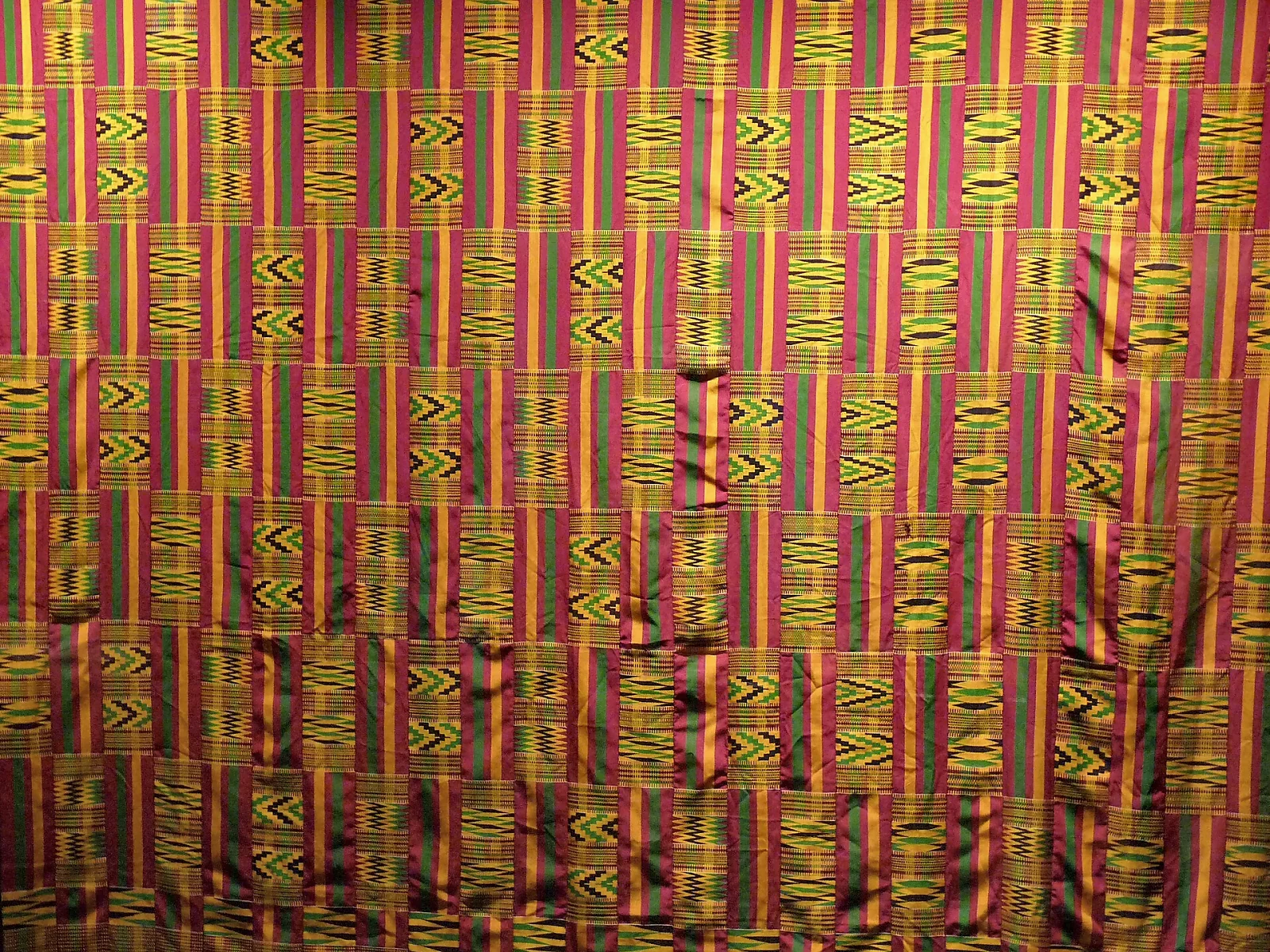
Cloths of the court
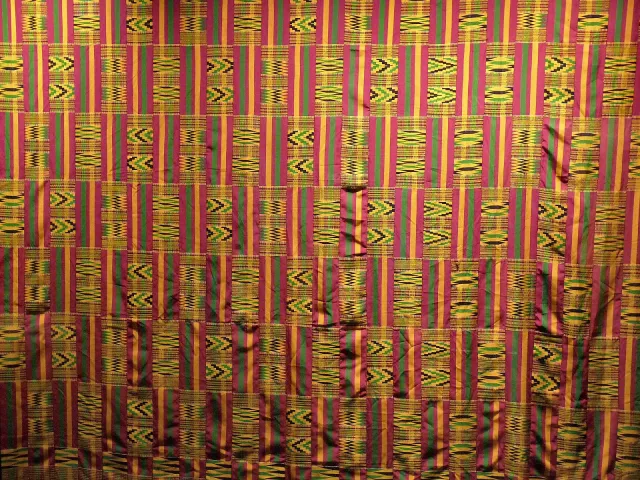
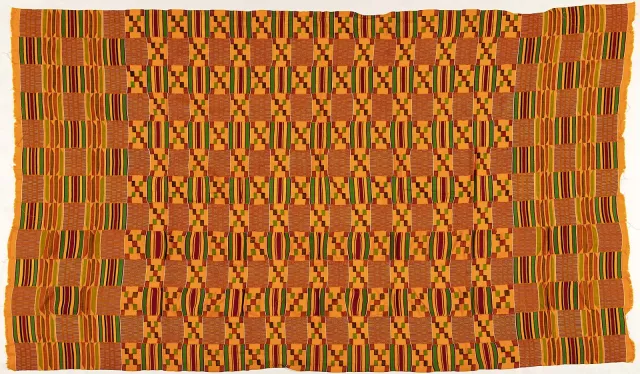
Oyokoman Ogya Da Mu: fire between the Oyoko
Oyokoman ogya da muThe best-known Asante warp pattern is the cloth of the Oyoko, the clan of the Asantehene. Rattray recorded its full name at Bonwire in the 1920s and translated it as there being fire…
Note on the sourcesOyokoman Amponhema: the cloth on the great umbrella
Oyokoman AmponhemaRattray lists Oyokoman Amponhema as a slight variation of the royal Oyokoman warp. What sets it apart is its use: the Asantehene's great state umbrella was covered with cloth of this…
Oyokoman Asonawo and Oyoko ne Dako: composite royal warps
Oyokoman Asonawo; Oyoko ne DakoTwo more of Rattray's silk patterns belong to the Oyoko family of designs. Oyokoman Asonawo is, in his words, a composite: it borrows part of its warp from the Oyoko clan cloth and part…
Ammere Oyokoman
Ammere Oyokoman; AmereAmmere Oyokoman is a variation on the Oyokoman warp. Doran Ross illustrates it in his 1998 study as a variant of the standard pattern, and the Metropolitan Museum of Art, describing a royal…
Note on the sourcesAdweneasa (Adwinasa): my skill is exhausted
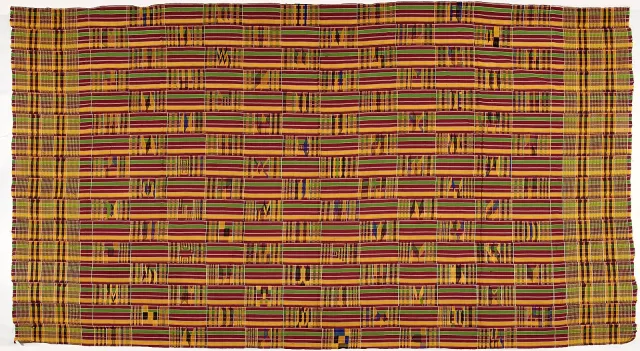
Adweneasa; Adwinasa; Adwini asa; Edwini asaAdweneasa names both a famous cloth and a way of weaving. Rattray glossed it as 'my skill is exhausted' or 'my ideas have come to an end', called it one of the best-known patterns in…
Note on the sourcesOyokoman Adweneasa and how compound names work
Oyokoman Adweneasa; Oyokoman Asasia AdweneasaWhen the Oyokoman warp is woven in the adweneasa manner, with weft designs packed into every space, the cloth is called Oyokoman Adweneasa. Doran Ross calls it the most esteemed of cloths…
Nwotoa Adweneasa: a shuttle in either hand
Nwotoa AdweneasaRattray's fiftieth silk pattern is Nwotoa Adweneasa, which he describes as very like Adweneasa. He explains nwotoa as shuttles, and reports that the design is said to be woven 'with a…
Note on the sourcesAsasia: the Asantehene's own cloth
AsasiaAsasia is the rarest class of Asante silk cloth. Ayesu and colleagues describe its mark as a twill: the extra weft floats over and under groups of warps and steps sideways in each row, so…
Note on the sourcesSika Futuro: gold dust
Sika futuro; Sika futuru; Sika futoroSika futuro means gold dust, the old currency of Asante. Rattray lists it among the silk patterns and says that in former times only the King of Ashanti might wear it. Ofori-Ansa's chart…
Kyeretwie: catch the leopard
Kyeretwie; Kyere 'twie; Kwame KyeretwieKyeretwie means 'catch the leopard'. Rattray lists it among the cotton cloths and says it refers to an incident in the reign of Kwaku Dua I, when the king ordered some men to catch a…
Note on the sourcesEmaa Da (Mmeeda): it has not happened before
Emaa da; Emmaa da; MmeedaThe name means that something has never happened before. On Ofori-Ansa's chart, Nana Kwasi Afranie of Bonwire, described as the Asantehene's chief weaver, says a king was so struck by the…
Note on the sourcesTweneboa, also called Ntokosie
Tweneboa; Ntokosie; NtokoseeRattray's fifth silk pattern carries two names. Tweneboa, he was told, was a woman, the wife of Pampa, a weaver to one of the old kings; the cloth named for her might be worn only by the…
Note on the sourcesOfebiriti: a praise name of Kofi Kakari
OfebiritiOfebiriti is one of the cloths Rattray recorded as belonging to a single king. He explains the word as a 'strong name' (mmerane) of King Kakari, that is Kofi Kakari, and says the cloth…
Dokoasiri: a family of royal warps
Dokoasiri; Nokoasiri; Dokoasiri Krofa; Dokoasiri FoduaDokoasiri, which Rattray also heard as Nokoasiri, is not one cloth but a class. He says several designs differing slightly in detail are all placed under the title, and that in olden days…
Note on the sourcesOhene Akamfuo: the king's approval
Ohene akamfuo; Ohene akamfo; Ohene nko nyon; Ohene nko mfuraRattray lists this name twice, once in silk and once in cotton. The silk Ohene Akamfuo he translates as having the king's approbation; it might be worn only by the Asantehene or by others…
Nkatewasa: the nkatewa seeds are finished
Nkatewasa; Nkateaasa birie; Akatewa aduasaTwo of Rattray's patterns share this name. The silk Nkateaasa birie he renders as the black nkatewa seed being finished, adding that some historical allusion surely lies behind it though he…
Note on the sourcesApea Akobi: a weaver's name kept for the king
Apea Akobi; Apea Kusi (variant asked for, not found)Apea Akobi, Rattray was told, was a weaver who lived at Bonwire in the reign of Kusi Bodom, about 1750. The design named after him was formerly worn only by the King of Ashanti. Rattray…
Note on the sourcesTiafo, or Onyina ne no man: the silk-cotton tree and its branches
Tiafo; Onyina ne no manRattray's informants in Kumasi called this silk pattern Tiafo, 'he who tramples upon', a sobriquet of the King of Ashanti, and said it was formerly worn only by him. The Bonwire weavers…
Note on the sourcesYiwa ne Bota: two precious beads
Yiwa ne BotaYiwa and bota are two kinds of valued bead, and this cloth joins their names. Rattray lists it in silk, formerly worn only by the King of Ashanti, and again in cotton. The Bonwire weavers…
Note on the sourcesDumrane and Higya: the great odum tree and the lion
'Dumrane; Asonawo tuntum; HigyaTwo silk cloths in Rattray's list bear titles of the Asantehene and were formerly worn only by him. 'Dumrane is the great odum tree, also a title of the kings; the same warp was known as…
Note on the sourcesKontomire Ahahan and Panpana Ahahan: leaf cloths of the king
'Kontomerie ahahan; Panpana ahahanKontomire is the leaf of the cocoyam, eaten as a green vegetable, and 'Kontomerie ahahan means its tender leaf. Rattray says the silk cloth of this name was formerly worn by the King of…
Nkontompo Ntama: the liar's cloth
Nkontompo ntama; Nkontompo ntomaThe liar's cloth takes its name, Rattray says, from its warp pattern, in which the stripes do not run true. The King of Ashanti is said to have worn it when holding court, to confute people…
Kyime Kyerewere and Nkwadwe: loincloths and hammock cushions
Kyime Kyerewere; Kyime Ahahamono; NkwadweNot every royal pattern was made to be seen as an outer cloth. Kyime Kyerewere, which Rattray translates 'Kyime who seizes and devours', also called Kyime Ahahamono, the green Kyime cloth,…
Nsankani Koko and Nsankani Tuntum: the yellow and the black flower
Nsankani koko; Nsankani tuntumThe nsankani is a flower, and Rattray records two cloths named for it. Nsankani koko, the yellow (literally red or bright) nsankani, is a silk pattern formerly worn only by the King and…
Agyapoma: the favourite wife and the favourite gun
AgyapomaAgyapoma, Rattray was told, was the favourite wife of King Osei Tutu, who is also said to have named his favourite gun after her. The silk pattern called by her name was formerly worn only…
Mmada Krofa and the room where a new king slept
Mmada K'rofa; Asonawo mmada; Mmada Asonawo AhahamonoRattray could not translate Mmada Krofa, but he recorded what the word mmada called to mind. There was a room in the palace of the Asante kings known as Mmada. A newly enstooled king had to…
Asonawo Mmada: the Asona clan and a king's father
Asonawo mmadaAsonawo mmada is described by Rattray as the clan 'tartan' of the Asona. He records the tradition behind it: the father of King Bonsu Panyin (Osei Tutu Kwame, Osei Bonsu) was Owusu Ansa, an…
Krofa: half a wooden plate
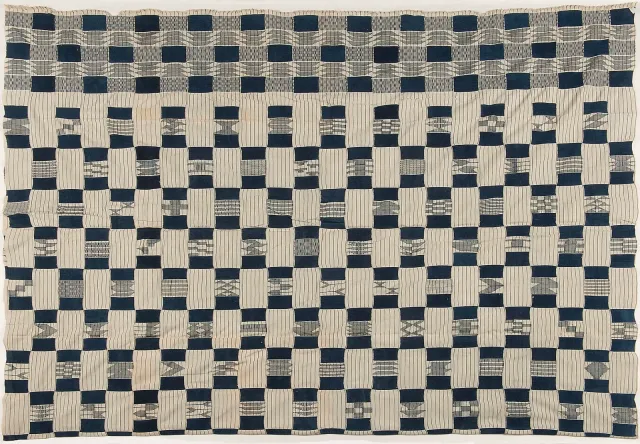
KrofaKrofa is a blue-and-white cotton cloth which, in olden times, only the King of Ashanti might wear. Rattray was given a derivation for the word: from a term for a wooden plate and fa, half.…
Antoko and Atoko: they did not meet the enemy
Antoko; AtokoAntoko means 'they did not meet the enemy'. Rattray was told it recalls an event in the reign of Bonsu Panyin (Osei Bonsu): the general Amankwatia was sent to reinforce an army already in…
Nyawoho (Nkyimkyim): he has become rich
Nyawoho; NkyimkyimNyawoho means that a man has made himself rich. Rattray records that in olden times a man had to be worth a thousand pounds in gold dust to wear this cotton pattern, and even then needed…
Nnapane: sleep alone
Nnapane; Nnapane nketewaNnapane comes from da pane, to sleep alone, as a bachelor does. Rattray's note on it is unusual because it states a prohibition on the king himself: the King of Ashanti might not wear this…
Nsafoa: the cloths of the keys
Nsafoasia; Nsafoasa; Nsafoa tonton; Ahenemma nsafoa; Achimota nsafoa (not found)Four cotton cloths in Rattray's list are named for keys. Nsafoasia, the six keys, was formerly worn by the king's treasurers and has three blue lines crossing the warp every ten…
Note on the sourcesCloths Kwaku Dua I designed for his children
Ahene mma mfura; Ahene mma ntama; AboadieRattray records three cotton patterns made for the children of the king. Ahene mma mfura, 'let the king's children wear it', is said to have been designed by Kwaku Dua I for his own…
Damienu: the two who rest side by side
DamienuDamienu is a cotton pattern that appears twice in Rattray's list. He translates it as the two who rest side by side, and against the second entry he adds what he was told it stood for: the…
Cloths of office: Gyase, Adonten, Kontire and Akwamu
Wirempe ko gyina; Aberewaben; Ko'ntiri ne AkwamuSeveral silk patterns in Rattray's list belonged to named offices of state. Wirempe ko gyina, 'the Wirempe go to consult together', was worn by the Gyase chief; the Wirempe are a body of…
Akyem Ntama: the shield-bearers' cloth
Akyem ntama; Akyem konmuAkyem ntama is the cloth of the shield-bearers, and Rattray says it was formerly worn only by that body. He adds that the Asante once carried shields and used bows and arrows, but so long…
Akyempem (Akyempim): a thousand shields, or a gift of a thousand
Akyempem; Akyempim; AkyempemheneThis cloth has two explanations. Rattray wrote Akyempim and translated it 'he has given him one thousand'; tradition, he says, dates the design to the reign of Osei Tutu and to a gift from…
Note on the sourcesCloths once kept for the paramount chiefs
Abodaban; Ntumoa; Srafo biri; Aburo ahahanBelow the king's own patterns Rattray records a tier that only the amanhene, the paramount chiefs, might wear. Abodaban, the iron bars of the castle, is one; the Bonwire weavers classed it…
Makowa and Asase ne Abuo: cloths lesser chiefs might wear
Makowa; Asase ne abuo; KotwaMakowa is the little pepper. Rattray says the silk cloth is named for the design woven at intervals to represent red and yellow peppers, that its warp is entirely green, and that lesser…
Kofi Esono: a cloth granted to a celebrity
Kofi EsonoKofi Esono, Kofi the Elephant, was in Rattray's words an Asante celebrity who was presented with this cloth by the King of Ashanti and given permission to wear it. The text describes it…
Nyankonton: the rainbow
NyankontonNyankonton is the rainbow. Rattray translates it as the Sky God's arch and says the silk cloth might be worn only with the king's permission; he also published its weft pattern and a thread…
Anwonomoase: the sweet root
AnwonomoaseAnwonomoase is the root of the anwonomo plant. Rattray notes that the silk cloth was worn only by special permission of the King of Ashanti and, unusually, tells us what it signified:…
Asebi Hene: the chief over the king's weavers
Asebi HeneThe cotton cloth Asebi Hene is named for an office. The Asebi chief, Rattray says, was in charge of the King of Ashanti's weavers, and the pattern was worn by the holder of that stool or by…
Note on the sourcesNamed cloths (warp patterns)
Toku Kra Toma: the soul cloth of Queen Mother Toku
Toku ne 'kra tama; Toku kra toma; Toku akra ntomaToku was a queen mother whom Opoku Ware I defeated. Rattray, the earliest source, says the king overthrew and killed her, took from her a cloth of this pattern and gave it to the Queen…
Note on the sources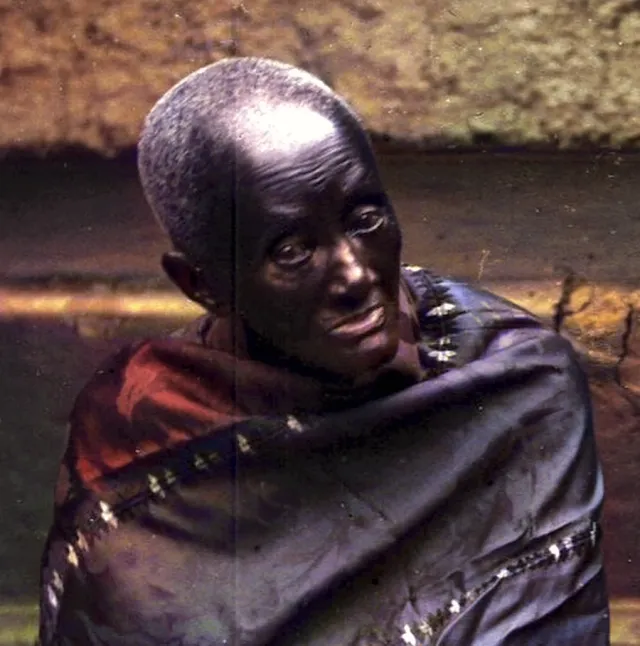
Afua Kobi: a queen mother's cloth
Afua KobiAfua Kobi was Queen Mother of Asante and the mother of two kings, Kofi Kakari and Mensa Bonsu. Rattray says the silk pattern is called after her and was formerly worn only by Queen Mothers…
Yaa Ataa and Atta Birago: the queen mothers of Kokofu
Yaa Atta; Atta BiragoTwo silk cloths remember queen mothers of Kokofu. Yaa Atta, Rattray says, was Queen Mother of Kokofu in the reign of King Bonsu the Elder, about 1800, and the cloth was formerly worn only…
Abawere: the queen mother of all birds
AbawereAbawere is a small bird. Rattray was given a saying that makes it the queen mother of all birds (anoma nhyina 'ni abawere), and the silk cloth named for it was worn by queen mothers. He…
Afwa Sapon: the Wednesday Adae cloth of queen mothers
Afwa Sapon; Afua SaponAfwa Sapon is described by Rattray as the name of a Queen Mother in the reign of Agyeman I, by which he seems to mean Kwaku Dua I, whose stool name was Agyeman. The silk cloth called after…
Note on the sourcesFirimpoma: grandmother of the first weaver
FirimpomaFirimpoma, Rattray was told at Bonwire, was Queen Mother of that town and the grandmother of Ota Kraban, the man remembered there as the first weaver. The silk cloth called after her was…
Note on the sourcesAgobamu, Owireduwa and Yaa Kete: cloths for royal women
Agobamu; Owireduwa; Yaa KeteThree more silk patterns were limited to royal women or to the royal family. Agobamu, said to be a personal name, was formerly worn only by the Queen Mother of Asante. Owireduwa is called…
Adwowa Koko and the cloths of the king's wives
Adwowa Koko; Adwoa Kokoo; Adwobi; TakyiawoAdwowa Koko, the red (fair) Adwowa, is said to have been the wife of Pampo, a weaver of Bonwire. The cloth was presented to King Kwaku Dua I, who then allowed only his wives to wear it;…
Cloths named for women of history
Bewo; Yaa Amanpene; Akoabena; Amma Benewa; Adjua AfwefweRattray's silk list keeps the names of several women with a line of history for each. Bewo was an Oyoko princess who married the chief of Tafo in the reign of Osei Tutu; there is a cotton…
Kyemea
KyemeaKyemea is a kente pattern that the sources opened for this catalogue mention only briefly. Ernest Asamoah-Yaw's book of 1994, which draws on the Kentehene of Bonwire, Nana Akwasi Gyamfi,…
Note on the sourcesCloths named for men: chiefs, princes and weavers
Sama; Kwakye Asare; Amsaku; Amankuo; Amoako ne Asare; Gyimikye; Atabia tuntum; Adjai BohyenMen's names in Rattray's lists fall into three kinds. Chiefs and princes: Kwakye Asare, a prince of the Asona clan; Amsaku, a former king of Akwamu; Amankuo, for Nti Amoa Amankuo, killed by…
Amponsim, Akurase and Kyekye Amponsem
Amponsim; Akurase; Kyekye AmponsemRattray lists a silk cloth called Amponsim or Akurase. Amponsim, he says, is a person's name and akurase means the mouse's tooth; the design is said to have been first worn by a chief,…
Note on the sourcesObaakofo Mmu Man and Fathia Fata Nkrumah
Obaakofo mmu man; Baako mmu man; Fathia fata Nkrumah; Afoakwa mpuaThis is the most widely sold kente design and its name is a history lesson. Obaakofo mmu man means that one person does not rule a nation. Fathia fata Nkrumah, 'Fathia befits Nkrumah',…
Note on the sourcesAbusua Ye Dom: the family is an army
Abusua ye domDom is an army or a multitude, and the name says that the family is one. Ofori-Ansa's chart reads it warmly: like a military force, the members of the extended family are jointly…
Note on the sourcesSika Fre Mogya: money calls blood
Sika fre mogyaBlood, mogya, is the tie of kinship through the mother, and the name says money summons it. Three readings are on record. A Bonwire weaver's explanation is rueful: relatives who ignore a…
Note on the sourcesWoforo Dua Pa A, Na Yepia Wo: climb a good tree and you get a push
Woforo dua pa a, na yepia wo; Wofro dua pa aThe proverb says that whoever climbs a good tree is helped up. Ofori-Ansa's chart explains it as social thinking: a worthy effort deserves the community's support, since those who push know…
Obi Nkye Obi Kwan Mu Si
Obi nkye obi kwan mu si; Obi nkyere obi kwan mu siThe saying is that sooner or later one person steps into another's path. A website that summarises interviews with Bonwire weavers gives the lesson as forgiveness: we are bound to hurt each…
Owu Nhye Da and other cloths about death and enemies
Owu nhye da; Eka obi nko anka mawu; Wiase ye sum; Suro onipaSmith collected a cluster of sombre names at Bonwire. Owu nhye da, death has no fixed date, is said to urge hard work and upright living because there may be no time to repent; his example…
Sika Ne Barima: money is the man
Sika ne barimaSika ne barima says that money makes the man: with the standing that wealth gives, a person is free to do as he likes. Smith uses the cloth to show how a warp name and a weft name can…
Nkum Me Fie Na Nkosu Me Abonten
Nkum me fie na nkosu me abontenThe name is a reproach: do not kill me at home and then go and mourn me in the street. Smith lists it among the cloths that speak of the evil in the world, as a reminder of insincerity and…
Papa Nko Akyiri and Boafo Ye Na: sayings about help
Papa nko akyiri; Boafo ye naTwo cloths state, in Smith's words, that help received is soon forgotten and that few are willing to give it. Papa nko akyiri means that good does not go far; his example was woven with the…
Tata Koro, or Ankonam: I walk alone
Tata koro; AnkonamSmith records this warp under two names, Tata koro and Ankonam, and translates them 'only child' and 'I walk alone'. He says the cloth suggests independence on one side and solitude on the…
Tikoro Nko Agyina: one head does not hold council
Tikoro nko agyinaThe Smithsonian National Museum of African Art holds a cloth (teaching collection ED85-12) that belonged to the paramount chief Nana Akyanfuo Akowuah Dateh II of Kumasi, who was…
Note on the sourcesBreguo Ye Ya: a cloth named for a private grief
Breguo ye yaNew names are still being made. Osei Antobre, a master weaver and shopkeeper at Bonwire, told an Open University film crew in the 1990s how he named one of his own cloths. He had seen a son…
Ohene Aforo Hyen: the king has boarded a ship
Ohene aforo hyenOhene aforo hyen means that the king has gone aboard a ship. Kojo Arthur, in his study of Akan cloth symbols, says the kente of this name was created to mark the king's exile, which points…
Mmaaban: unity is strength
MmaabanMmaaban is the name of a cloth in the Seattle Art Museum, catalogued as 'unity is strength'. The museum's book describes it as a mixture of warp patterns, implying strength in unity: strips…
Note on the sourcesNsaasaawa, or Maaman: the old black-and-white strips
Nsaasaawa; Maaman; Ete si w'ani; Ofodua; Afrumu asoSmith reports that black-and-white cloths, the first products of the Bonwire looms, were by the 1970s seldom made, but that a mixed cloth called Nsaasaawa or Maaman, 'mixture', preserved…
Note on the sourcesAsambo, Asam Takra and Kotwa: guinea-fowl and scar
Asambo; Asam 'takra; KotwaOne pattern, three names. In silk, Rattray lists Asambo, the breast of the guinea-fowl, and says it is sometimes called Asam 'takra, the guinea-fowl's feather, and sometimes Kotwa, a scar;…
Srafo and Ntumedie: the army and the bush fire
Srafo; Ntumedie; Kwame BadieSrafo, the army on the march, is a silk pattern for which Rattray published the weft design; a related name, Srafo biri, the black army, is an alternative for the paramount chiefs' cloth…
Note on the sourcesClan cloths: Aduana, Asona and the clan's pot
Aduana; Abusuakuruwa; Hoaasonawo; AbusuasaBesides Oyokoman, the cloth of the Oyoko, Rattray recorded patterns belonging to other matrilineal clans. Among the cotton cloths Aduana is the 'tartan' of the clan of that name. Asonawo…
Note on the sourcesCloths named for birds
Bansoa; Aserewa monom; Akroma; Akroma fufuo; Amene komBirds give several names in the 1927 lists. Bansoa is a small white, black and yellow bird said to be very brave, with the saying Bansoa di ben, the bansoa eats the arrow. Aserewa monom is…
Cloths named for animals
Otromo; Atabia; Kyirebin; Fodua; Ademkyemyamu; Adwire nkyemu; EkomenmuAnimal names are common, and a few carry rules. In silk: Otromo, the bongo antelope; Atabia, a small antelope; and Kyirebin, a deadly snake and one of the titles of the kings, which Bonwire…
Note on the sourcesNankatiri and Afurumu Aso: a man's cloth and a woman's
Nankatiri; Afurumu asoTwo cotton cloths in Rattray's list are assigned by sex. Nankatiri, the puff-adder's head, was worn only by men, and he gives the reason in Twi and English: it is a man, not a woman, who…
Cloths named for plants
Nkuruma bete; Bese hene; Dwuma horodo; Konkroma tenten; Matatwine; FwinteaPlants supply a long run of names. In silk Rattray lists Nkuruma bete, the soft okro; Bese hene, the king of the kola nuts, which is what the white kola is called; Dwuma horodo, the young…
Note on the sourcesHiampoa and Biribi Ne Hia Nse: poor men's cloths
Hiampoa; Biribi ne hia nseAt the bottom of the ladder of rank Rattray records two cotton patterns as poor men's cloths, and their names say so. Hiampoa means 'I lack even a penny'. Biribi ne hia nse means that there…
Proverb names among the cotton cloths
Boboserewa; Gyemeware; Akoko de boro be kum ako; Ntontom beforo 'po; Ennamenkoso; Wa yi me bakoRattray's seventy cotton patterns include a good many sayings. The first on his list is Boboserewa, joy and sorrow, also called Gyemeware, take me in marriage. Akoko de boro be kum ako says…
Note on the sourcesSugar and honey, the priestess, the three Mossi: other cotton names
Asikyiri ne burowo; Kradie; Okomfo Akua; Mosi nkoasa; Nkasawesewa; KyekyeA last group of names from 1927. Asikyiri ne burowo, sugar and honey, was worn by queen mothers and chiefs, and has a dark (tuntum) version. Kradie, in silk, is the satisfied soul.…
Weft motifs (adwini)
Babadua: the cane band
BabaduaBabadua is the commonest weft design in Asante kente: a block in which the weft is beaten down so closely that it hides the warp, crossed by narrow bars. Rattray wrote that much of the…
Bankuo: the solid weft bands
BankuoBankuo is the word Rattray gives for the weft patterns of cotton cloths, the plain or ribbed bands of blue that cross the white-and-indigo warp at measured intervals; he pairs it with…
Note on the sourcesNnwotoa: the snail's bottom
Nnwotoa; NwotoaNnwotoa is, with Babadua, the design that opens and closes a strip. Smith translates it 'snail's bottom' and explains the layout: every strip begins and ends with a head of five designs; on…
Note on the sourcesNkyemfere: the potsherd
Nkyemfere; Kyemfere; Nkyemfre; Ponko seNkyemfere is a broken pot or potsherd. Smith lists it with Apremo as one of the designs that fill the places between Nnwotoa and Babadua in the head of a strip, and translates it 'broken…
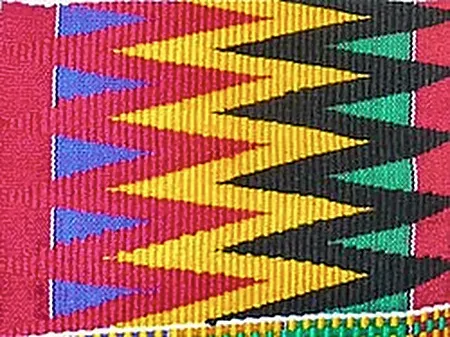
Nkyimkyim: the zigzag
Nkyimkyim; NkyinkyimNkyimkyim means bent, crooked or twisting, and as a weft design it is a zigzag. Rattray records it in the cotton cloth Nyawoho, where the zigzag appears at intervals in the weft and gives…
Akyem: the shield
Akyem; Akyem (skin)Akyem is one of the most used weft designs, and the usual translation is shield. The master weaver Akwasi Akwaboah, naming the motifs in a strip of design-upon-design cloth for a film crew,…
Note on the sourcesApremo: cannon
Apremo; AperemooApremo means cannon. Smith gives it, as Aperemoo, among the designs that fill the head of a strip in the better weaves, repeated either side of Babadua. A Bonwire weaver lists it among the…
Mpuaa Nkron: nine tufts of hair
Mpuaa nkron; MpuankronMpuaa nkron is a block of nine small squares in three rows. Smith explains mpuaa as a popular hairstyle and nkron as nine. Ofori-Ansa's chart says the nine tufts were the ceremonial haircut…
Note on the sourcesFa Hia Kotwere Agyeman: lean your poverty on Agyeman
Fa hia ko twere Agyeman; Fa ohia kotwere AgyemanThis weft design carries a whole sentence: take poverty and go and lean on Agyeman. Smith explains that people in need go to whoever has riches, whether the Asantehene, for whom Agyeman is…
Nsatea and Owo Aforo Adobe: fingers and the climbing snake
Nsatea; Nsatia; Owo akoforo adobeNsatea or Nsatia means fingers. Smith shows it as a weft design in its own right and says that, with Akyem, it forms the head of the less expensive weaves in place of Nnwotoa and Babadua.…
Motifs named for things about the house
Puduo; Mpuduo; Ekye; Sekan; Emma; Afe; coal potMost weft designs are named for objects, and Smith's captions give a household inventory. Puduo or Mpuduo is pots, seen on Boafo ye na and on Nyankonton. Ekye is a hat, on Nyankonton. Sekan…
Anintonnwi and Nko Dumasa: the eyebrow and 'my work is finished'
Anintonnwi; Nko dumasaTwo weft designs from Smith's captions. Anintonnwi is the eyebrow; he found it on Owu nhye da, on Nkum me fie na nkosu me abonten and on Wiase ye sum. The rainbow cloth Nyankonton is…
Atwedee and Owuo Atwedee: stairs and death's ladder
Atwedee; Owuo atwedeeAtwedee is a ladder or stairs. Smith records it as a weft design on the old black-and-white strip Kwame Kyeretwie. Akwasi Akwaboah, naming the motifs along a strip of his design-upon-design…
Note on the sourcesOdofo Awaamu and Abankuo Akyi: the lover's back and the beetle's back
Odofo awaamu; Abankuo akyiTwo more of Smith's weft names. Odofo awaamu he translates as the back of the lover; it was one of three designs on the cloth Obi nkye obi kwan mu si, with the zigzag and the climbing…
When the weft names the cloth
Makowa; Nkotimsefuopua; Ko'ntiri ne Akwamu; Kyemfere; AfeThe rule is that a cloth takes its name from the warp. Rattray notes the exceptions, and they have one thing in common: a warp of a single colour. Makowa has an all-green warp and is named…
Adwini Si Adwini So: design upon design
Adwini si adwini so; Adwenisi adwenisoAdwini si adwini so means a design sitting on a design. The Open University filmed Akwasi Akwaboah of Bonwire weaving it and called it the most prestigious kente. He said it is harder than…
Note on the sourcesThe head of a strip: five designs at each end
Smith describes a convention that helps in reading any Asante cloth. Each strip is begun and ended with a group of five weft designs which he calls the head. In the best cloths the head…
Motif names recorded without an explanation
Afa; Kaw; Kukruboo; Kwadum asa; AfofantoSeveral motif names turn up in the sources with little or nothing said about them. Afa is named by the Bonwire weaver Akwasi Kwarteng as one of the patterns of Oyoko mmaa ntoma; the word…
Note on the sourcesHow a cloth is named and read
The warp names the cloth
The first rule for reading Asante kente is that the name belongs to the warp, the lengthwise threads and their stripes. Rattray put it carefully: the names do not appear to be taken from…
Ordering a cloth: warp, weave and designs
Because warp and weft are named separately, a customer has to specify both. Smith says that when ordering from a weaver one must name the cloth and also the designs to be put on it. Lamb…
Counting in fours: oba, mma and the warp sample
oba; mma; asa 'tene; menko-me-namWeavers do not count single threads. Rattray examined a black and white warp of 288 threads and found that the weaver described it as 72 mma, the plural of oba: threads are reckoned in…
Ahwepan: plain weave
Ahwepan; AwhepanAhwepan is the simplest class of Asante cloth. McLeod defines ahwepan cloths as those with warp stripes only; Picton and Mack say cotton or silk with warp stripes and no additional pattern.…
Topreko: the single weave
ToprekoTopreko is the middle class. McLeod calls topreko 'single' cloths with weft-faced areas; Picton and Mack add extra weft floats. Ayesu and colleagues explain the word as doing something…
Faprenu: the double weave
FaprenuFaprenu means, roughly, take it twice. McLeod describes it as cloth in which the weft floats are even denser than in topreko; Picton and Mack call it double weave and a further development…
Note on the sources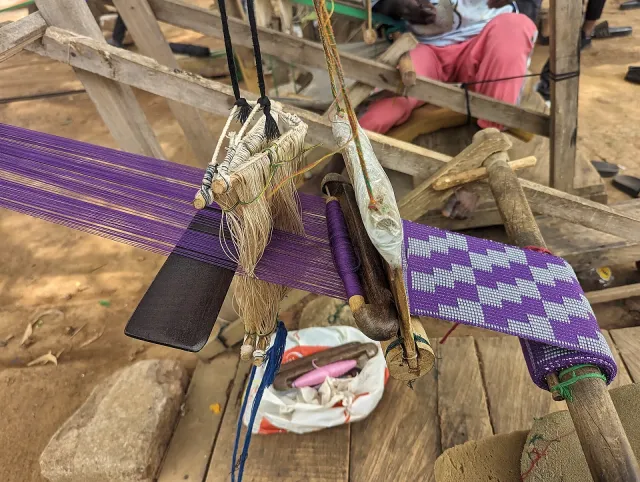
Asatia and asanan: the two pairs of heddles
asatia; asanan; kyereye; tabonThe Asante loom normally carries four heddles in two pairs. Rattray names them asatia and asanan and was given a derivation, the short ones and the fours, because groups of four threads…
Nsaduaso and nwentoma: what the Asante call the cloth
Nsaduaso; Nwentoma; Nwontoma; Nwin-ntomaKente is not the weavers' own word. Lamb wrote that the usual Asante names for so-called kente are nsaduaso and nwentoma, and Ross says the Asante themselves use nsaduaso. Nwentoma is…
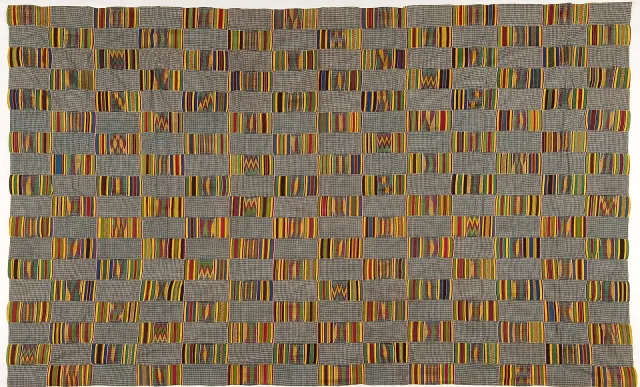
Where the word 'kente' comes from
Kente; kentenEvery source agrees that kente is connected with kenten, a basket; they differ on how. The Smithsonian and most popular texts say only that it comes from the word for basket. Ofori-Ansa's…
Note on the sources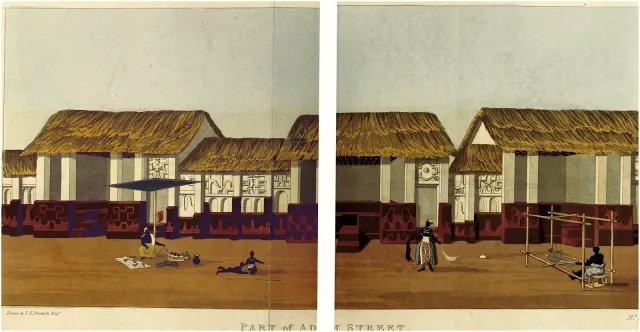
Silk, cotton and the unravelled thread
Rattray kept two lists, about a hundred silk patterns in many colours and seventy cotton patterns confined to blues and whites. He believed cotton came first, from thread grown and spun…
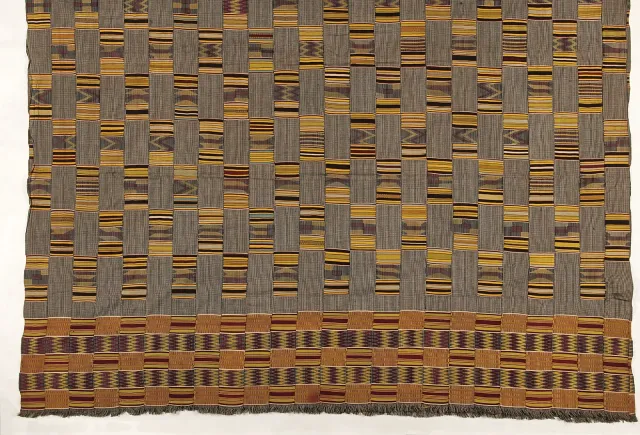
Men's cloths and women's cloths
A man wears one large cloth wrapped round the body and thrown over the left shoulder; a woman wears two or three smaller pieces as lower and upper wrappers. Smith gives the man's size as…
One cloth, two names: Kumasi and Bonwire
Rattray warns that although the designs are more or less standardised, their names sometimes vary from place to place. He collected names first elsewhere and then took his samples to…
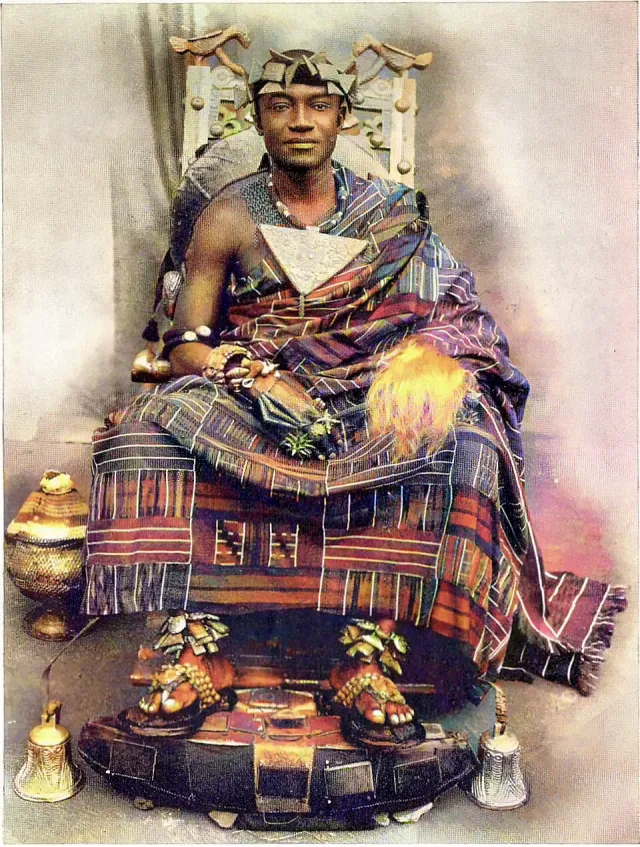
The king's 'copyright' in new designs
Rattray's most quoted sentence on kente is that in olden times the King of Ashanti appeared to hold the 'copyright' of all new designs; he would either keep them for himself or allocate…
A ladder of rank in Rattray's list
Read as a whole, the 1927 list is a table of precedence. About twenty-five silk and cotton patterns were for the Asantehene alone or needed his permission. A few were for the king and queen…
Who names a new cloth today
Naming did not stop in 1927. Ayesu and colleagues, who interviewed master weavers at Bonwire and Adanwomase, say names are given by the innovators, who are mostly the weavers, sometimes…
Hand-woven, broadloom and printed 'kente'
Not everything sold as kente is strip-woven. Ross distinguishes four kinds: strip-woven kente, broadloom kente, machine-woven kente and roller-printed kente. Asamoah-Yaw has three:…
Copying: from royal permission to patents and a protected name
In the old order copying a reserved pattern was an offence against the king. Akwasi Akwaboah explained why weavers still refuse to make the Asantehene's cloth for others: to wear what he…
The loom's taboos: Fridays and women
Nsadua KofiThe chief of Bonwire told Rattray that no piece of weaving may be begun or finished on a Friday, because Friday was the day Ota Kraban set up the first loom. Women could never be weavers,…
Note on the sources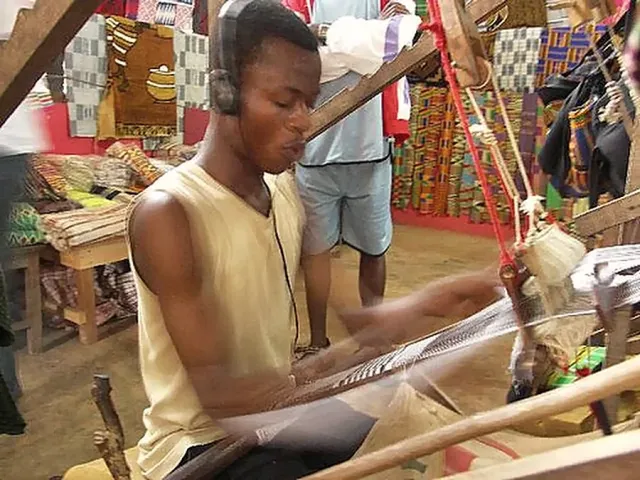
The loom and its parts
Kofi nsa nnua; oponko dua; ayase dua; kurokurowa; dodowaRattray counted thirteen pieces in the frame of an Asante loom and gave their names. The four posts are Kofi nsa nnua, Kofi's hand sticks. The front bar over which the warp passes is the…
Weaving towns and their cloths
Bonwire: the king's weaving village
Bonwire; BonwereBonwire, about fifteen miles from Kumasi, is the place every account treats as the home of Asante weaving. Rattray called it the great centre of weaving for the kings of Ashanti and went…
Note on the sourcesWho wove first: four Bonwire accounts
The origin of weaving at Bonwire is told in at least four ways. Rattray, in the 1920s, heard that the Asante learned to weave about the time of Oti Akenten, and that a man named Ota Kraban…
Note on the sourcesBonwire's kente stools: Kentehene, Oyokomaahene, Awinfohene
Kentehene; Yokomaahene; Awinfohene; FufutomaheneBonwire's own account, published by the Ghana Tourism Authority, says the Asantehene's cloth is made there through three kente chiefs. In 1721, it says, Opoku Ware I created the Kente stool…
Note on the sourcesThe Kentehene and the palace
KenteheneTwo Kentehene of Bonwire appear by name in the sources. Nana Akwasi (Kwasi) Gyamfi was photographed weaving for Asamoah-Yaw's book of 1994, which is built on his account, and was filmed by…
Note on the sourcesAdanwomase and the sesea samples
Adanwomase; sesea; fufutomaAdanwomase lies about two kilometres from Bonwire and has its own claim. The town tradition, as given on Wikipedia and by the tourism authority, is that in 1697 the Asante king had the…
Note on the sourcesWonoo and the other weaving villages
Wonoo; Sakora Wonoo; Asotwe; Safo; Baman; AmepeWeaving was never confined to two towns. The Open University filmed at Wonoo as well as Bonwire, and its chief informant there, Nana Asante Frempong, was a master weaver of forty years who…
Note on the sources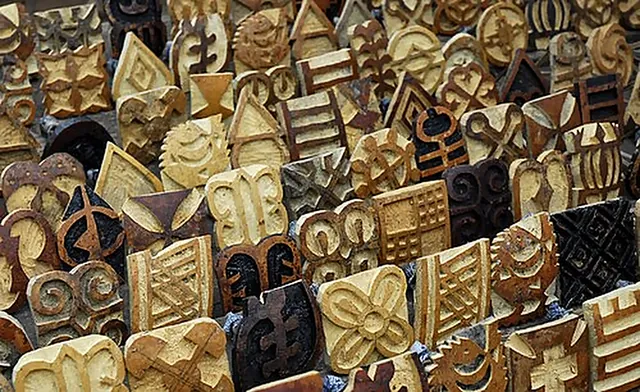
Ntonso: where cloth is stamped
NtonsoNtonso, about six kilometres from Adanwomase in the same district, is the town of adinkra, stamped cloth. The Open University filmed a family workshop there in the 1990s: one man pounding…
Note on the sources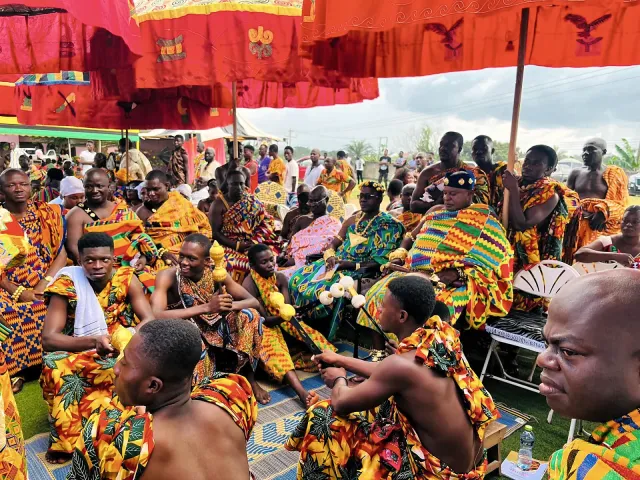
The Bonwire Kente Festival
Bonwire holds a festival of its cloth. A launch text for the twentieth edition set the dates as 3 to 9 December 2018 and described the programme: a clean-up, races, exhibitions over five…
UNESCO listing (2024) and the protected name (2025), in brief
Two recent recognitions are covered fully in other records of this project and are noted here only for their bearing on designs. In 2024 UNESCO's Intergovernmental Committee, at its…
Cloths for occasions
What is worn at Akwasidae
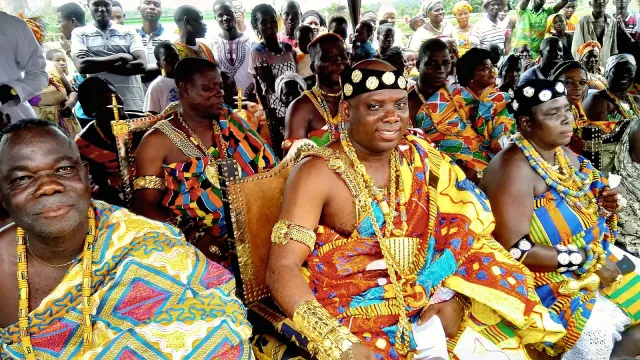
The one firm statement in the early record is Rattray's: the cloth Oyokoman ogya da mu was worn by the King of Ashanti at the Kwesi Adae, the Sunday Adae. It is the royal clan's own…
Note on the sourcesOdwira, soul-washing and the enstoolment room
Amanahyiamu; Manhyia ntama; EmmoThree cloths in Rattray's list are tied to rites of the king. Amanahyiamu, 'the nation have met together', was worn by the Asantehene at the Odwira ceremony, and the great chiefs might wear…
Note on the sourcesAt court and at an enstoolment
A cloth can be chosen for what it says to those present. The classic case is the liar's cloth, Nkontompo ntama, which the Asantehene is said to have worn when hearing cases, to unsettle…
Note on the sourcesMarriage and outdooring
For joyful family rites the sources give colours more than patterns. Ayesu and colleagues say white kente is kept for happy moments such as weddings and naming ceremonies, and that Asante…
Note on the sourcesFunerals: what is worn on which day
At the funeral itself the cloth is dark. A printer at Ntonso told the Open University that the head of the family must be in red, with others of the family who choose to, to show they have…
Note on the sourcesChurch, graduation and the stole
Kente moved from court to congregation in the twentieth century. The Open University filmed a man in church wearing a cloth his father had bought him ten or twenty years before; he wore it…
State occasions: presidents and gifts
Kente has been the cloth of the state since before independence. Rattray records that one of the cloths the Asante gave Princess Mary on her wedding in 1922 was an Adweneasa. The Seattle…
Note on the sources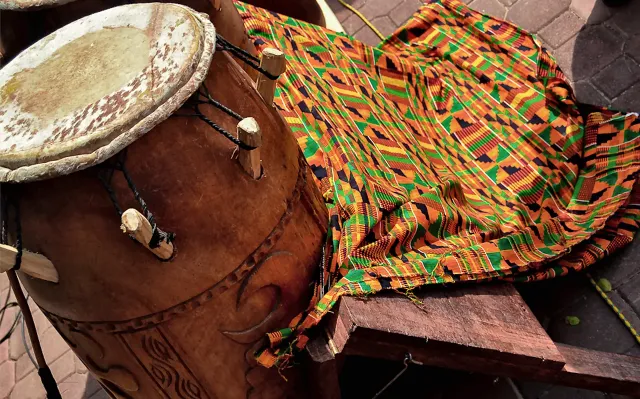
Kente on umbrellas, palanquins and drums
Kente is not only worn. Rattray's list shows it built into the king's equipment: Oyokoman Amponhema covered the great state umbrella, Nkwadwe made the cushions of the royal hammock, and…
Putting it on: the toga, the wrapper and Okatakyie
OkatakyieThe Smithsonian's exhibition includes step-by-step pages on wearing kente. A man wraps the large cloth round the body and lays the end over the left shoulder, leaving the right arm free. In…
Adinkra, kuntunkuni and other cloths
Kuntunkuni: the russet-brown mourning cloth
KuntunkuniKuntunkuni is the dark brown cloth of mourning. Rattray names it in his chapter on stamped cloths: the ground of an adinkra cloth is either plain white cotton or cotton dyed russet brown…
Note on the sources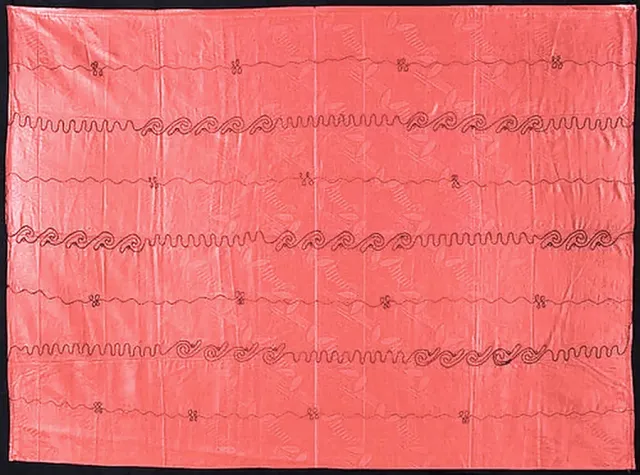
Kobene: the red cloth of the closest mourners
Kobene; KobenKobene is red mourning cloth. Cooper Hewitt gives it as one of the three funerary colours and notes that practice differs: in some families the closest relatives wear black and in others…
Birisi: the blue-black cloth
Birisi; BrisiBirisi, spelled brisi in the museum essay that is the best source read, is blue-black mourning cloth, the third of the funerary colours with kuntunkuni and kobene. The Cooper Hewitt text…
Note on the sourcesAdinkra, the stamped cloth: ntiamu ntoma
Adinkra; Adinkira; ntiamu ntoma; adinkra aduruAdinkra is cloth with designs stamped on it, and Arthur gives the plain Twi contrast: kente is nwentoma, woven cloth, adinkra is ntiamu ntoma, stamped cloth. Rattray described the making in…
Note on the sourcesKwasiada adinkra: Sunday adinkra
Kwasiada adinkraNot all adinkra is for mourning. Kwasiada adinkra, Sunday adinkra, is the festive kind. Cooper Hewitt describes it as colourful cloth worn for births, marriages and other important events.…
Nwomu: the embroidered and woven joins
Nwomu; nnwomu; kukruboo; kawA full adinkra cloth is several widths joined edge to edge, and the join is itself decoration. Kyerematen describes narrow strips of satin-stitch embroidery laid in horizontal lines, and…
Stamped designs once kept for the king
Aban; MmusuyideeReservation applied to stamped cloth too. Rattray notes that the adinkra design Aban, a two-storeyed house or castle, was formerly worn by the King of Ashanti alone. Of Mmusuyidee,…
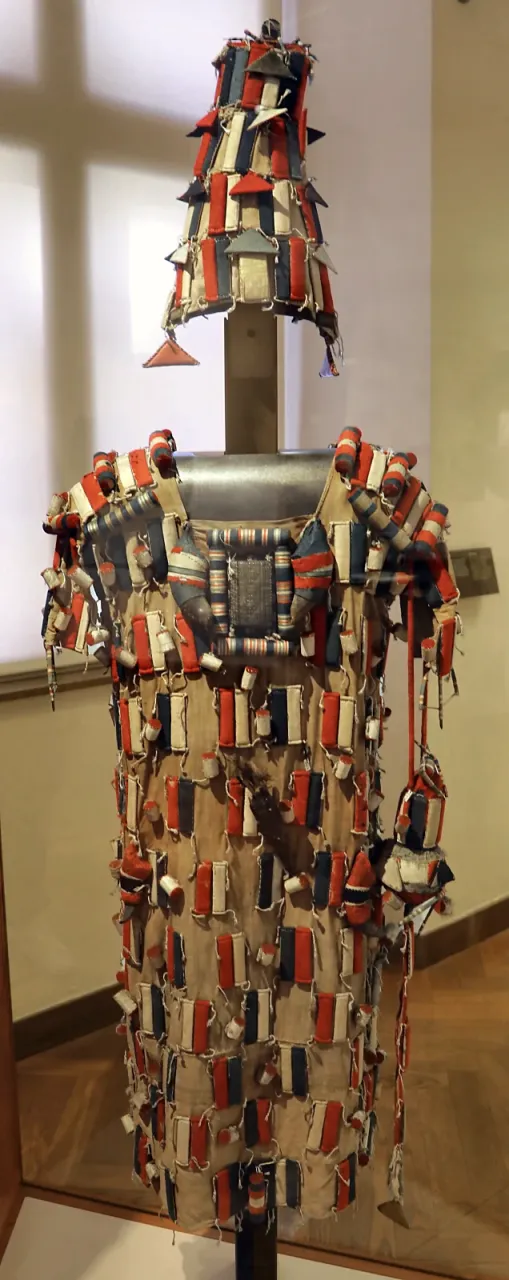
Batakari and the Batakari Kese
Batakari; Batakari kese; fuguBatakari is the Asante name for the smock of northern Ghana, called fugu or tani in the north. It is made from hand-loomed strips of dyed and undyed cotton sewn together into a striped…
Kyenkyen: bark cloth before weaving
KyenkyenRattray opens his weaving chapter with the cloth that came before it. Kyenkyen is bark cloth, named after the tree whose bark is used. The bark was stripped in pieces about a foot wide,…
Blue-and-white cotton: the everyday cloth
Behind the silk stood a large output of plain cotton. Rattray gives seventy cotton patterns, all in blues and whites, and they include the poor man's cloths, a woman's farm cloth and the…
Colours and what they say
Colour meanings: how far to trust the tables
Almost every website on kente prints a table giving one meaning to each colour. The table on Wikipedia lists twelve colours and carries an editor's flag asking for a better source, since it…
Note on the sourcesThe first colours: indigo, black and white
fufutomaAll accounts agree that the first cloths were not coloured. A master weaver told Ayesu and colleagues that kente was at first woven strictly for the Asante king and used only indigo and…
When colour arrived: three rival dates
The sources give three different dates for coloured kente. The documentary one is the 1730s, when a Danish agent reported that Opoku Ware bought silk taffeta of all colours for his weavers…
Note on the sourcesGold and yellow
The tables say gold stands for royalty, wealth, high status, glory and spiritual purity, and yellow for preciousness, wealth, fertility and beauty; the National Commission on Culture says…
Note on the sourcesRed
kobeneThe tables give red as political and spiritual moods, bloodshed, sacrificial rites and death; the National Commission on Culture says sacrifice and struggle. In the stronger sources red…
Note on the sourcesGreen
The tables say green means vegetation, planting, harvesting, growth and spiritual renewal; the National Commission on Culture says renewal, growth and fertility. Named cloths give the plant…
Blue
The tables give blue as peacefulness, harmony and love. In the record blue is first of all indigo, the one strong dye of the early cotton cloths: every one of Rattray's seventy cotton…
Note on the sourcesBlack
tuntumThe tables say black stands for maturation, intensified spiritual energy, the spirits of the ancestors, rites of passage, mourning and funerals; the National Commission on Culture says…
White
fufuoThe tables give white as purification, sanctification rites and festive occasions; the National Commission on Culture adds victory. Ayesu and colleagues say white kente is kept for happy…
Note on the sourcesMaroon, pink and purple
For these three the tables are the only source of meanings. Maroon is called the colour of mother earth, associated with healing. Pink is a mild, gentle aspect of red linked with the female…
Note on the sourcesGrey and silver
The tables say grey belongs to healing and cleansing rituals and is associated with ash, and that silver stands for serenity, purity and joy and is associated with the moon. Neither colour…
Note on the sources