19th century to present
Ntonso: where cloth is stamped
Ntonso
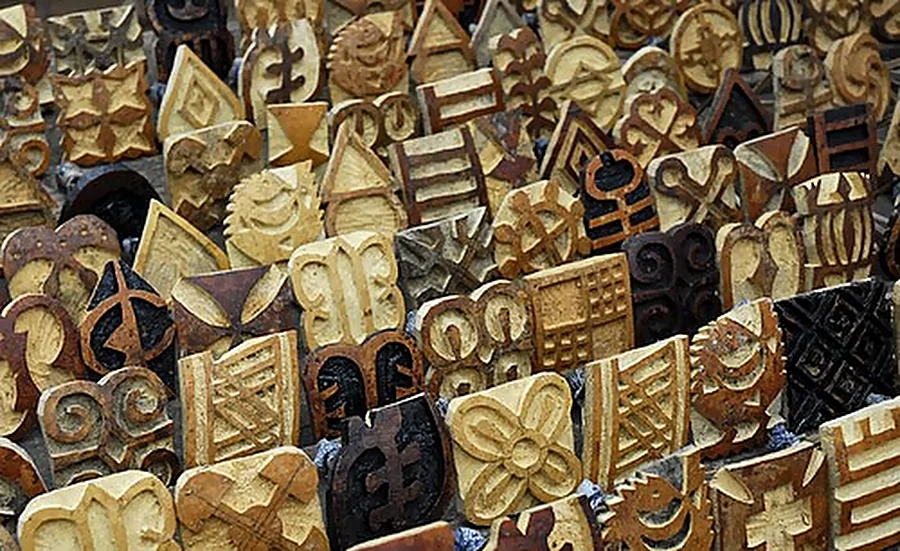
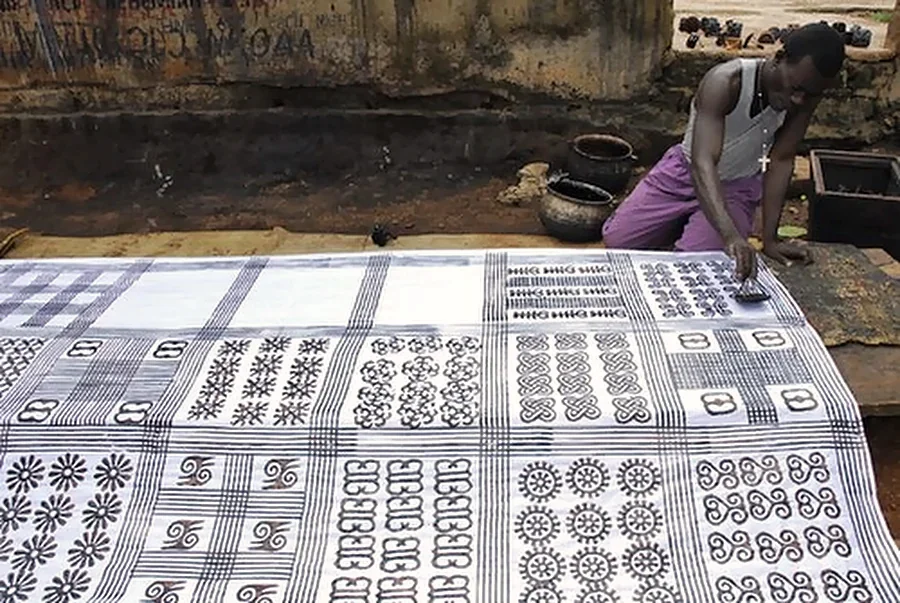
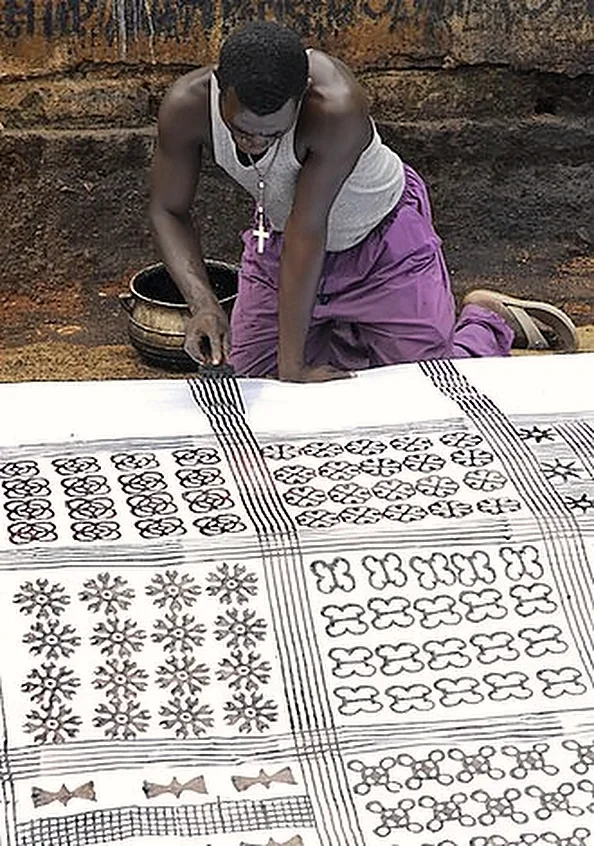
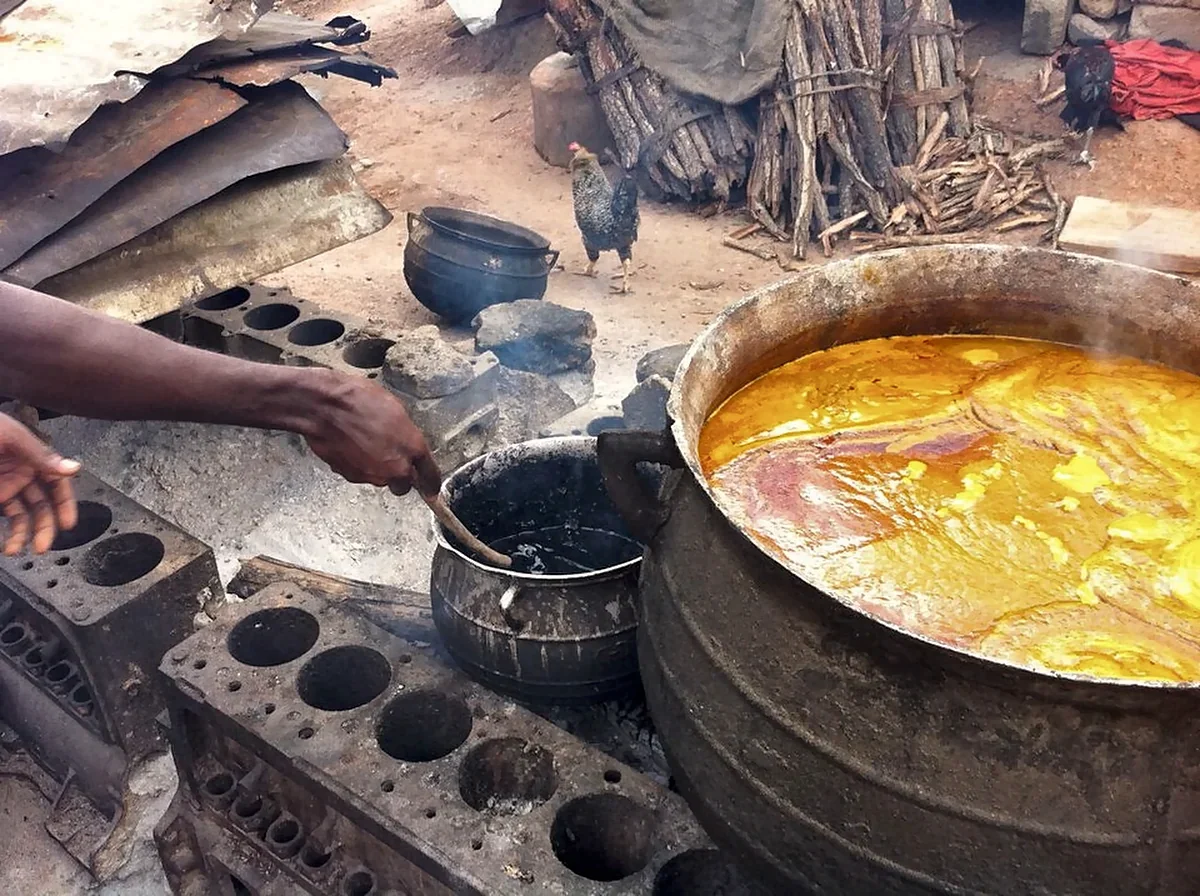
Ntonso, about six kilometres from Adanwomase in the same district, is the town of adinkra, stamped cloth. The Open University filmed a family workshop there in the 1990s: one man pounding bark for the dye, another printing, and Joseph Kofi Nsiah carving the calabash stamps and inventing new symbols as well as recutting old ones. Photographs on Wikimedia Commons show Anthony Boakye of Ntonso ruling lines on a cloth with a comb and printing with a stamp. The course observed that adinkra-making was organised wholly by family, boys learning from their fathers, and held a more modest status than kente weaving; because it is the proper dress for mourning it has to be affordable. Some lists also count Ntonso as a kente town. The making of adinkra there is covered by a first-pass record.
The name 'Kofi Nsiah' sometimes listed as a kente design was found only as the name of this Ntonso stamp carver.
Key facts
- Worn: Ntonso cloth is worn above all at funerals.
- First woven: not applicable; printing there is documented from the 20th century in the sources read.
Weavers and sellers of this cloth will be listed here. This will come with the marketplace, which is not yet open.