19th century to present
Batakari and the Batakari Kese
Batakari; Batakari kese; fugu
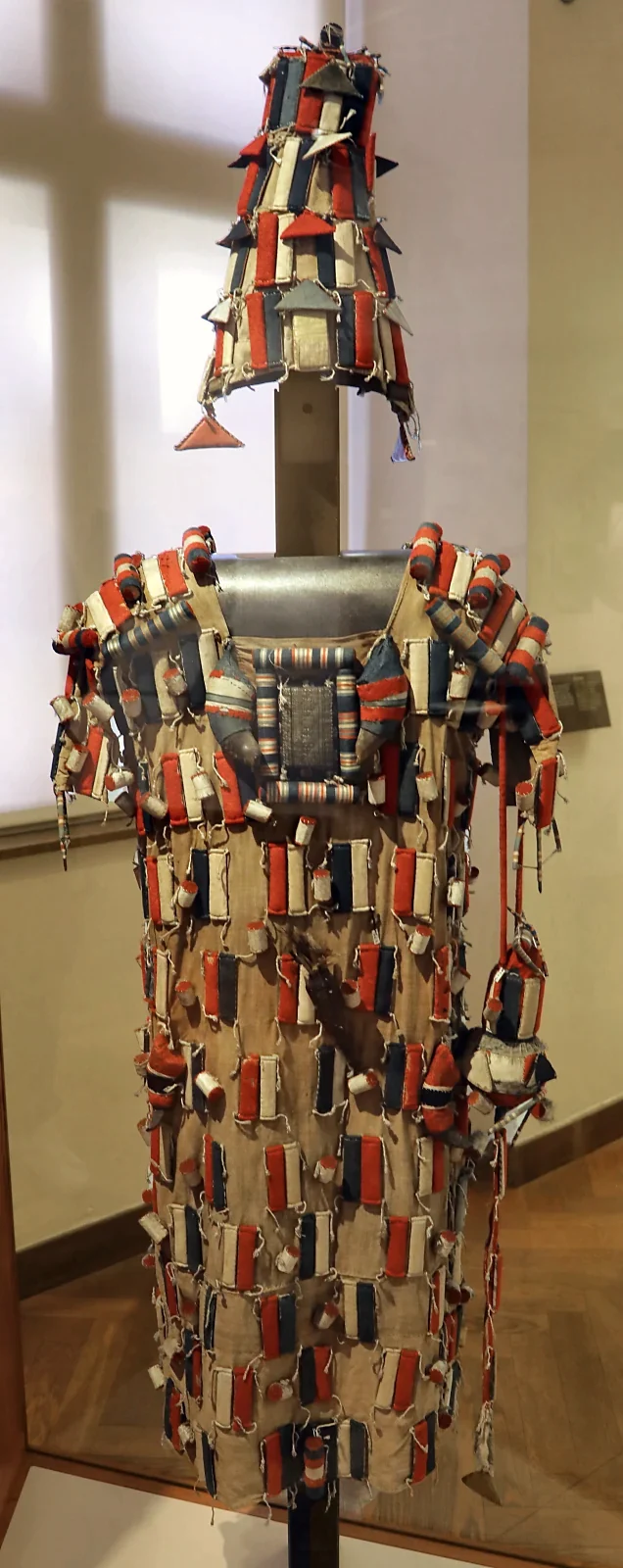
Batakari is the Asante name for the smock of northern Ghana, called fugu or tani in the north. It is made from hand-loomed strips of dyed and undyed cotton sewn together into a striped tunic; Wikipedia's article says women traditionally make the strips and men sew the smock. In Asante the garment has a martial form. McLeod describes a war smock, Batakari Kese, from Ejisu covered with protective talismans, says the Asantehene's Great Batakari is believed to have strong protective power, and notes that such smocks were and are also worn in peacetime. Lamb writes that the symbolic use of the Batakari Kese today links the Asantehene with his predecessors. An earlier record in this project describes the great war coat as shown at Manhyia. The two scholarly books were read only as search extracts.
Key facts
- Meaning: batakari, a smock; batakari kese, the great smock or war coat.
- Looks like: tunic of narrow cotton strips; the war coat is covered with protective talismans.
- Worn: the Batakari Kese in war and, McLeod says, also in peacetime.
- Reserved: the Great Batakari to the Asantehene.
Weavers and sellers of this cloth will be listed here. This will come with the marketplace, which is not yet open.