named for events of c. 1717-1720; recorded 1927
Oyokoman Ogya Da Mu: fire between the Oyoko
Oyokoman ogya da mu
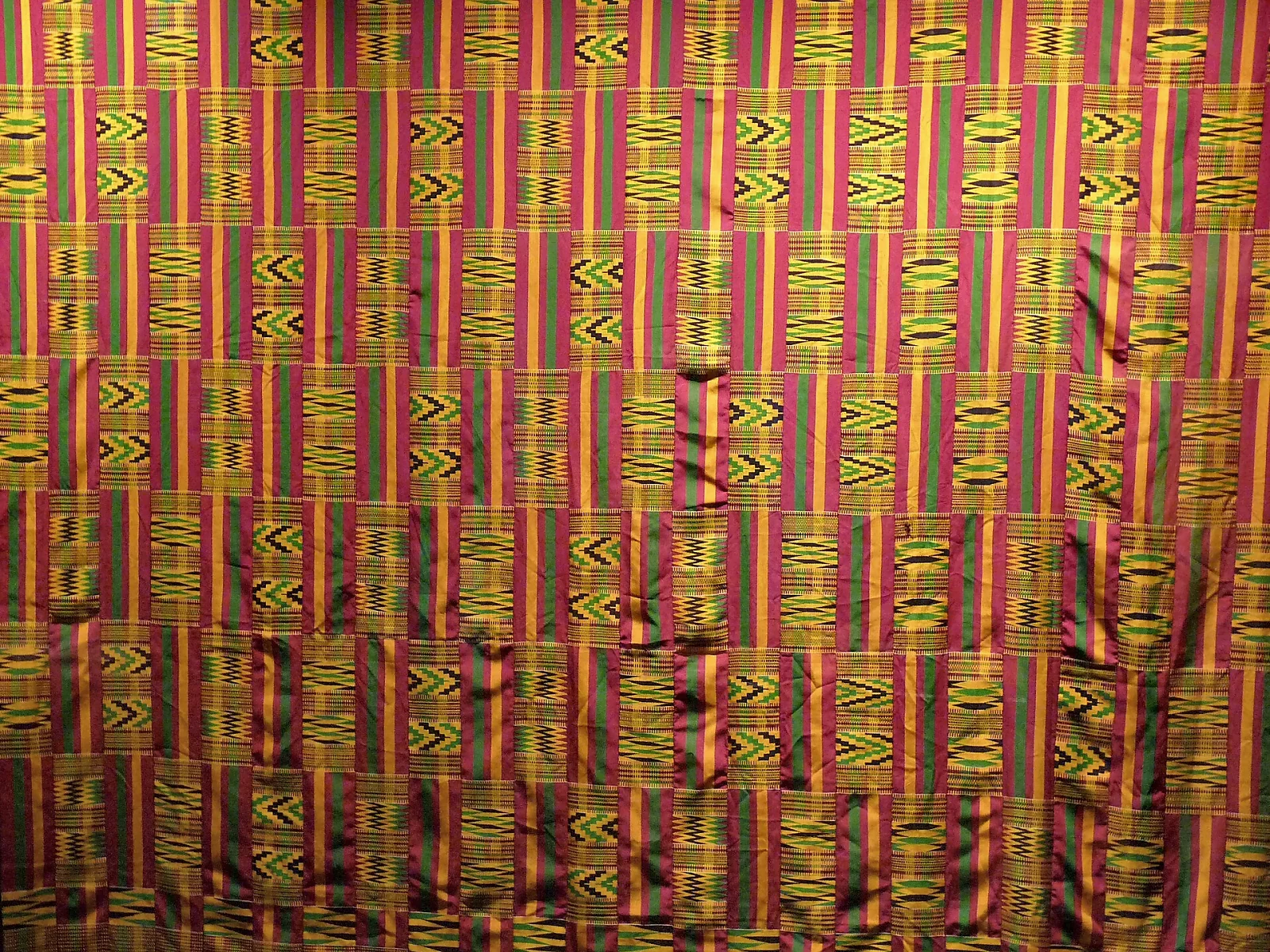
The best-known Asante warp pattern is the cloth of the Oyoko, the clan of the Asantehene. Rattray recorded its full name at Bonwire in the 1920s and translated it as there being fire between the two factions of the Oyoko clan, a reference to the struggle after Osei Tutu's death between Opoku Ware and the Dako branch. He called it the clan 'tartan' of the royal house and said the king wore it at the Sunday Adae (Akwasidae). A later museum catalogue describes the warp as bold red, green and yellow stripes. The Smithsonian's online exhibition shows a silk example (EJ10583) and reads the name as a crisis in the Oyoko nation: an Oyoko guest might wear it to another family's enstoolment as a quiet warning to the new chief to use power with care. A Bonwire chief told a researcher in the 1970s that Oyokoman was the first cloth woven when coloured yarn arrived, in honour of the clan and of Agyeman Prempeh.
Rattray ties the name to an eighteenth-century succession war; the Bonwire chief quoted by Smith (1975) dates the cloth to the coming of coloured yarn under Agyeman Prempeh, about 1900, which cannot be right for silk colours seen by Bowdich in 1817.
Key facts
- Meaning: 'there is fire between the two factions of the Oyoko clan' (Rattray); 'there is fire (crisis) in the Oyoko nation' (Smithsonian).
- Named for: the dispute after Osei Tutu's death between Opoku Ware and the Dako.
- Looks like: warp of bold red, green and yellow stripes.
- Worn: by the Asantehene at the Sunday Adae; by Oyoko royals; today also at enstoolments.
- Reserved: the clan cloth of the royal house.
- First woven: Bonwire tradition (1975) says it was the first cloth in coloured thread.
Weavers and sellers of this cloth will be listed here. This will come with the marketplace, which is not yet open.