19th-20th century
Where the word 'kente' comes from
Kente; kenten
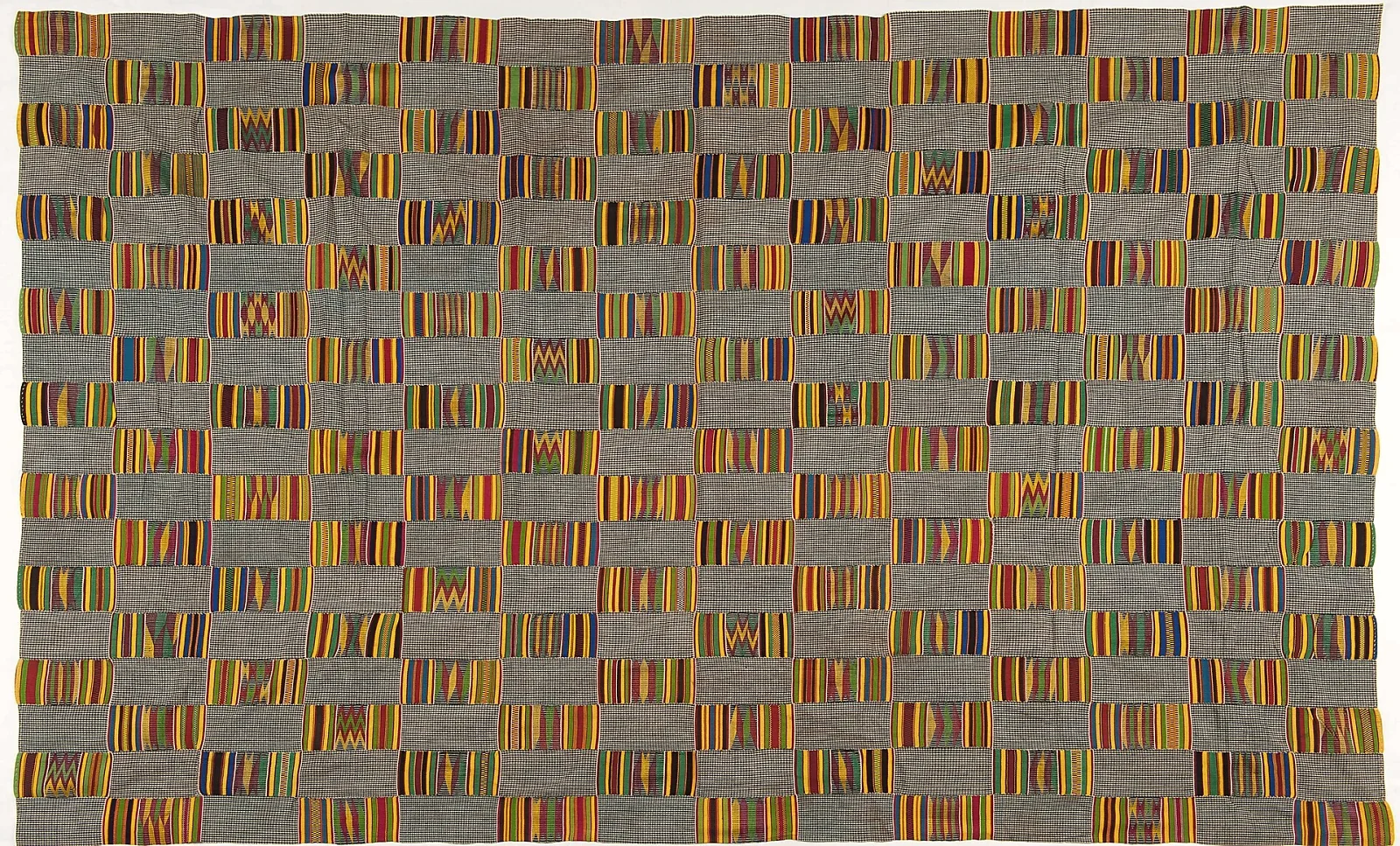
Every source agrees that kente is connected with kenten, a basket; they differ on how. The Smithsonian and most popular texts say only that it comes from the word for basket. Ofori-Ansa's text says the first weavers used raffia and made cloth that looked like a basket, kenten ntoma. The Bonwire account tells it as local history: an improved cloth with a basket-like surface was called kenten-nwin-ntoma, shortened to kenten-ntoma and then corrupted to kente. Scholars put it differently. Cole and Ross call kente a misnomer apparently derived from the Fante word; McLeod calls it a term apparently of Fante origin; Gilfoy agrees; a Dutch museum note suggests cloth was carried to market in baskets. On that view coastal traders named the cloth, and the Asante, who said nwentoma, adopted the name later.
An Asante word describing basket-like weave (Bonwire tradition, Ofori-Ansa) against a Fante outsiders' term (Cole and Ross, McLeod, Gilfoy). An older handbook's gloss, 'that which will not tear', was seen only as a snippet and is not relied on.
Key facts
- Meaning: from kenten, 'basket'.
- Named for: either the basket-like look of early cloth, or a Fante trade term.
Weavers and sellers of this cloth will be listed here. This will come with the marketplace, which is not yet open.