1730s-1927
Silk, cotton and the unravelled thread
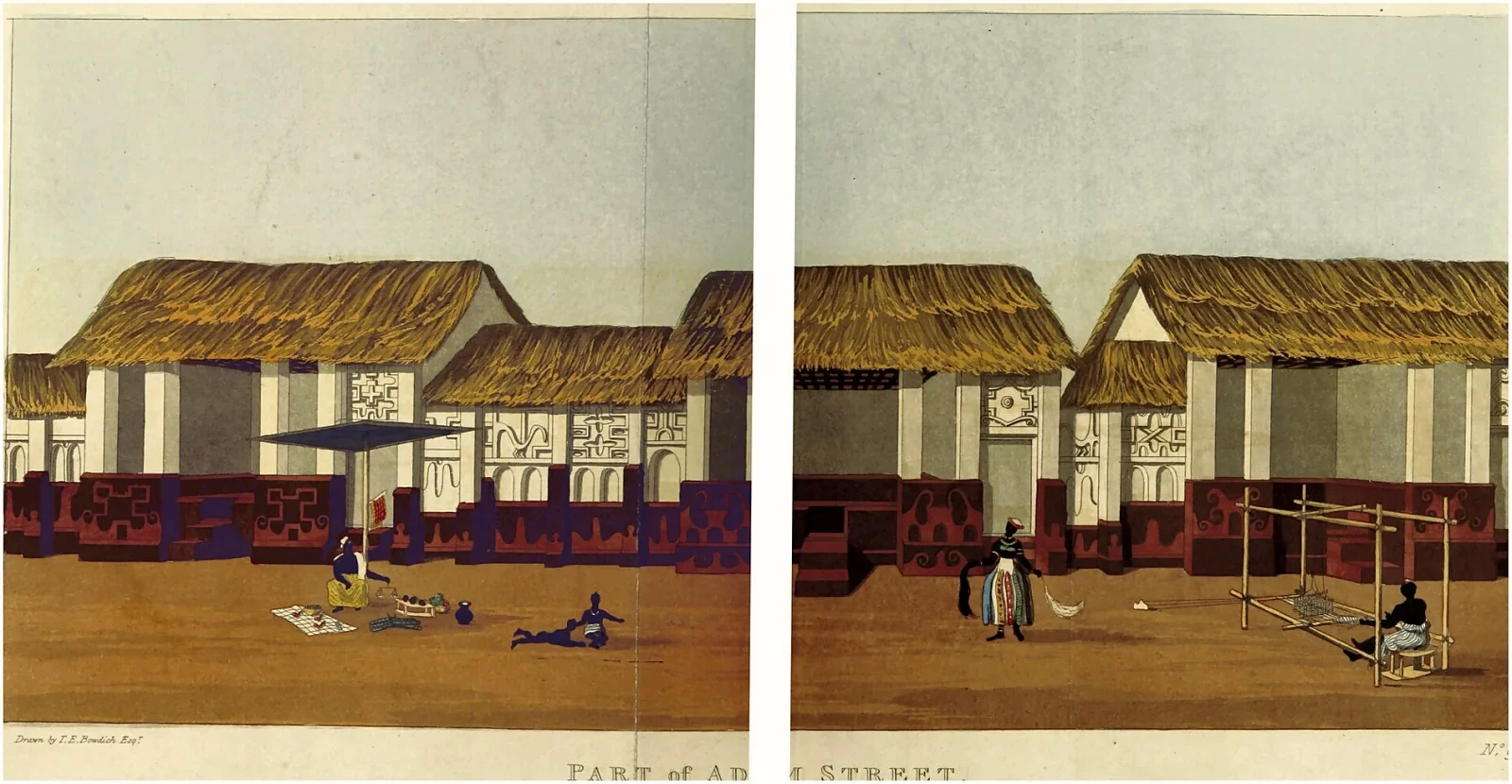
Rattray kept two lists, about a hundred silk patterns in many colours and seventy cotton patterns confined to blues and whites. He believed cotton came first, from thread grown and spun locally, and that silk followed soon after, the silks of Dutch and other coastal merchants being bought only to be unravelled and rewoven. Bowdich had reported the same in 1817, and a Danish report of the 1730s, quoted on Wikipedia, says Opoku Ware bought silk taffeta and stuffs of all colours which his artists unpicked. By the 1920s yarn was imported in hanks. Nana Asante Frempong, a weaver for forty years when filmed in the 1990s, said he had never seen real silk used in the weaving villages, only a spun rayon that felt like silk; lurex has been added since for glitter.
Key facts
- Looks like: silk or rayon cloths are many-coloured; old cotton cloths are indigo and white.
- Worn: silk by the court; cotton by all ranks, with its own restricted patterns.
Weavers and sellers of this cloth will be listed here. This will come with the marketplace, which is not yet open.