recorded 1927
The loom and its parts
Kofi nsa nnua; oponko dua; ayase dua; kurokurowa; dodowa
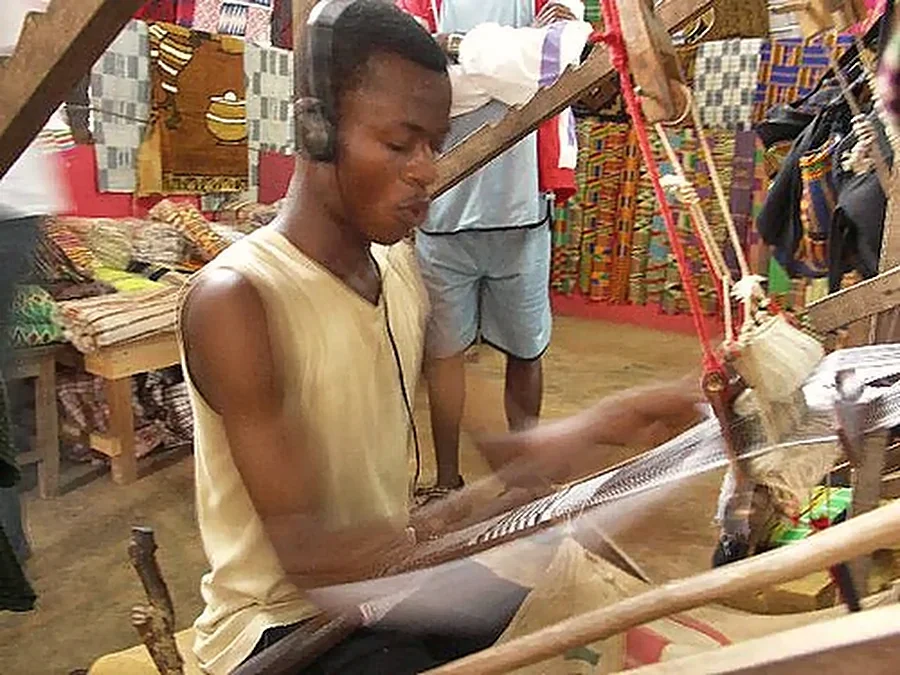
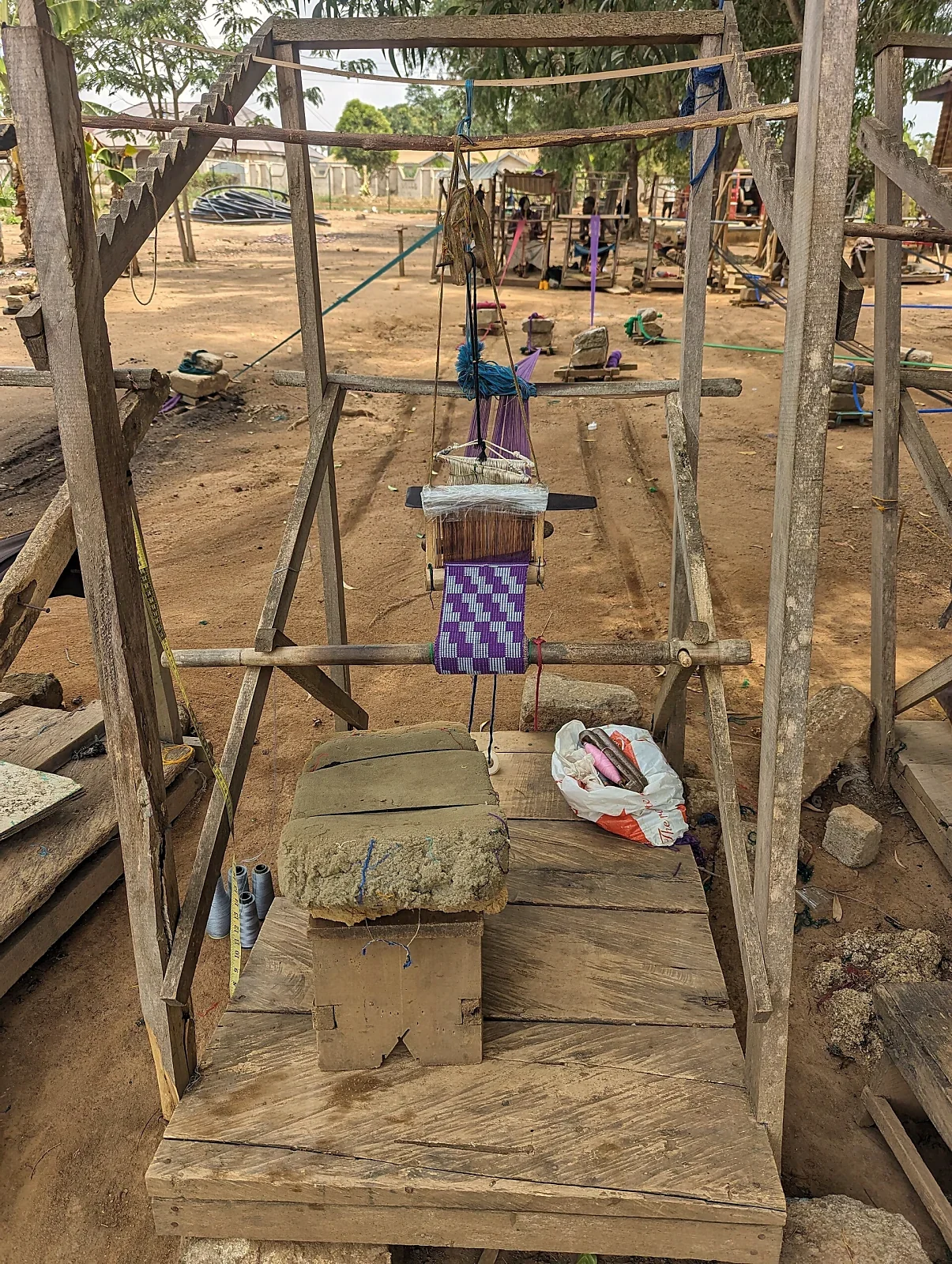
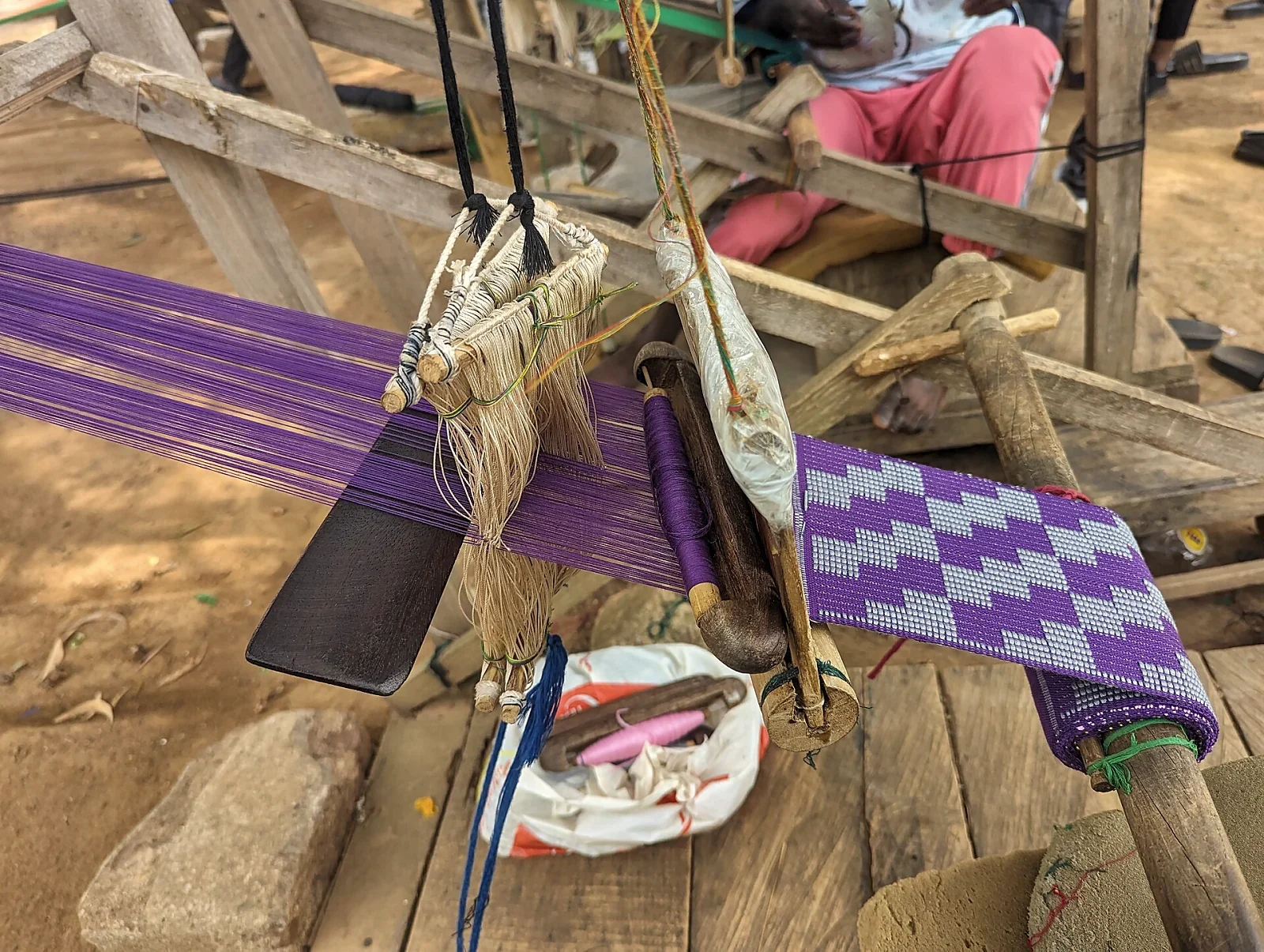
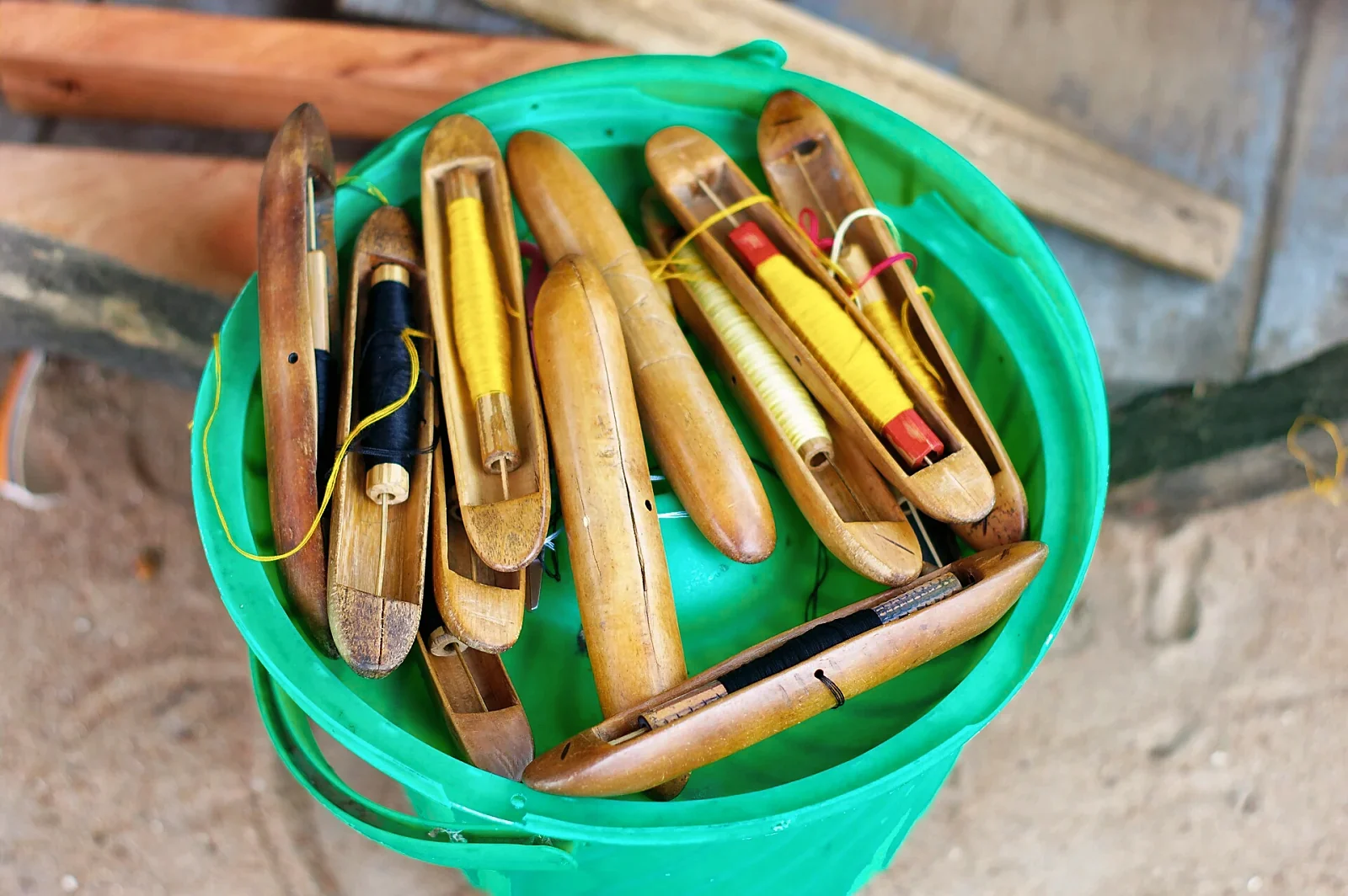
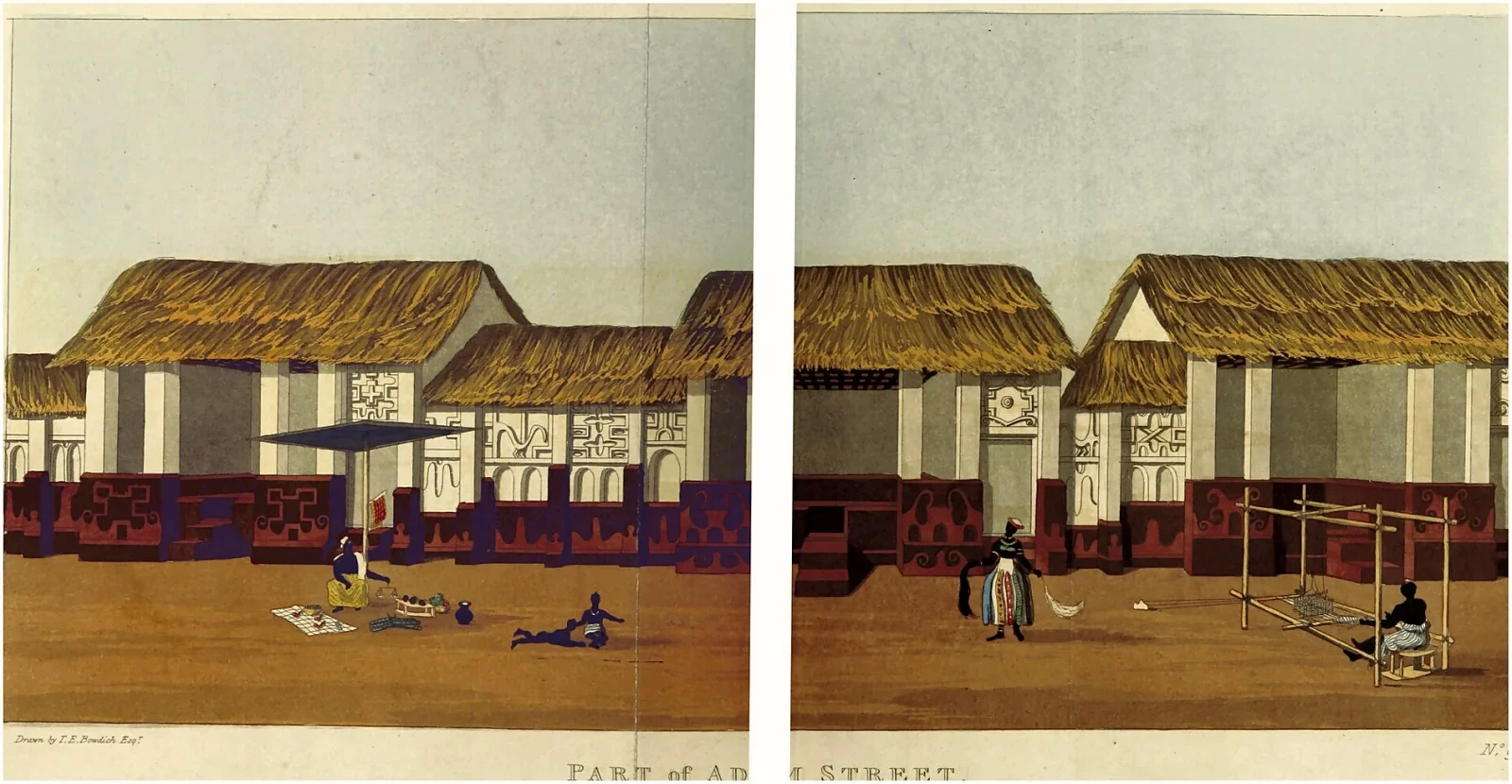
Rattray counted thirteen pieces in the frame of an Asante loom and gave their names. The four posts are Kofi nsa nnua, Kofi's hand sticks. The front bar over which the warp passes is the oponko dua, the horse stick, and the bar at the weaver's body on which the cloth is rolled is the ayase dua, the belly stick. Two cross sticks carry the pulleys from which the heddles and the reed hang. The treadles are discs of calabash held between the toes. The shuttle case is the kurokurowa, a word imitating the rattle of the bobbin, dodowa, inside it. The warp is stretched out in front of the loom and held taut by a weighted sledge. Boys learn on a toy loom, the asase tama. Ayesu and colleagues give the loom's name as Nsadua Kofi.
Key facts
- Meaning: 'Kofi's hand sticks', 'horse stick', 'belly stick'.
- Looks like: a small frame loom with two pairs of heddles hung from pulleys and a long warp weighted by a dragstone.
Weavers and sellers of this cloth will be listed here. This will come with the marketplace, which is not yet open.