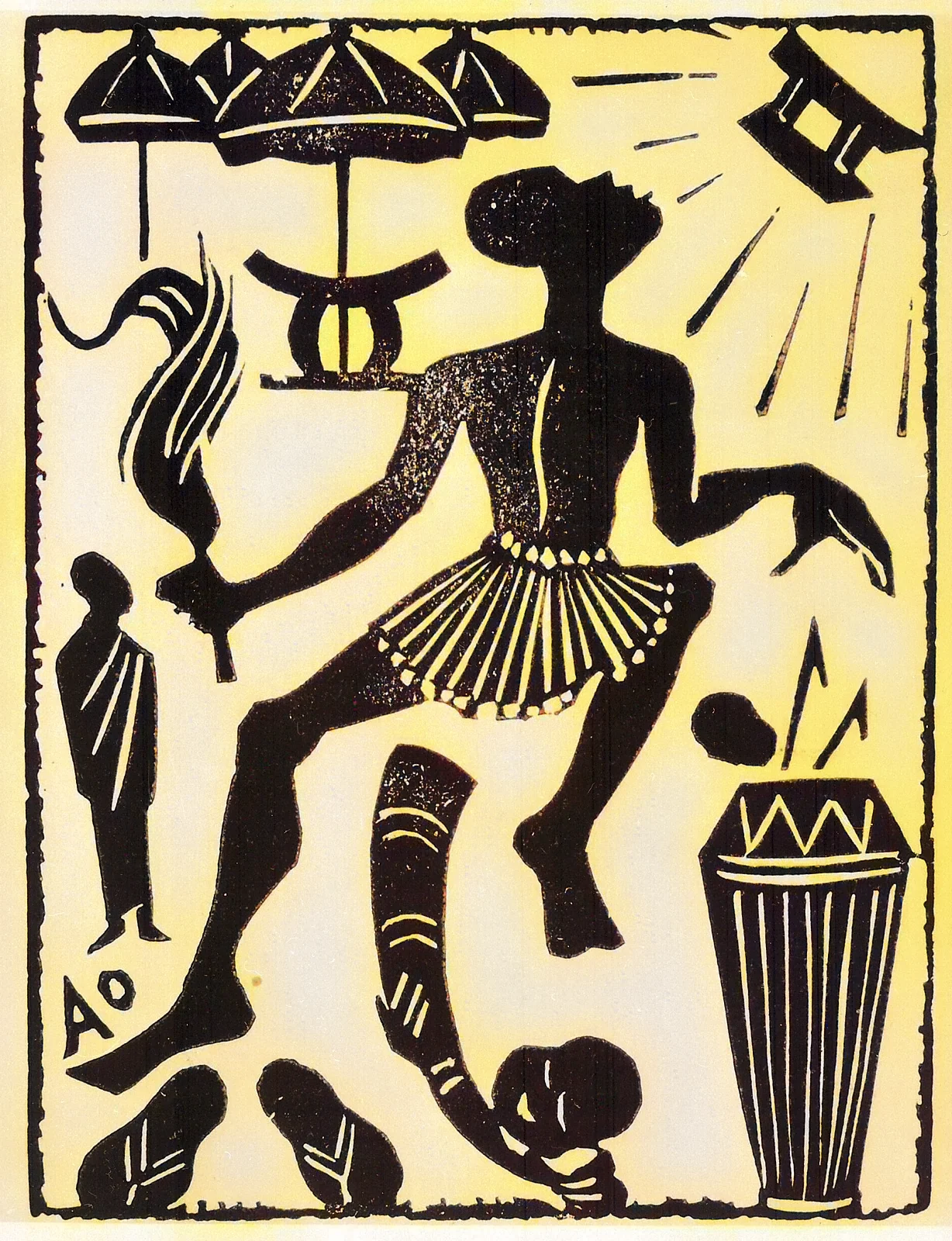
late seventeenth - early eighteenth century
Okomfo Anokye: what is recorded and what is told
ɔkɔmfo (priest)
Almost everything said about Okomfo Anokye comes from tradition written down two centuries or more after his time. J. K. Fynn's entry in the Encyclopaedia Africana calls him both a folk hero and a historical figure, gives his dates with question marks as about 1660 to about 1712, and warns that the wonders in his story make fact hard to separate from fiction. The tradition Fynn follows places his birth at Awukugua in Akuapem and has him meet Osei Tutu at the court of Denkyira or of Akwamu; the two are presented as complementary, the priest with wisdom and no political base, the prince with a claim to the Kwaman stool. Anokye is credited with choosing Kumase by the test of three seedlings, with bringing the Golden Stool down at a Friday gathering and declaring that it held the nation's spirit, and with framing its laws. He received the stool of Agona, and his descendants served later kings as diviners. Prempeh I's history, written in exile, includes a section on his part in preparing the war against Denkyira, and Prempeh worried about a prophecy attributed to him that the state would fall under a light-skinned king. T. C. McCaskie's 1986 study treats him less as a biography to be recovered than as a figure through whom Asante have thought about history and society; he notes that Wilks's great political history barely mentions him.
Birthplace: Awukugua in Akuapem (the tradition Fynn reports) against an Asante tradition placing his origins at Agona, which the first pass could not source either. No contemporary European document naming him was identified in the sources opened.
Key facts
- Fynn gives his dates as c. 1660? - c. 1712?, both uncertain.
- Tradition makes him first holder of the Agona stool.
- A prophecy attributed to him about a fair-skinned king troubled Prempeh I.