present
The parts of an Asante stool
sese dwa; asesedwa; dwa
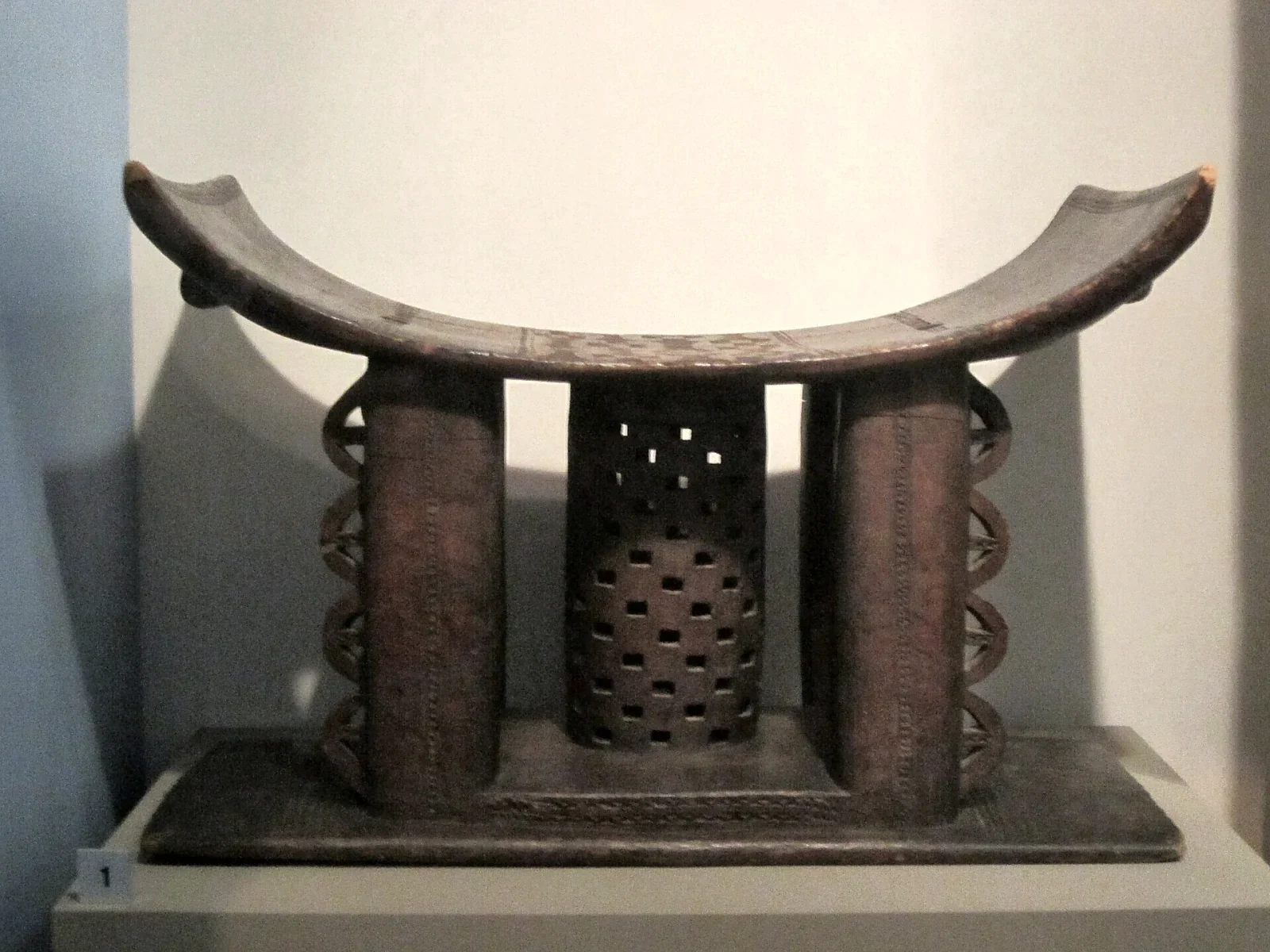
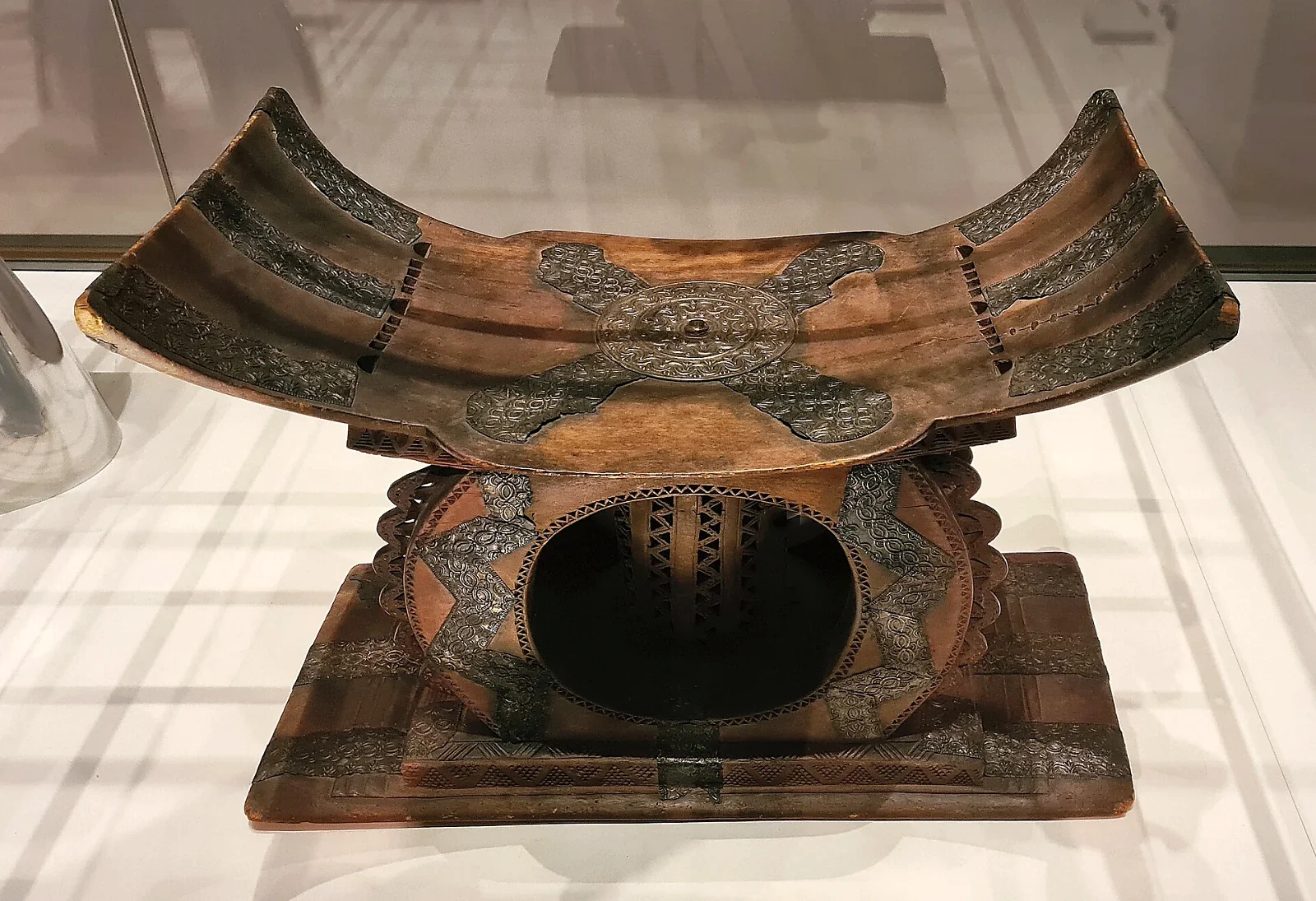
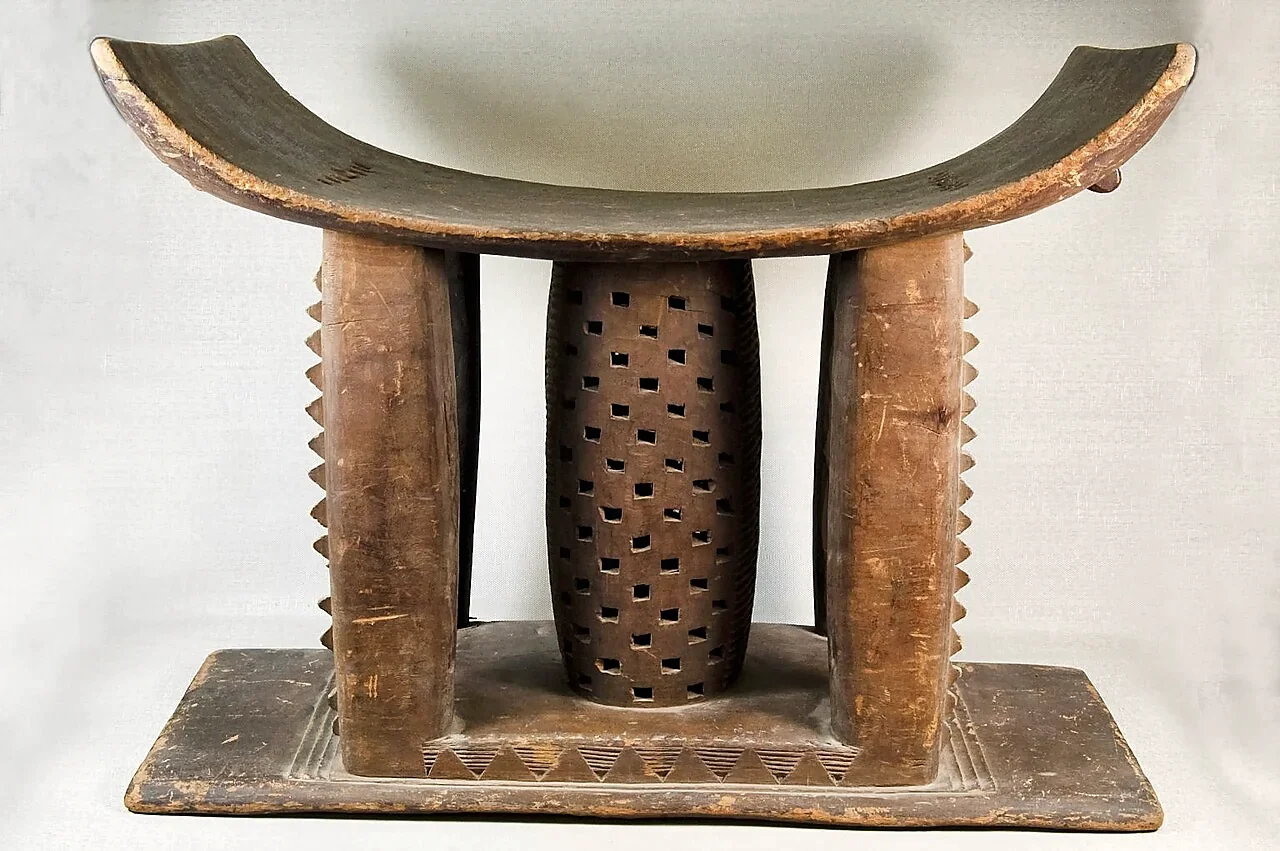
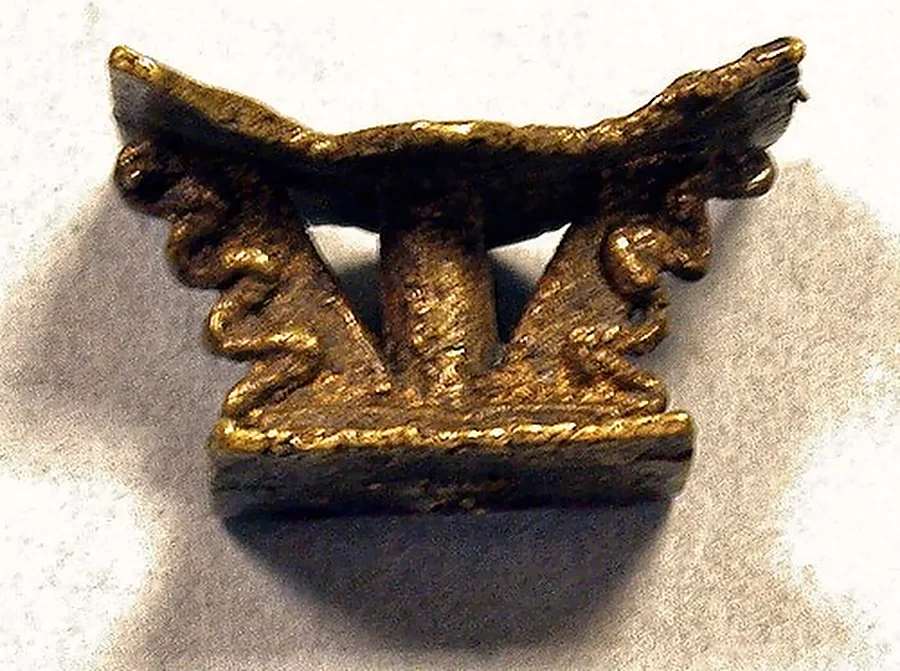
A conventional stool is carved from one block of pale sese wood. It has a rectangular base with incised steps, a central support that carries the design and gives the stool its name, usually four outer supports, and a curved seat. The little knobs under the wings of the seat are 'the ears', where bells are tied. A shape is carved round the opening on the underside of the base. Stools are almost always left unvarnished. Blackened stools are those consecrated to the dead. Catherine Hale's fieldwork (2012) found that queen mothers sit on stools in public, while chiefs sit on chairs.
Key facts
- Carved from a single block of sese wood
- The central support names the design
- Queen mothers sit on stools in public; chiefs on chairs