recorded 1927; in use today
Duafe: the wooden comb
Duafe


Adinkra sign
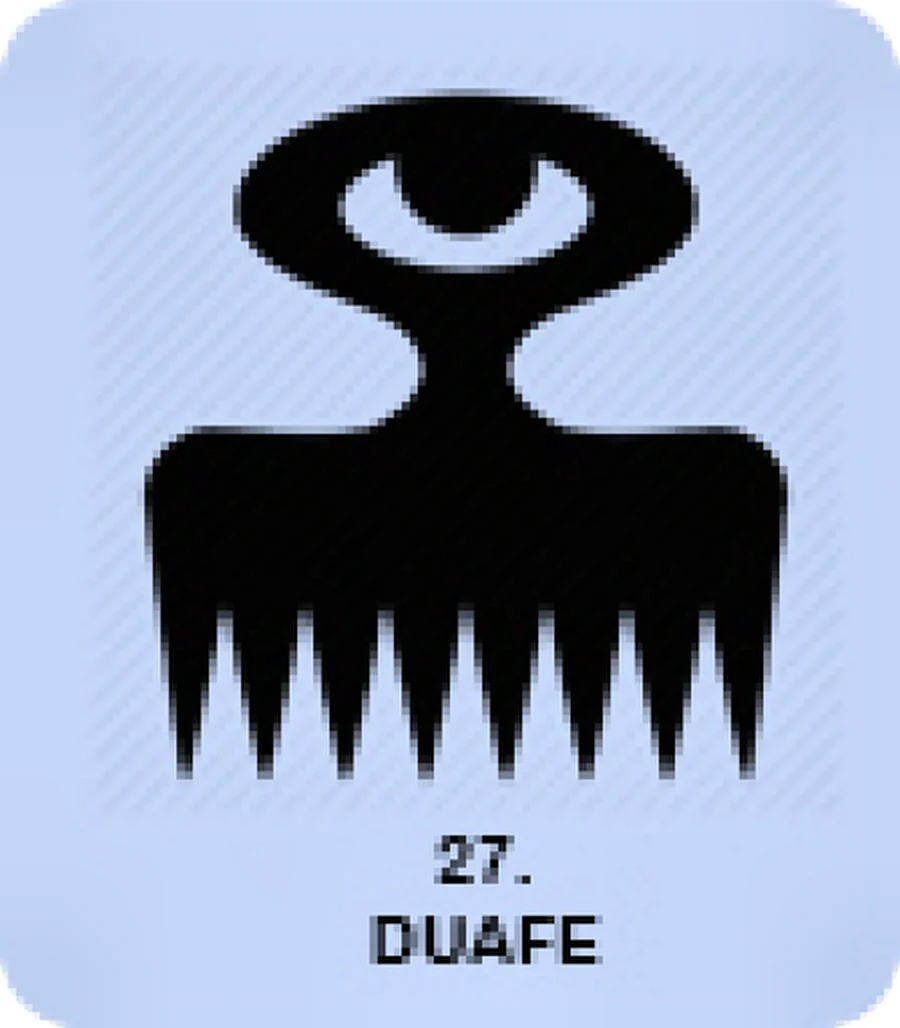
Duafe, the wooden comb, is read as feminine goodness and care, or as beauty and cleanliness.
- Literal meaning
- the wooden comb
- Stands for
- feminine goodness, love and care, or looking one's best
- What it shows
- A wooden comb, a prized possession of an Akan woman.
- How sources differ
- Willis reads it as abstract feminine virtues such as goodness, love and care; Agbo reads it as beauty and good hygiene.
The sign is traced from a licensed reference and shown in this platform’s own style. Its shape is not changed.
Duafe is a wooden comb, a prized possession of an Akan woman. Sources differ on emphasis. Willis's Adinkra Dictionary, as reported by adinkra.org, reads it as feminine goodness, love and care; Agbo's Values of Adinkra Symbols reads it more literally as looking one's best and good hygiene. Rattray listed it simply as the wooden comb. Status: in Rattray's list of 1927, and in the modern catalogues consulted.
Note on the sources
Willis stresses abstract feminine virtues; Agbo stresses beauty and hygiene.
Key facts
- Rattray (1927): the wooden comb
- Read as feminine virtues, or as beauty and cleanliness
- Status: in Rattray's list of 1927, and in the modern catalogues consulted.