19th century to present
Asipim, akonkromfi and hwedom: the chairs of chiefs
asipim; akonkromfi; hwedom
Stool design
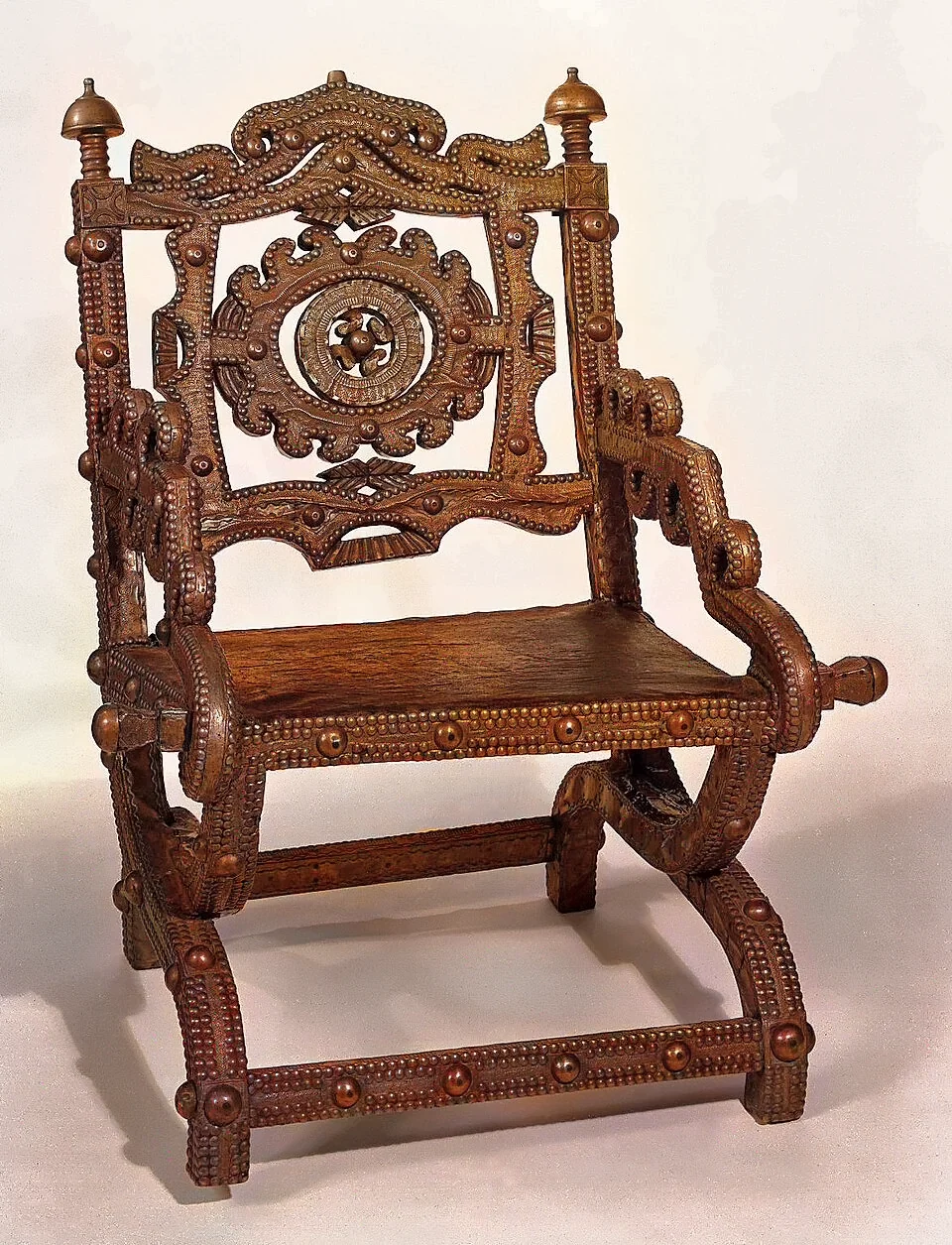
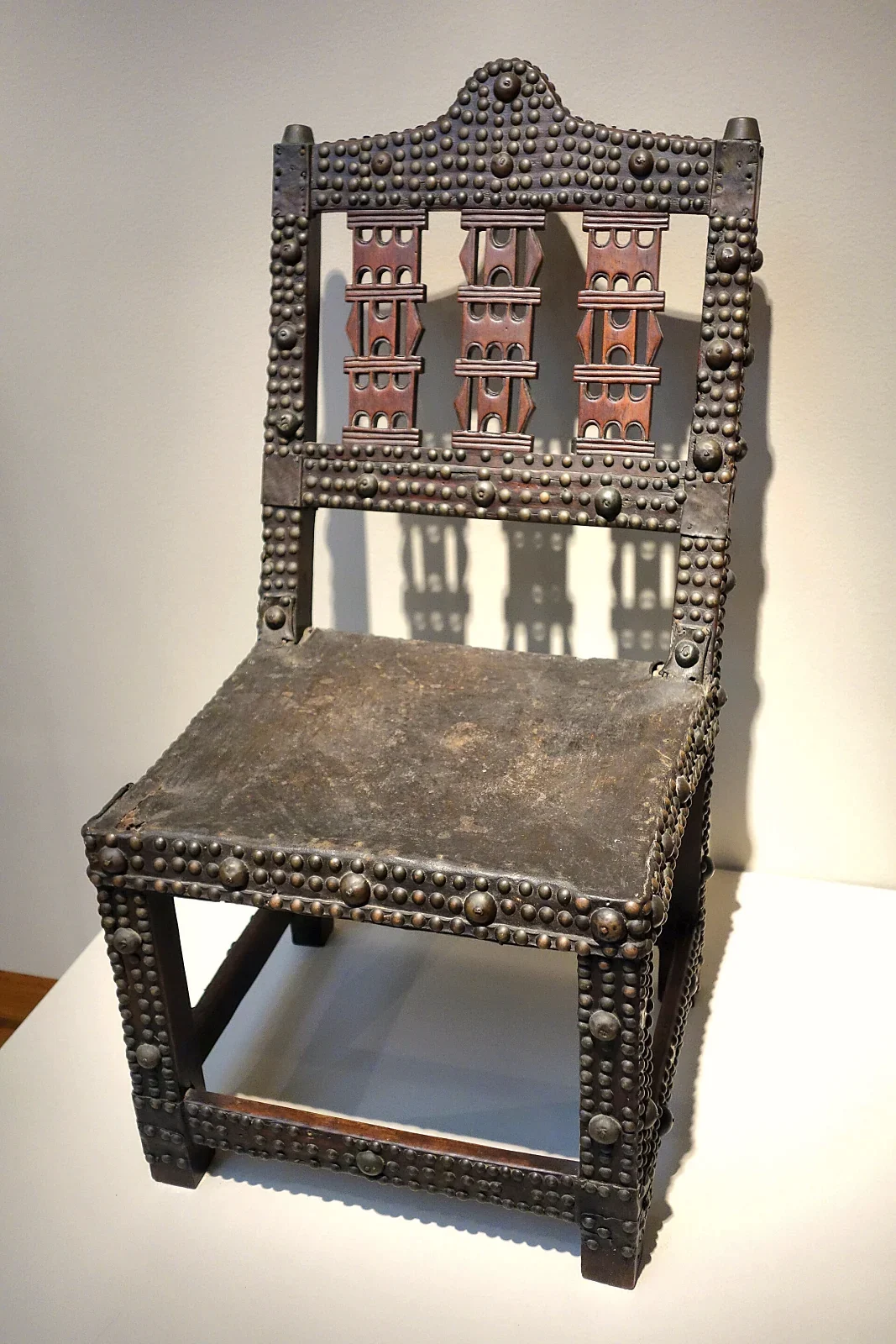
Chiefs sit in state on chairs called asipim, akonkromfi and hwedom, the last being the seat of the Golden Stool.
- What it shows
- Asipim are European-style chairs of wooden frame and hide seat studded with brass tacks; akonkromfi has crossed legs and openwork like a folding chair; hwedom is upright with a flat back and turned legs.
- Where it is used
- Chiefs sit in state on chairs, larger and richer for higher chiefs; the Golden Stool rests on a hwedom.
- Also written
- asipim, akonkromfi, hwedom
- How sources differ
- Most people in Kumasi now call all of them asipim, though McLeod names the akonkromfi and hwedom as grander types.
Chiefs sit in state on chairs. Asipim are European-style chairs with a wooden frame and hide seat, studded with brass tacks and finials; the higher the chief, the larger and richer the chair. Malcolm McLeod, as summarised by Hale, names two grander types. The akonkromfi has crossed legs and openwork, like a folding chair. The hwedom is upright, with a flat back and turned legs. Most people in Kumasi now call all of them asipim. The chair on which the Golden Stool rests is a hwedom.
Key facts
- Asipim: studded chair with hide seat
- Akonkromfi: crossed legs, like a folding chair
- Hwedom: upright chair; the Golden Stool's seat