1950s - present
The Centre for National Culture and the Prempeh II Jubilee Museum
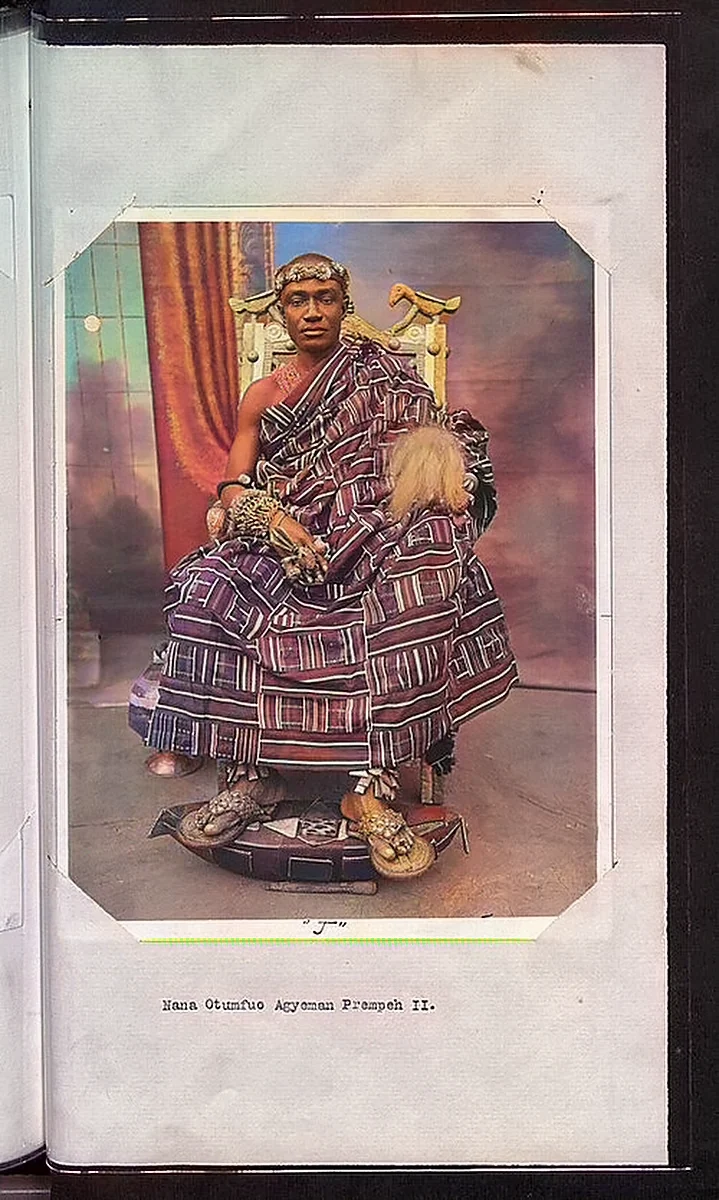
Kumasi's cultural centre was the work of the Asante scholar Dr Alexander Atta Yaw Kyerematen, who founded it in the 1950s with the backing of Prempeh II as the Asante Cultural Centre. It was later taken over by the state as a national centre, becoming the model for regional centres of national culture across Ghana. On its grounds at Bantama stand craft workshops for weaving, carving, pottery and brass-casting, a library, performance spaces and the Prempeh II Jubilee Museum, a small building in the form of a traditional Asante house. The museum holds royal memorabilia including furniture and personal effects of Prempeh II, old regalia, gold-weights and, famously, the fake golden stool made to deceive the British in 1900. With the Manhyia Palace Museum, the Kumasi Fort museum and the Okomfo Anokye sword site it forms the core heritage circuit of the city. The Graphic has described the centre as the cultural hub of Oseikrom, the city of Osei Tutu.
The centre's founding is dated 1956; the Jubilee Museum is dated 1954 by Wikipedia and 1956 elsewhere. The renaming as a national centre is dated 1963 in one source and 1990 in another.
Key facts
- The centre was founded by Dr Alex Kyerematen with Prempeh II's support.
- The Prempeh II Jubilee Museum stands inside the centre.
- It became a state-run national cultural centre after independence.