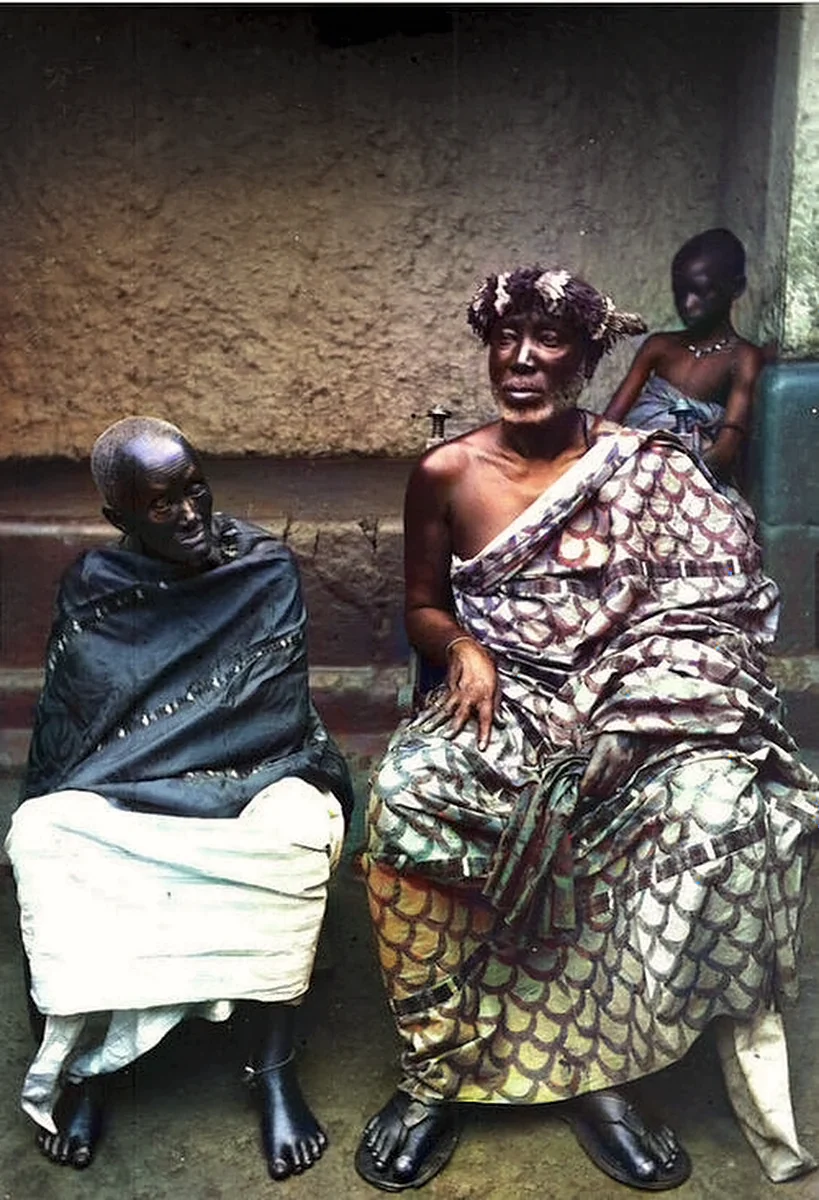
1874-8 March 1883
Mensa Bonsu, eleventh Asantehene
Mensa Bonsu Kumaa
Mensa Bonsu, born about 1840, was a younger son of Afua Kobi and succeeded his deposed brother Kofi Karikari late in 1874 with the support of the Kumasi chiefs who wanted peace with Britain. He set about rebuilding the capital and the treasury after the 1874 defeat, avoided new wars with the British, and in 1881 sent Queen Victoria a golden axe as a token of goodwill, an episode recorded in her journal. He survived attempts to unseat him in 1877, when Karikari tried force, and in 1880. But heavy fines and confiscations made him hated. McCaskie's judgement, quoted in the Wikipedia article, is that he was chronically short of revenue and personally avaricious. Manu-Osafo describes the end of the reign as a commoner revolt against tyranny: early in 1883 rebellion spread from the villages around Kumasi and the king fled the capital; rulers.org dates the end of the reign to 8 March 1883. His sister Yaa Akyaa took the leading part in driving him out. Five years of civil war followed. He died about 1896 in British custody, and in 1911 his remains were brought to Kumasi for royal burial.
Wikipedia calls him the tenth king, the Manhyia Archives the eleventh. Agency in his fall: a popular revolt (Manu-Osafo) versus removal by his sister Yaa Akyaa (reference works). One encyclopedia entry dates the removal to 1884.
Key facts
- Son of Afua Kobi; brother of Kofi Karikari and Yaa Akyaa.
- Sent a golden axe to Queen Victoria in 1881.
- Overthrown in March 1883; rulers.org gives 8 March.
- Died c. 1896; reburied at Kumasi in 1911.
- Counted eleventh in Asante lists (some web pages say tenth).