31 January 1935
The restoration of the Asante Confederacy, 31 January 1935
Asanteman - the Asante nation
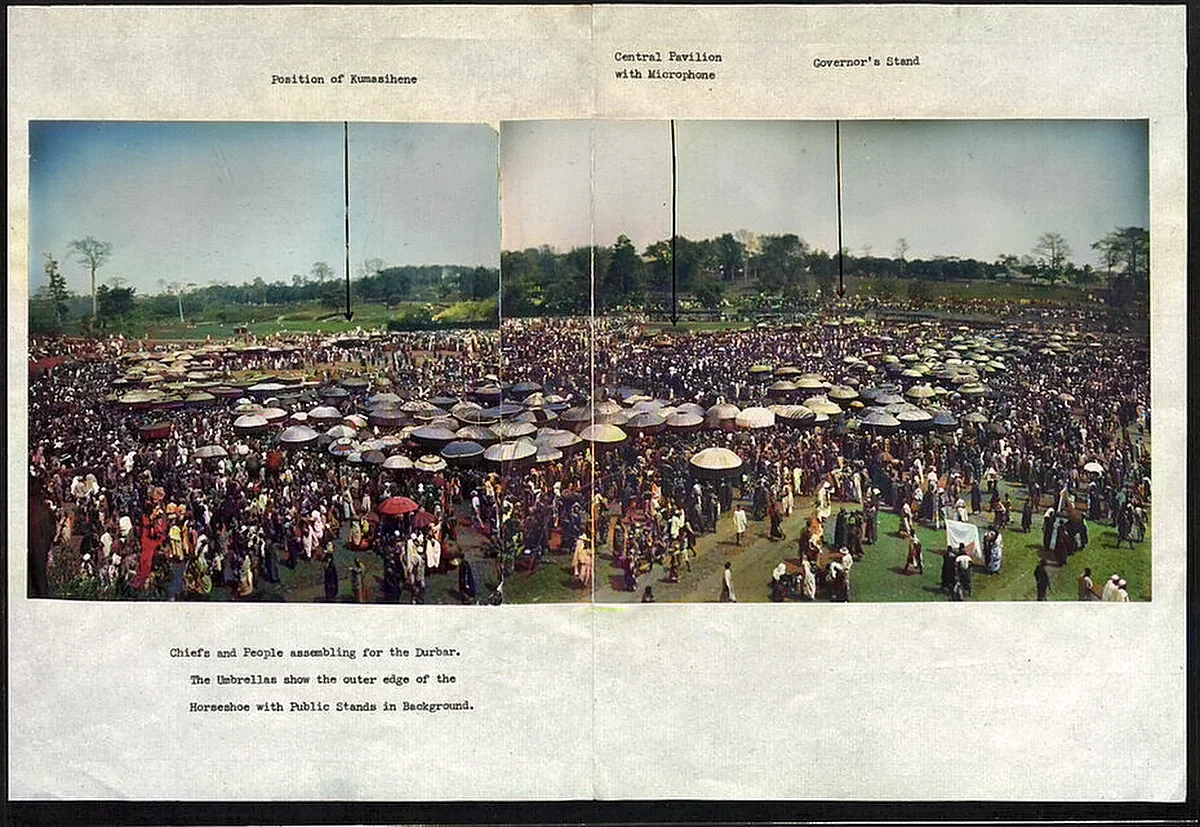
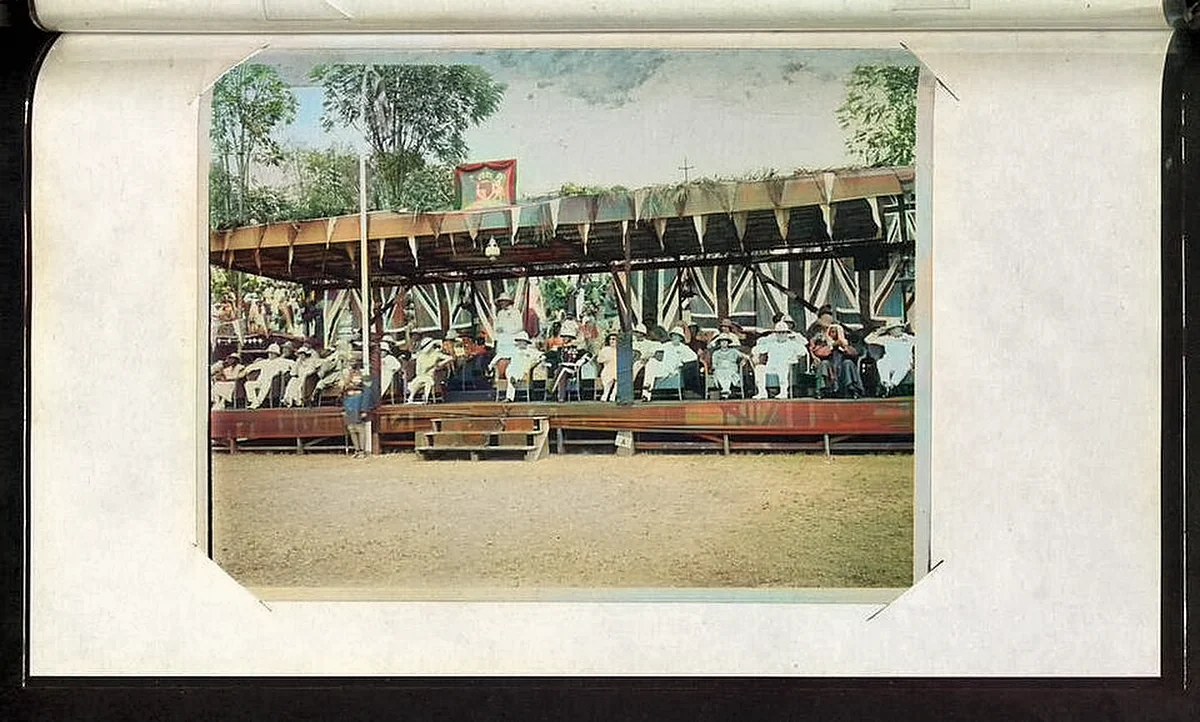
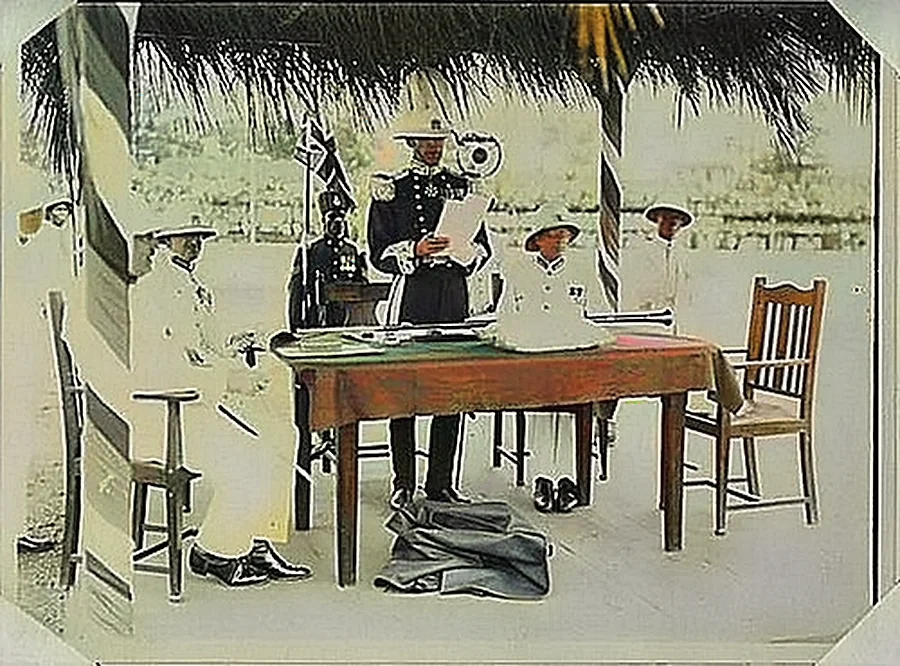
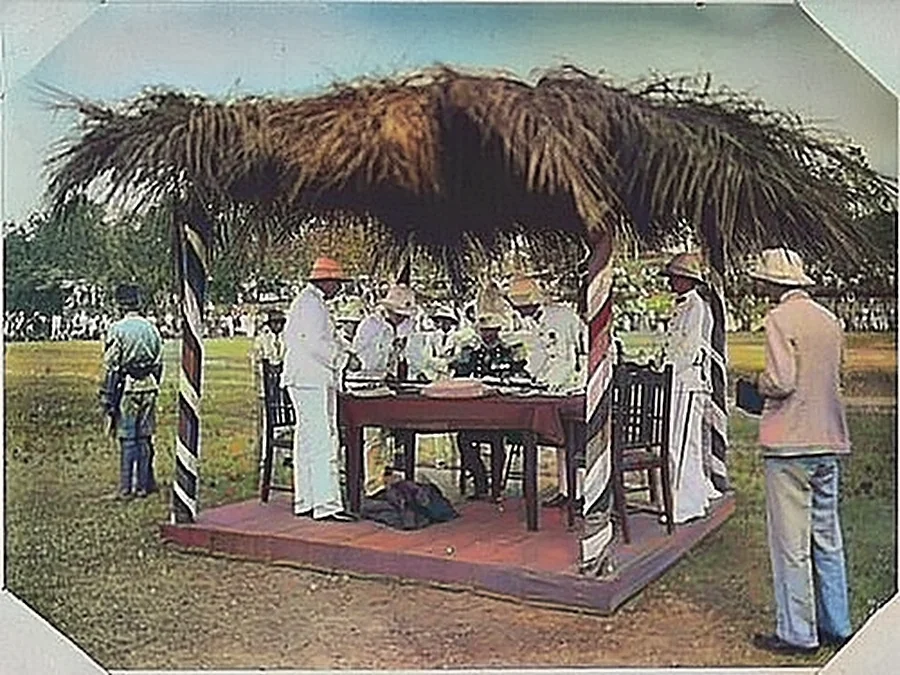
By the early 1930s the administration had come round to the view that Ashanti could not be governed indefinitely as a scatter of separate 'native states'; the Chief Commissioner of the day, Newlands, argued that 'restoring' the confederacy was essential. Governor Sir Arnold Hodson proclaimed the Ashanti Confederacy restored at Kumasi on 31 January 1935, and Prempeh II was installed as Asantehene. For the first time since 1896 the Golden Stool was shown in public, and the whole assembly rose to honour it. The reconstituted union brought together Kumasi, Mampon, Juaben, Bekwai, Esumeja, Kokofu, Kumawu, Nsuta, Adansi, Ejisu, Offinso and Agona, with several Brong divisions such as Banda, Wenchi and Mo joining of their own accord. Scholars stress the limits of the act. Triulzi calls it a partial restoration of local authority within British over-rule, a carefully balanced institution designed by the colonial government, and Tordoff's title - dismemberment and revival - captures the fact that what returned in 1935 was a native authority, not a sovereign kingdom.
Popular accounts speak of the 'restoration of the kingdom' or even of independence being restored in 1935 (Wikipedia, Prempeh I); academic accounts insist it was a limited restoration under colonial control. The list of member states comes from a press feature seen as a search excerpt.
Key facts
- Proclaimed by Governor Sir Arnold Hodson on 31 January 1935.
- Prempeh II recognised as Asantehene.
- The Golden Stool was displayed in public for the first time since 1896 (Edgerton).
- Member states included Kumasi, Mampon, Juaben, Bekwai, Kokofu, Nsuta, Kumawu, Adansi, Ejisu, Offinso, Esumeja and Agona.