4-6 February 1874
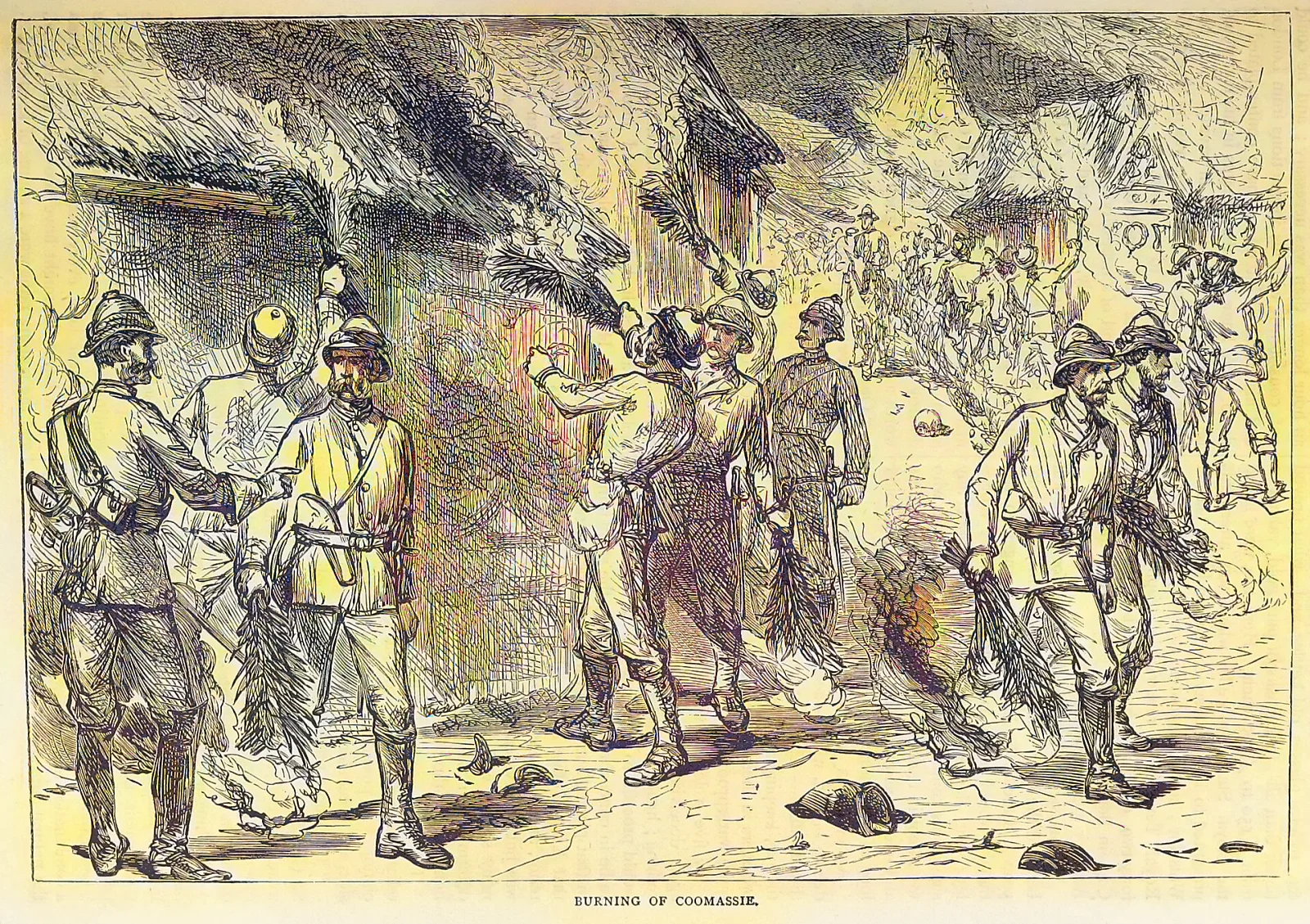
The occupation, looting and burning of Kumasi, February 1874
Wolseley held Kumasi for less than two days. The king had withdrawn and no one came to negotiate; rain was falling, the rivers behind were rising and the general had sick and wounded to carry. He therefore decided to leave a mark and go. The V&A's own history stresses that what followed was organised: three officers were appointed prize agents and, working in the stone palace, selected the most valuable portable things - gold masks and ornaments, swords, soul-washers' badges, silver plate, cloths and curiosities accumulated by generations of kings. A Fante policeman caught plundering privately was hanged. Engineers then mined the palace, and the town was set alight; Fuller says the fuses were lit at eight in the morning. British accounts dwell on a grove of execution they called the place of vultures. The column then fell back across the flooded Oda. Glover's eastern force, which had been held up by Juaben troops, reached the ruins on 12 February with about 5,000 men. The prize was sold, most of it in London; Edgerton puts the proceeds at about 5,000 pounds. Overall the British lost fewer than seventy men to the enemy and many more to sickness.
The burning is placed on 4 February by loose summaries, on the morning of 5 February in Fuller's text as extracted, and on 6 February in many modern accounts (not verified here). British death tolls differ by source and by what is counted (Europeans only, or all troops; battle only, or disease). Campaign cost is given by Edgerton as about 900,000 pounds.
Key facts
- Kumasi entered 4 February 1874; palace blown up and town burned before the withdrawal.
- Three prize agents collected royal regalia for sale (V&A).
- Glover entered the deserted town on 12 February with about 5,000 men (Fuller).
- British deaths: 18 in action and 55 from disease (Wikipedia); Edgerton counts 69 killed and about 400 wounded overall, over 1,000 invalided.