1817-1820
Cape Coast and Komenda: fealty priced in gold
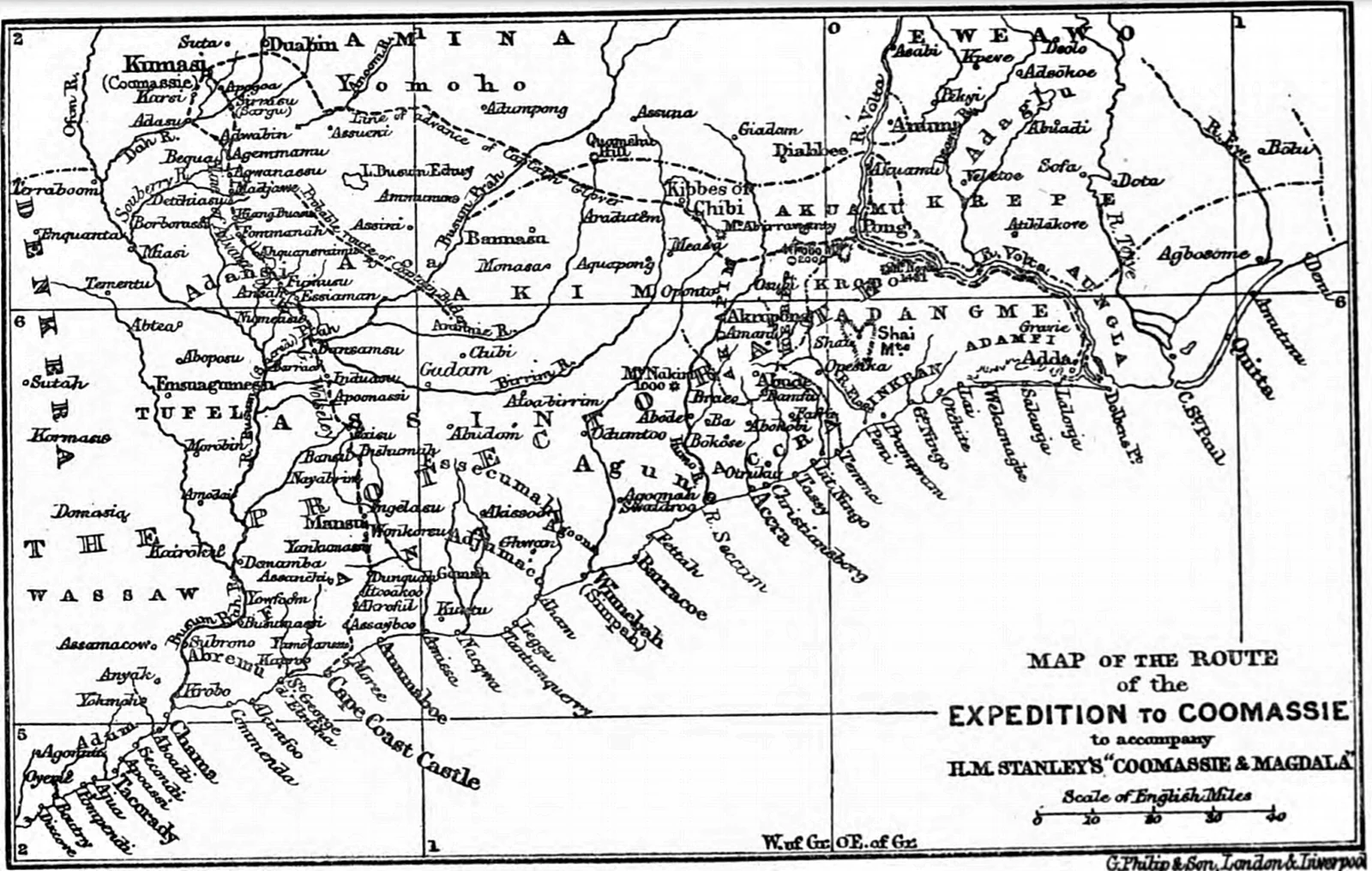
Two episodes show what submission cost a coast town. In 1817 Komenda, which had seized and sold ninety-eight Elmina people, was called to account while Bowdich was in Kumase. The king first demanded 2,000 ounces of gold. Under the preliminaries Bowdich helped to settle, the Komenda people acknowledged fealty to the king and came under his protection in return for 120 ounces, or about 150 with the customary fees to his envoys. Cape Coast was a harder case, because it sat under the walls of the British headquarters. After the townspeople insulted Asante messengers in 1819, the king's ambassador demanded 1,600 ounces from the town and another 1,600 from the Governor himself. Dupuis, arriving as consul in 1820, argued the claim on the Governor away, and the king dropped it once the consul had been received. The town's liability remained. Dupuis noted that Cape Coast had offered 100 ounces, that the Governor and council afterwards authorised payment of up to 1,500 and then 1,000, and that Muslim advisers in Kumase suggested the king settle for a few hundred. The king's position, as Dupuis reports it, was simple: Fante had been won by his arms and the quarrel was about his right to tribute. The refusal of the Cape Coast authorities to accept Dupuis's treaty left the matter open until the war of 1823.
Key facts
- Komenda paid 120 ounces of gold (about 150 with fees) in 1817 after a first demand of 2,000.
- In 1819 the Asante ambassador demanded 1,600 ounces each from Cape Coast town and the British Governor.
- Osei Bonsu withdrew the demand on the Governor during Dupuis's mission in 1820.
- Cape Coast's offer was 100 ounces.