c. 1400 to c. 1900
Goldweights: brass weights for a gold-dust economy
abrammuo (also mrammuo)
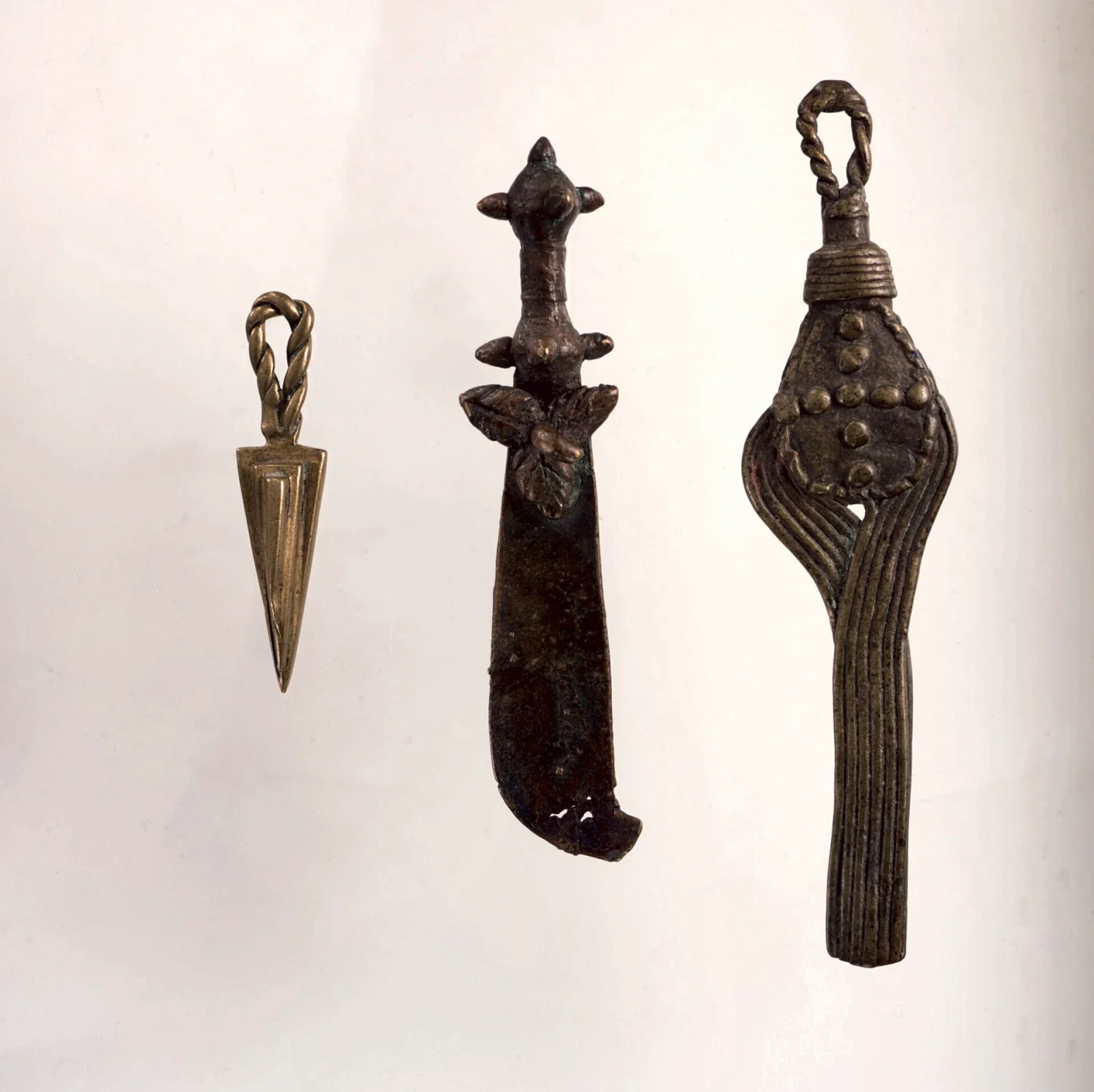
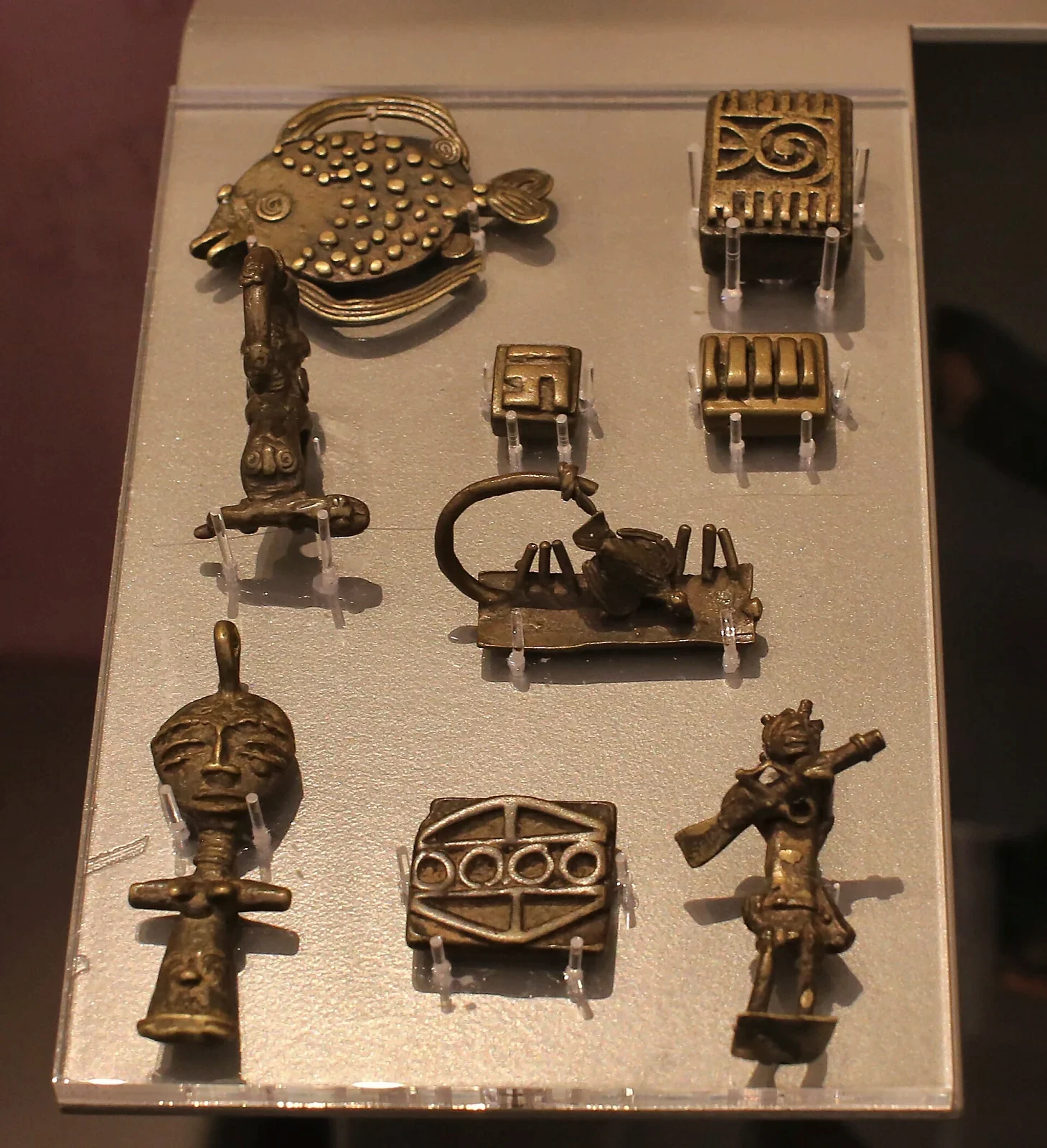
Until the end of the 19th century gold dust was money in Asante, and every trader needed weights to measure it. The weights, abrammuo, are small brass castings made by the lost-wax method. Following the work of Timothy Garrard, they are usually divided into an early period (about 1400 to 1720) and a late one (about 1700 to 1900). The oldest are geometric: squares, bars and discs with raised lines, spirals and swastikas. Figurative weights showing people, animals, birds, fish, tools and weapons appear from about 1600. Most are small, and a full range ran to more than sixty values. A man with a complete set had standing, and a few weights were a customary gift to a newly married man. Smiths adjusted a casting by filing it or adding a ring of lead. Scholars have linked the unit system to the Islamic weights of the trans-Saharan trade. When coins and notes replaced gold dust the weights fell out of use; by the 1890s new ones were poor, and since then they have been made for visitors and collectors.
Wikipedia gives two different estimates of the number ever made (about 3 million and about 4 million).
Key facts
- Cast in brass by the lost-wax method
- Geometric weights from c. 1400; figurative from c. 1600
- Most weights fall within about 3 per cent of their intended value
- Use ended around 1900 with coinage