c. 1400 to present
Lost-wax casting, step by step
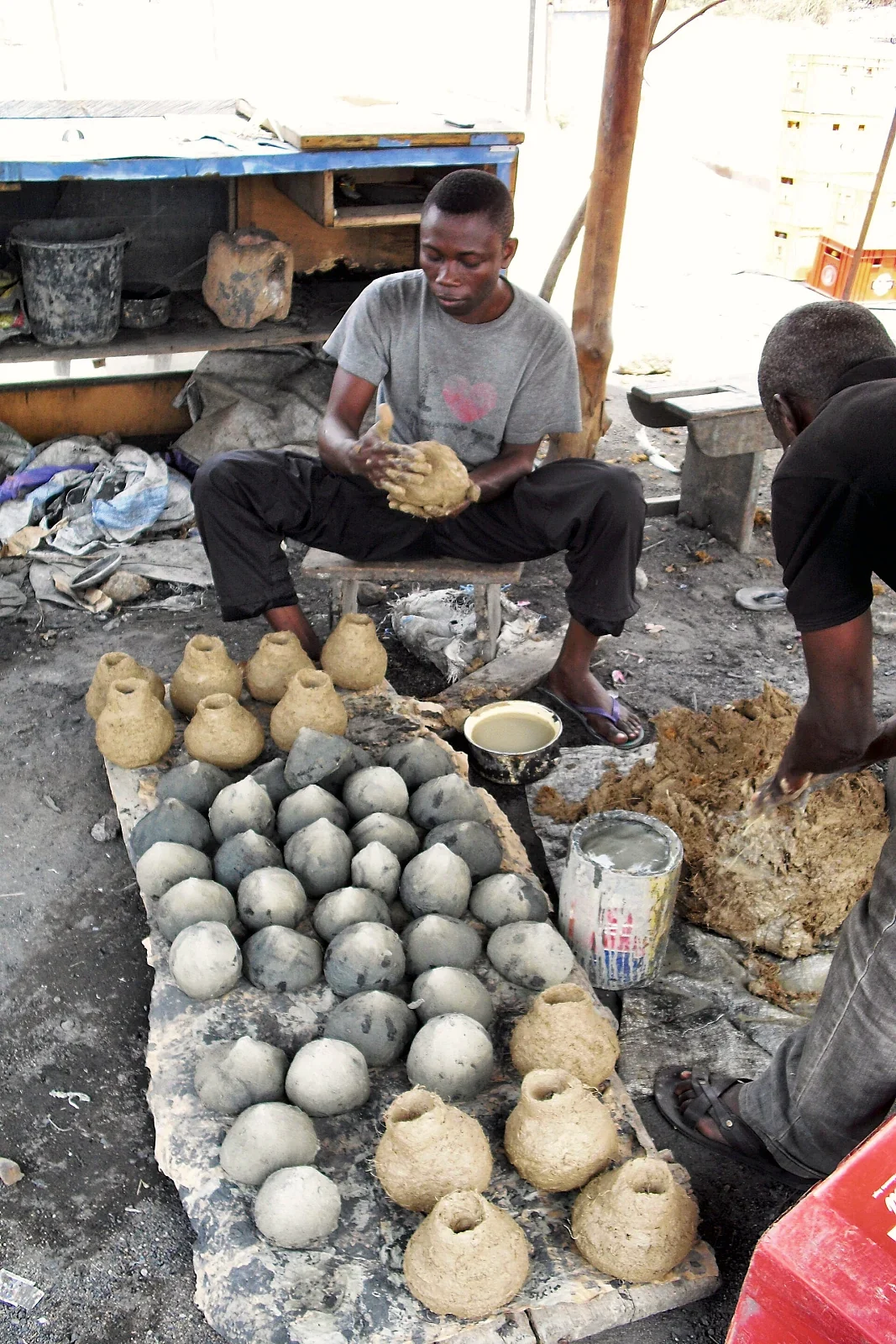
Asante brass and gold casting uses the lost-wax (cire perdue) method. Rattray watched it in the early 1920s. The smith models the object in beeswax and adds a wax stalk. He coats the model first with fine clay, then with coarser clay mixed with palm-nut fibre, and lets it dry. Heating melts the wax out through the stalk hole, leaving a hollow. Scrap brass is put in a crucible joined to the mould, and the whole is fired in a charcoal furnace worked by bellows; the smith reads the colour of the flame to know when the metal has run. When the mould is cool he breaks it, files off the stalk and trims the casting. Because the mould is destroyed, each piece is unique. Christine Fox's monograph Asante Brass Casting, based on her apprenticeship to a Kumasi caster, records the same sequence for goldweights, ritual vessels and figures. Goldsmiths (adwumfo) formed a respected brotherhood; those of Bekwai traced their craft to an ancestor named Fusu Kwebi, and the skill passed to a son or a sister's son.
Key facts
- Wax model, two clay coats, melt-out, pour, break the mould
- Each casting is unique because the mould is destroyed
- Goldsmiths (adwumfo) formed a brotherhood
- Craft passed to a son or sister's son