historic - present
Sword-bearers, heralds and royal messengers
afenasoafo (sword-bearers); nseniefo (heralds; Rattray writes osene for a herald); nhenkwaa (royal servants); asomfo (those who serve); abrafo (executioners, historical)
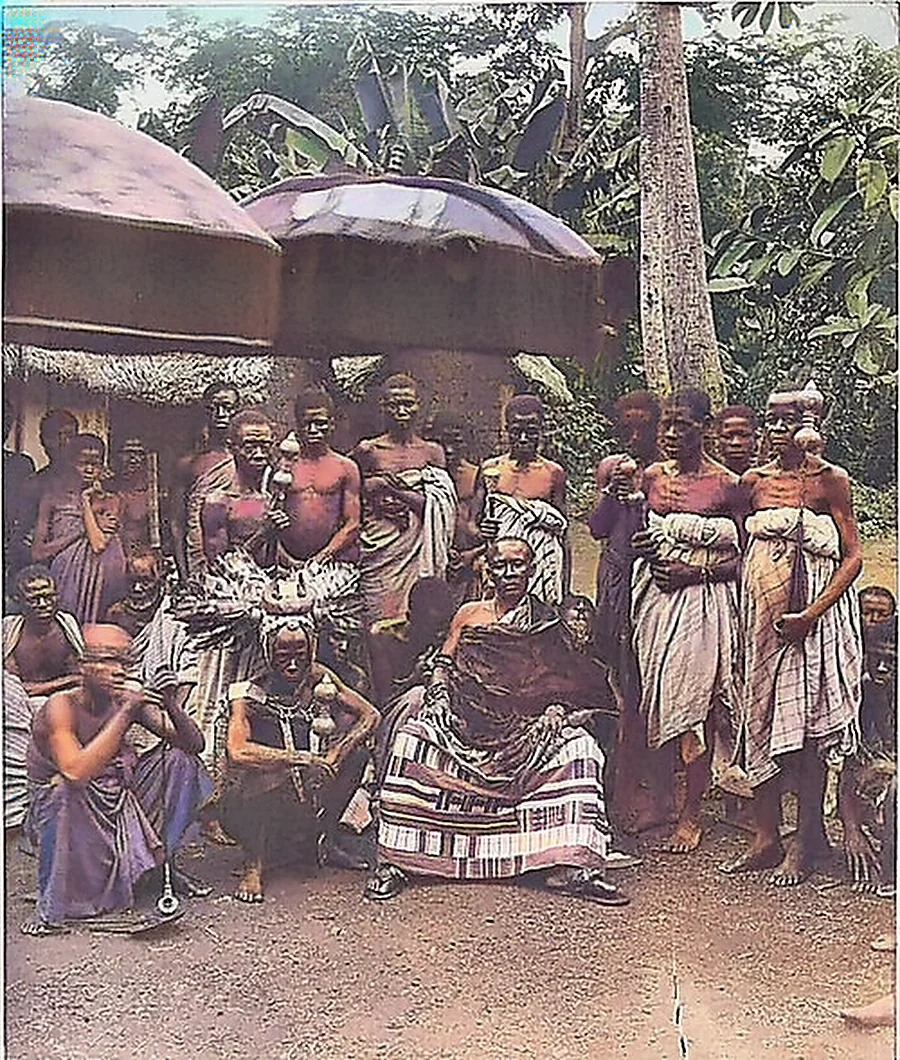
Around every stool stands a body of servants whose posts are themselves offices. The afenasoafo carry the state swords. A sword is a credential: according to Adjaye, sword-bearers travelled as the Asantehene's messengers to foreign governments, negotiated peace and secured the return of fugitives. A chief swears his oath of allegiance holding a state sword, and the Asantehene's paramount chiefs swear on the sword called Mponponsuo. The nseniefo are the heralds or criers, who kept order at sittings of the national assembly and proclaimed decrees; Rattray noted the herald's cry for silence after each sentence of a rite and his privilege of drinking first from the old brass wine cup. The nhenkwaa, the ruler's personal servants, carried messages within the kingdom. Wilks likened the whole class of asomfo to a civil service whose members were trained in a department, promoted, paid by fees and commissions, and dismissed or worse for corruption. Rattray also recorded gun-bearers in the stool house and executioners distinguished by leopard-skin bandoliers; the executioners' historical function ended with colonial rule.
Key facts
- Sword-bearers served as envoys to foreign governments.
- Paramount chiefs swear to the Asantehene on the Mponponsuo sword.
- Heralds keep order in council and proclaim decrees.
- Rattray recorded executioners wearing leopard-skin bandoliers.