October 1873 - February 1874
Wolseley's expedition: the 'Sagrenti' war
Sagrenti - the Asante rendering of 'Sir Garnet'
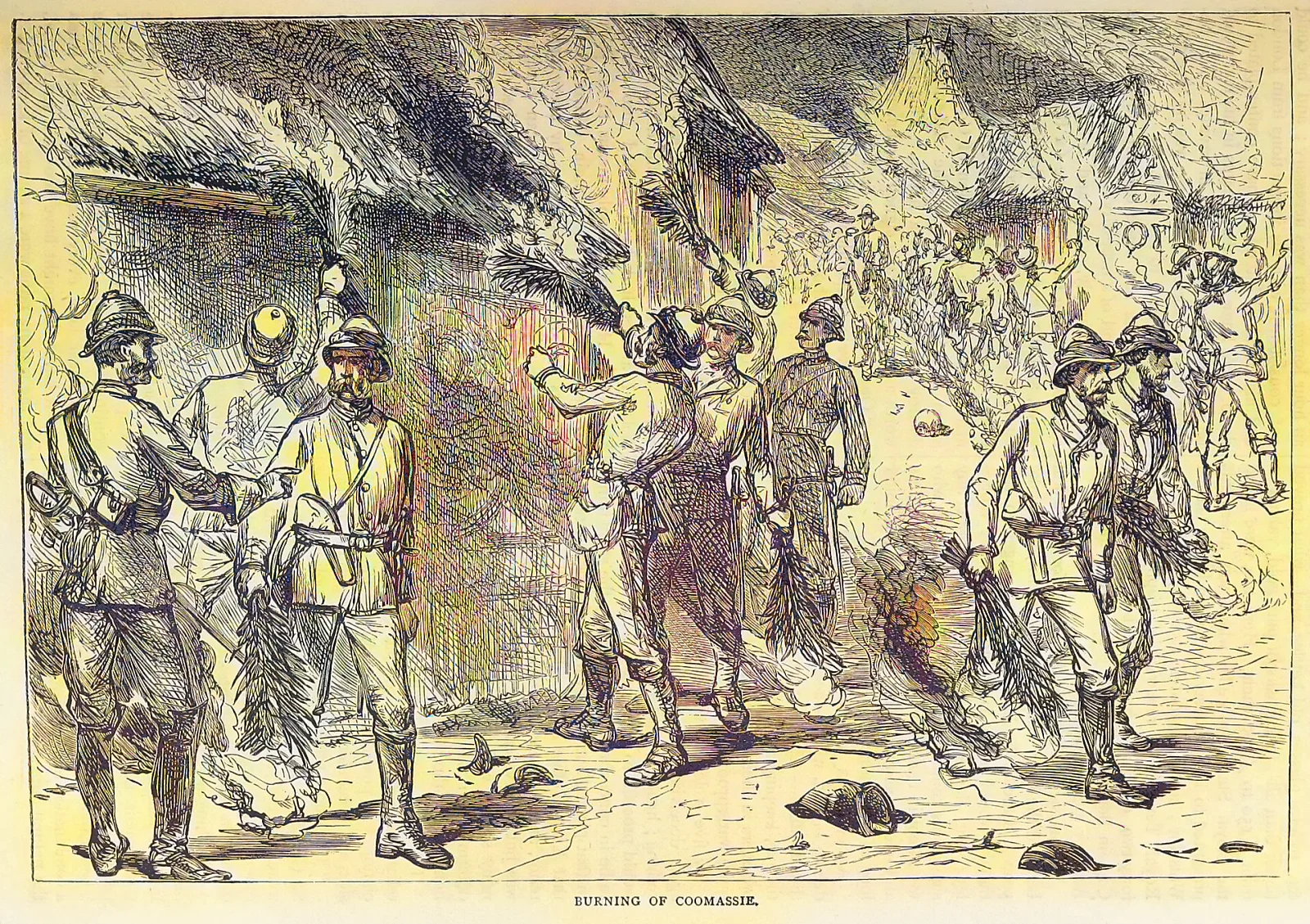
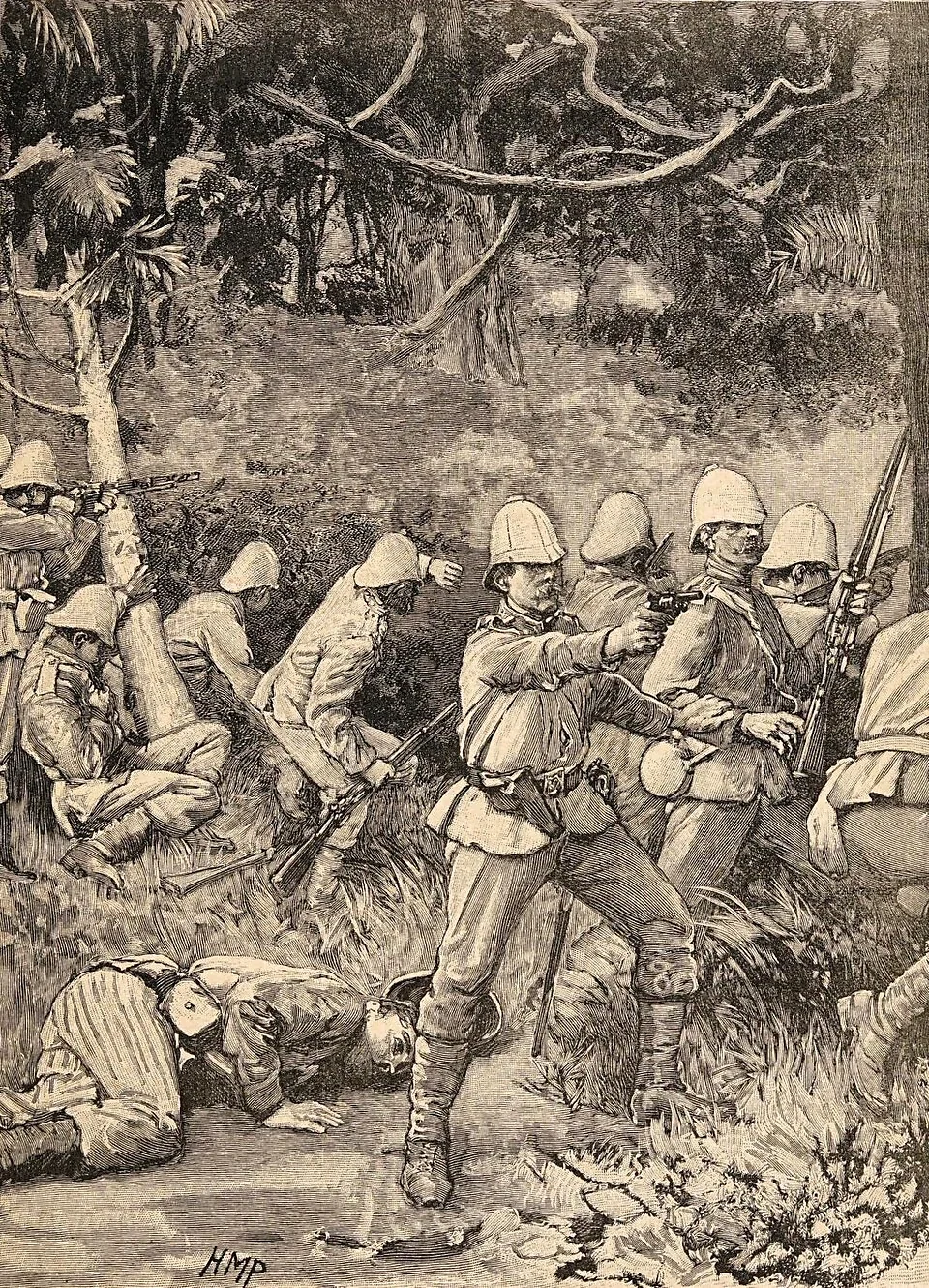
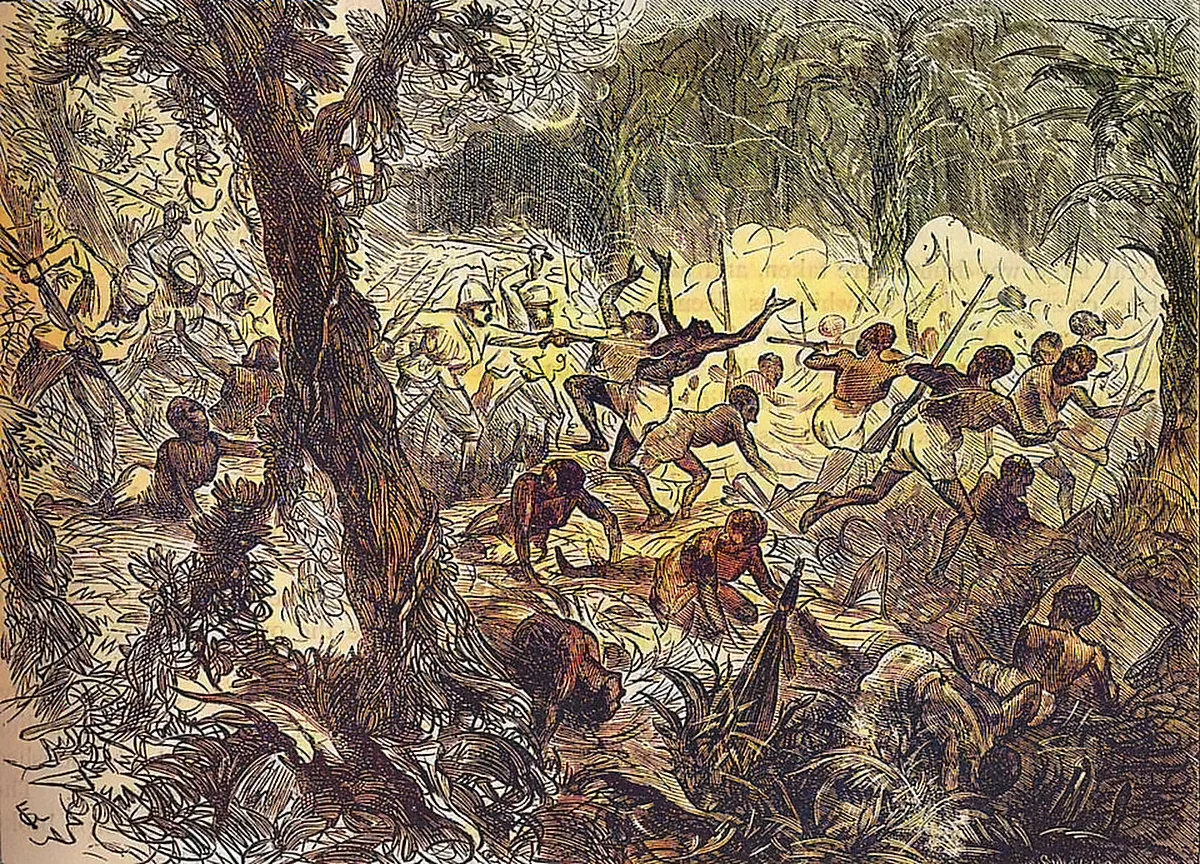
Asante remembers the war of 1873-74 by the name of the British commander: Sagrenti, from Sir Garnet (Wolseley). Appointed in August 1873 as both general and civil administrator, Wolseley sailed from Liverpool on 12 September with a hand-picked staff and reached Cape Coast on 2 October. Finding the coastal levies unreliable, he telegraphed for British battalions, which the Cabinet approved on 17 November. Royal Engineers meanwhile cut a road towards the Pra, bridging 237 streams and building staging camps with huts and hospitals roughly every ten miles, and thousands of carriers - many of them Fante women - moved the stores. The white troops (Black Watch, Rifle Brigade, Royal Welch Fusiliers, a naval brigade) were landed only at the turn of the year so as to spend as little time as possible in the climate. By January 1874 some 3,500 combatants, about 2,500 of them British, were at Prasu with West India and African units. A second column of Hausa and eastern levies under Captain John Glover advanced from the Volta. From the Pra on 2 January Wolseley sent Kofi Karikari his terms: release of all captives, an indemnity of 50,000 ounces of gold and hostages. The king released the missionaries and asked for a halt; Wolseley marched on.
The road is described as about 160 miles long by Wikipedia, far more than the distance from Cape Coast to Kumasi; treat that figure with caution. A 2024 Ghanaian news report loosely calls the 1900 rising the 'Sagrenti (Yaa Asantewaa) War'; the name properly belongs to 1873-74.
Key facts
- Wolseley reached Cape Coast on 2 October 1873.
- The military road crossed 237 streams.
- About 3,520 combat troops, some 2,500 British, were at Prasu in January 1874.
- Ultimatum of 2 January 1874 demanded 50,000 oz of gold.